The Empty Nest, The Full Court: How the Paddle Replaced the Office Social Life
Pickleball for Empty Nesters: How the Full Court Replaced the Office Social Life
Transitioning away from a demanding career and shifting to a quiet home can create a profound social void, but discovering pickleball for empty nesters offers a definitive modern bridge to replace comfortable corporate routines with social connection, athletic movement, and a deep sense of purpose.
For decades, identity was anchored to two central pillars: raising a family and climbing the professional ladder. Your calendar was dictated by school carpools, quarterly deadlines, board meetings, and weekend sports tournaments. The workplace served as your default social ecosystem. It offered structured problem solving, casual hallway check-ins, and a built in team oriented shared challenges.
Then, almost overnight, the dynamic shifted.
The kids packed up their cars to start lives of their own, leaving behind quiet rooms. Around the same time, the transition out of the traditional 9 to 5 arrived, whether through retirement, downshifting careers, or stepping away from corporate environments.
Suddenly, the silence in the house brought an unexpected social vacuum. Where do you find purposeful connection, mental stimulation, and everyday camaraderie when the office water cooler and the bustling family dinner table vanish?
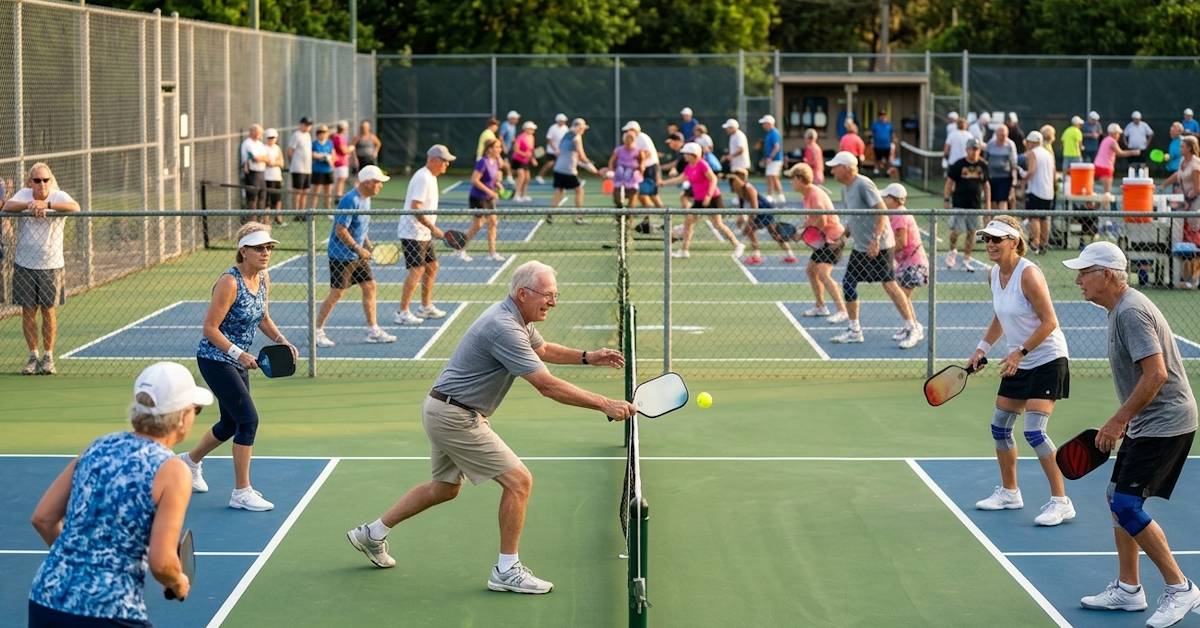
For millions of adults over the age of 50, the answer did not come from sedentary social clubs. It arrived with a perforated plastic ball, a court half the size of a tennis court, and an active social community.
Why Pickleball for Empty Nesters is the Ultimate Career Transition
Stepping away from a decades long career triggers a profound psychological rewiring. Sociologists and cognitive researchers frequently point to three essential ingredients for adult well being: autonomy, competence, and relatedness.
In corporate life, professional milestones supplied competence, while coworkers provided daily relatedness. Without intentional substitution, losing these environments can lead to feelings of isolation and cognitive stagnation. The challenge is not merely having free time; it is having empty hours devoid of challenge or shared purpose.
This is where the unique magic of pickleball for empty nesters quietly stages its revolution.
Golf demands half your day, expensive tee times, and endless frustration over a single bad swing. Tennis requires covering a massive court. In contrast, pickleball is welcoming, affordable, and deeply strategic.
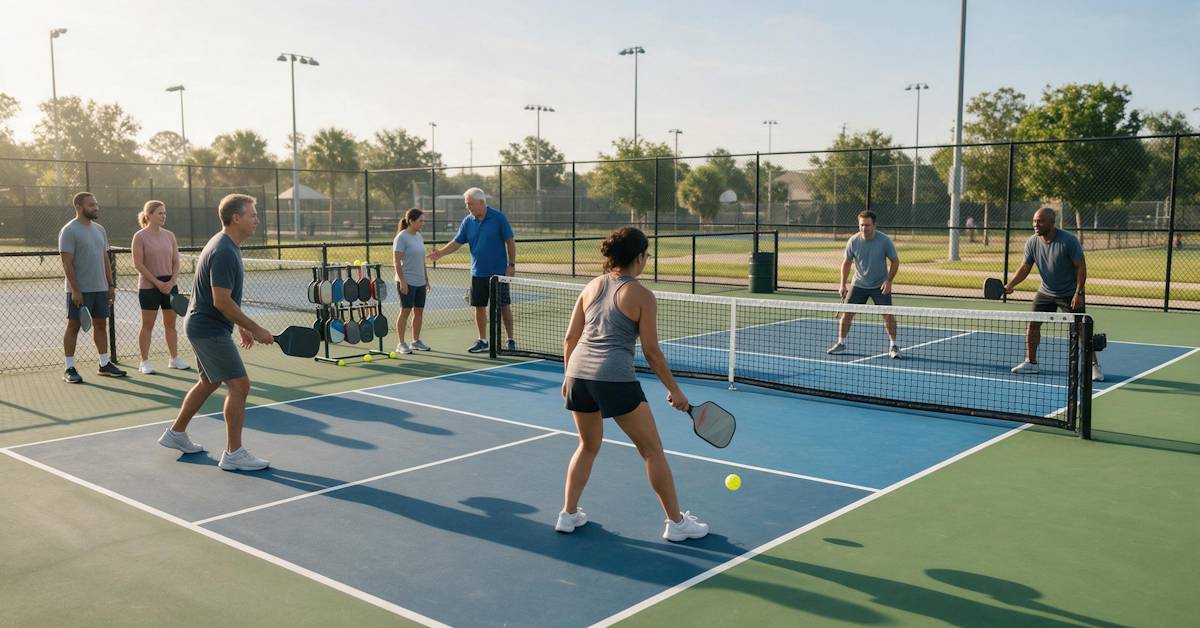
You can walk onto any public court, drop your paddle into the rotation rack, and instantly join a game. On the court, your age, background, and career history do not matter. Everyone is equal, and everyone is part of the community.

From Boardroom Meetings to the Non Volley Zone
In an office, true connection rarely forms during boring budget presentations. It forms in the micro-moments: laughing over break room coffee, debriefing after a tough client pitch, or working side by side through a difficult problem.
The pickleball court mirrors this architecture with remarkable precision.
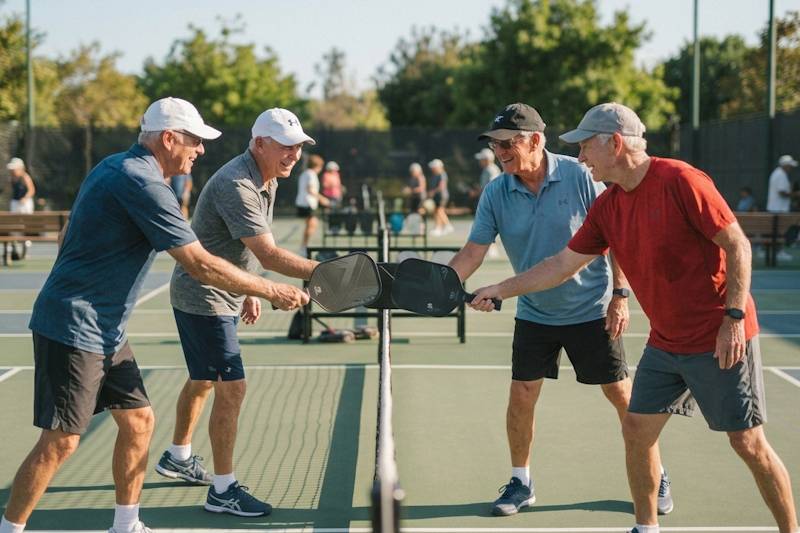
When you and a partner stand seven feet from the net at the kitchen line, you are engaged in a shared mental and physical exercise. Every dink, reset, and defensive block requires split second coordination, mutual trust, and immediate adaptation. A missed shot is not catastrophic; it is an invitation to reset, smile, tap paddles, and problem solve the next rally together.
The courtside bench has quietly become the new boardroom lobby:
- Organic Conversations: With short 15 minute games, rotation is built into the culture. You sit between games, chat with new partners, and share life updates without artificial icebreakers.
- Shared Vulnerability: Stepping onto the court requires learning new mechanics, managing errors, and embracing the humility of being a beginner or a developing intermediate again.
- An Egalitarian Equalizer: On the court, titles, net worth, and past corporate accolades mean nothing. What matters is your presence, your focus, and your willingness to play the ball where it lands.
The Strategic Mindset of Pickleball for Empty Nesters
One of the greatest losses when leaving a professional routine is the absence of complex decision making. The human brain thrives on novelty, real time feedback, and sensory engagement.
Pickleball satisfies that intellectual itch through fast paced strategic play. It is not simply about swinging hard. In fact, the higher you climb in skill, the softer and more deliberate the game becomes. Navigating the non-volley zone forces players to develop emotional discipline, master breathing under pressure, and practice mental resets after unforced errors.
When you shift your mindset from casual exercise to deep focus, you realize every shot is a reflection of your mental clarity. Developing an elite mental edge at the kitchen line requires quiet discipline rather than reckless power. You are not just swatting a ball to pass the afternoon. You are actively training your concentration, visual tracking, and body mind connection. This intentional, deliberate pursuit of mental growth fills the exact intellectual void that corporate life left behind.
Health and Connection Beyond the Heart Rate Monitor
The physical benefits of introducing pickleball for empty nesters into your daily routine are well documented: improved lateral agility, cardiovascular conditioning, and balance. Yet for those adjusting to a new pace of life, the psychological benefits outweigh the calorie burn.
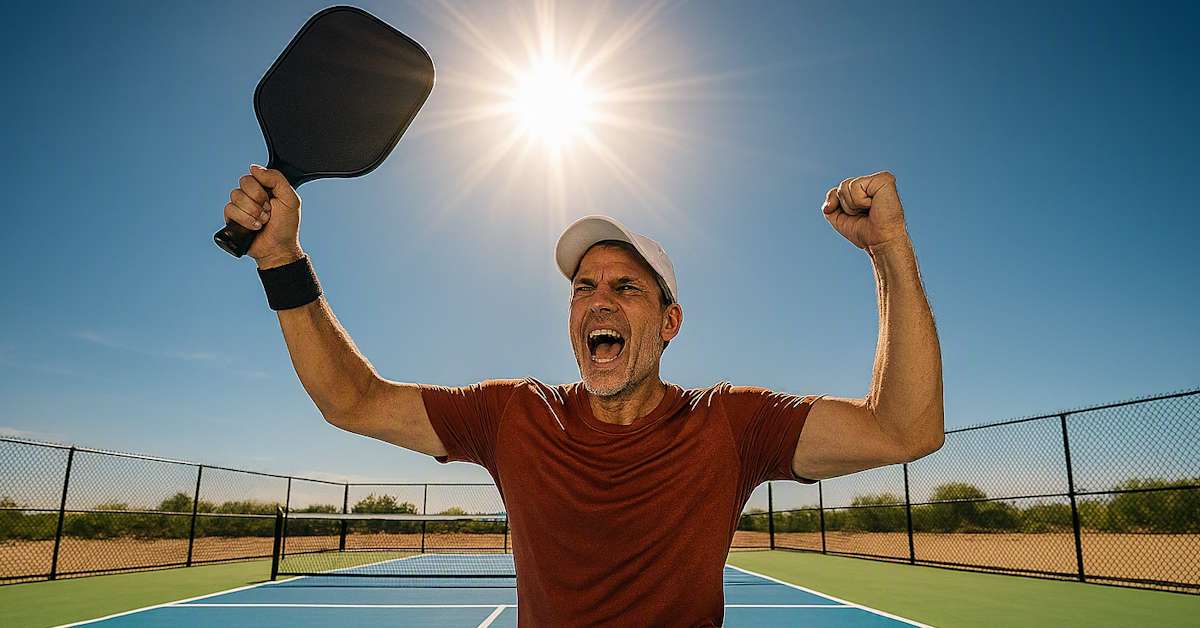
Neurochemical research demonstrates that interactive play releases high levels of dopamine and endorphins while lowering cortisol levels. When movement is tied to social interaction, consistency skyrockets. You do not set an alarm for 7:30 AM because you have to exercise; you wake up because three other players are waiting at Court 4 for competition and trash talking fun.
The sudden silence of an empty nest brings a real sense of isolation. Without kids to raise or corporate goals to chase, it is easy to feel entirely without purpose. That deep loneliness is exactly why finding a new, tight knit community on the court is so vital.
Engaging in this social, fast paced sport protects your brain health, lowers stress, and keeps your body moving, transforming a lonely routine into an active shield for your physical and mental well being.
Stepping Onto the Full Court
If you find yourself walking through a quiet house, wondering how to rebuild the daily community and sharp mental rhythm that defined your working years, the solution does not require reinventing your entire lifestyle.
Grab your paddle, step out of the quiet house, and head to the local courts. Place your paddle in the rack. Shake hands with a stranger, step up to the baseline, and call the score.
The office may be a closed chapter, but the court is full, and the next rally is waiting.
If you are new to the game, you do not have to figure it all out on your own. Explore the basic rules, history, and official playing guidelines by visiting the USA Pickleball Association. It is the best resource to help you learn the basic rules of Pickleball and more about this great sport.