My Current Meal Plan: How I Use BMR and TDEE to Stay Lean at 55+

So, why use a meal plan? Because it works! Here is my current meal plan…
When I first started my fitness journey, I didn’t just wake up one day and magically start eating 100% clean. Honestly, that would have been way too overwhelming! Instead, I took things slow and focused on making tiny changes here and there until healthy eating actually felt sustainable.
Taking it one small step at a time helped me see real progress without losing my mind. Before I knew it, I was ready to level up to meal prepping, tracking my macros, and following a structured plan.
My Baby Steps to Eating Clean
- Swapped soda for water: I cut out the sugary drinks and focused on staying hydrated.
- Dittoed the heavy starches: I said goodbye to regular plates of pasta and french fries.
- Cut back on takeout: I stopped eating out, keeping restaurant meals as a special treat for cheat days.
- Ditched the junk food: I quit buying highly processed snacks.
- Cleared out bad carbs: I removed refined sugar and white flour from my pantry.
How I Made It Stick
I absolutely did not do all of this at once! I started with the very first habit on the list. Once I mastered that one, I moved on to the next. Eventually, some of these habits became second nature, so I was able to combine a few together.
Changing your lifestyle doesn’t have to happen overnight. What is one small habit from this list you feel ready to tackle this week?
My current meal plan is completely simple and easy to prepare.
Honestly, I keep things basic because it makes my life so much easier. I do not have to spend hours cooking in the kitchen every single day, and I never have to deal with that annoying “what do I want to eat?” indecision. I already know exactly what is on the menu! Plus, I never stress about whether I am getting the right nutrients in the correct amounts.
Keeping things simple is always better. A complicated life drains your willpower because you spend way too much time just trying to make up your mind. Life is just easier when you follow a structured plan.
With that being said, here is the simple routine I follow each week. If I ever get bored or tired of a specific meal, I just switch it up, but I always have a baseline plan ready to go. On the weekend (usually Saturday or Sunday), I prepare all my food for the upcoming week. When it is time to eat, my meals are as easy as heat and eat or a super quick toss in the pan.
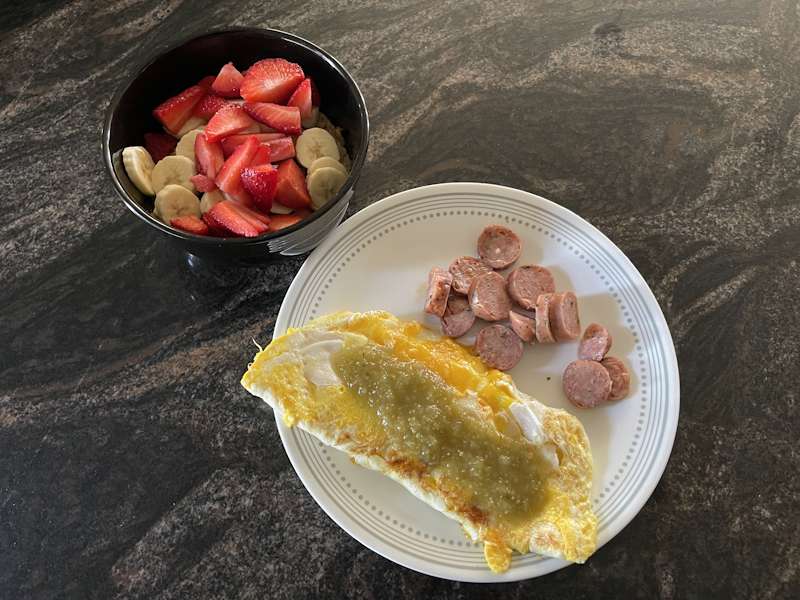
BREAKFAST: Total Calories: 1170
This breakfast routine is incredibly quick, and I can cook the entire meal in just 8 to 10 minutes.
First, I heat up my pan on the stove. Next, I pop my oatmeal into the microwave for 2 minutes, add the strawberries, nuts, and banana. While that cooks, I quickly load the dishes from the night before into the dishwasher. Then, I crack the eggs into the warm pan.
While the eggs cook, I slice the sausage and heat it in the microwave for 1 minute. Finally, I plate the eggs with the sausage, top them with salsa, grab a spoon and a water bottle, and dive in.
Boom! Everything is completely done in 10 minutes or less. If you are in a rush, just throw it all into a single bowl and eat it on the go.
The Ingredients;
1 Sausage Link: I love using Aidells Chicken & Apple Sausage, but their Habanero & Green Chile or Smoked Jalapeño flavors are also amazing if you like a little kick.
4 Large Eggs: I just spray a non-stick pan with oil and cook them up. If you want an omelette, you can toss in some PictSweet Veggies or add a sprinkle of cheese if you are extra hungry. If you need to cut calories, just swap them for 5 to 6 egg whites.
2 TBSP Green Salsa: I spoon this right over the eggs for an easy flavor boost. You can also use my homemade salsa recipe, which is super simple to whip up.
2/3 Cup Oatmeal: I like to top mine with walnuts, strawberries, and a banana. You can easily leave any of these out to keep the calories lower.
| Food Item (Serving Size) | Calories | Protein | Carbs | Fat | Fiber |
|---|---|---|---|---|---|
| Whole Eggs (4 large) | 288 kcal | 24.0g | 1.6g | 20.0g | 0.0g |
| Cheddar Cheese (1/3 cup) | 150 kcal | 9.3g | 0.5g | 12.0g | 0.0g |
| Herdez Salsa Verde (1/3 cup) | 15 kcal | 0.0g | 3.0g | 0.0g | 1.0g |
| Aidells Chicken Sausage (1 link) | 170 kcal | 13.0g | 3.0g | 12.0g | 0.0g |
| Oatmeal (2/3 cup dry) | 200 kcal | 7.0g | 36.0g | 3.5g | 5.3g |
| Walnuts (1/3 cup) | 215 kcal | 4.9g | 4.6g | 21.4g | 2.6g |
| Banana (1 medium) | 105 kcal | 1.3g | 27.0g | 0.4g | 3.0g |
| Strawberries (1/2 cup) | 27 kcal | 0.5g | 6.4g | 0.2g | 1.7g |
| Total Meal Profile | 1,170 kcal | 60.0g | 82.1g | 69.5g | 14.0g |
As you can see there is a lot of room to change this and make it less calories. But overall I like a large filling breakfast, because I only eat twice a day, once at 11 am and the other meal at 4 pm, the rest of the time I do intermittent fasting.
DINNER: Total Calories: 700
Usually every breakfast I have the same thing, and have never varied from that with some exceptions on the flavor of sausage, a different cheese, and maybe blackberries or blueberries instead of strawberries.
For dinner I choose from a view different options each week to have some variety. These all range in the sub 800 calorie range.
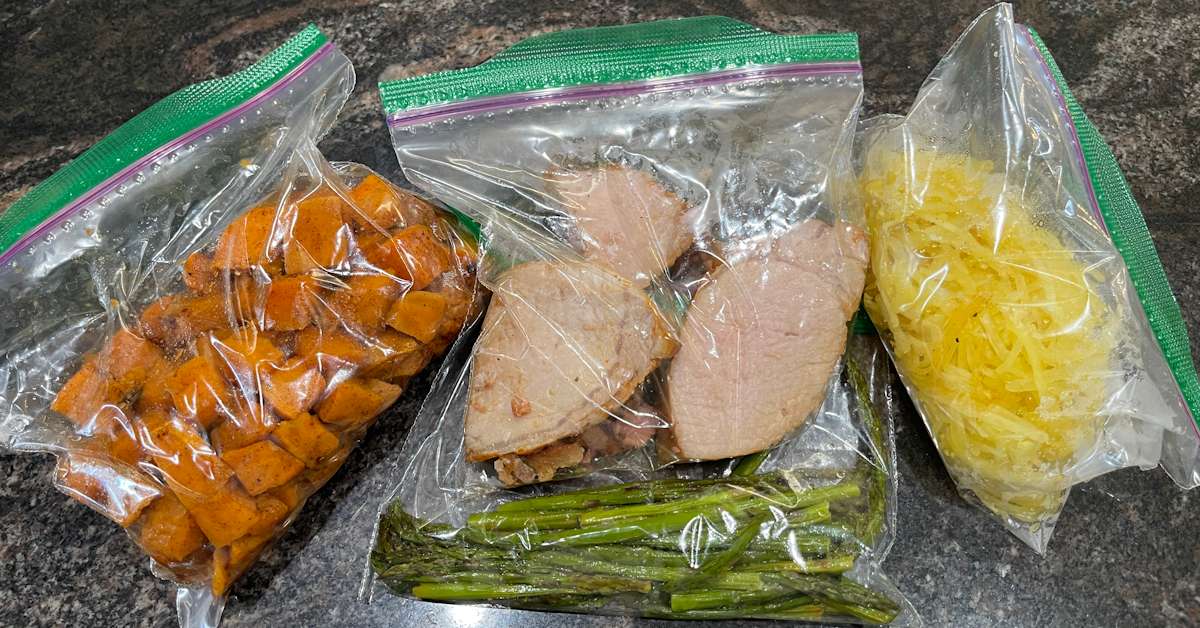
Pork Loin Meal Prep
This pork loin meal prep is easy to make, very filling, and not a lot of calories. It packs a lot of nutrients and tastes great.
| Food Item | Calories | Protein | Carbs | Fat | Fiber |
|---|---|---|---|---|---|
| Roast Pork Loin (6 oz) | 420 kcal | 44.0g | 0.0g | 24.0g | 0.0g |
| Sweet Potatoes (1 1/2 cups) | 172 kcal | 3.0g | 40.5g | 0.2g | 4.9g |
| Spaghetti Squash (1/2 cup) | 21 kcal | 0.5g | 5.0g | 0.2g | 1.0g |
| Asparagus (1/2 cup) | 20 kcal | 2.0g | 4.0g | 0.2g | 1.8g |
| Olive Oil Share (1/5 batch) | 48 kcal | 0.0g | 0.0g | 5.6g | 0.0g |
| Total Meal Macros | 661 kcal | 50.5g | 51.5g | 23.5g | 7.7g |
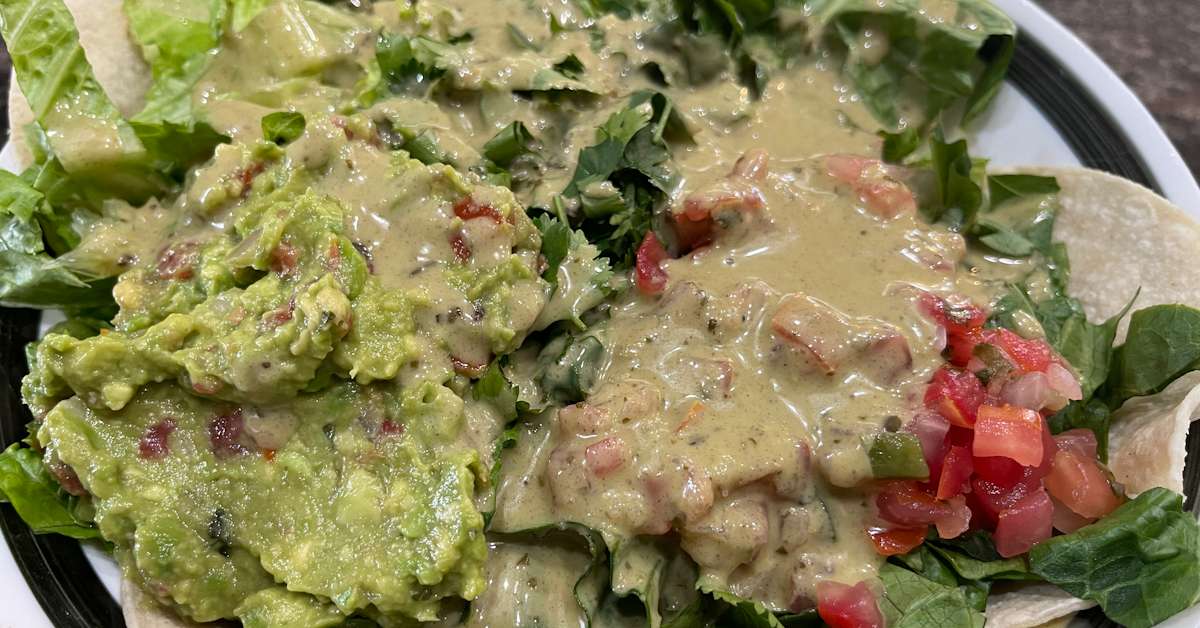
Easy to Make Copy Cat Cafe Rio Chicken Salad
This Cafe Rio copy cat salad meal prep stays fresh all week by cutting the romaine lettuce when needed. It is very filling and easy to assemble.
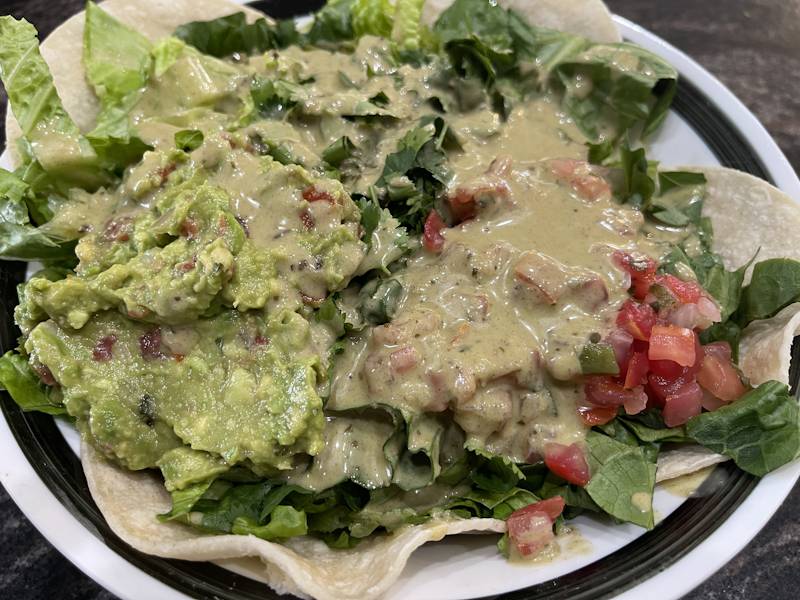
Including 5 warm corn tortillas as a side option for each daily bowl increases the energy profile while keeping the meal exceptionally clean.
| Nutrient | Per Daily Serving | 5-Day Meal Prep Total |
|---|---|---|
| Calories | 695 kcal | 3,475 kcal |
| Protein | 50g | 250g |
| Carbohydrates | 68g | 340g |
| Fat | 26g | 130g |
| Dietary Fiber | 15g | 75g |
My total calories for the day are below 2000 calories and as you can see my current meal plan allows me to increase or decrease calories needed based upon my activity levels.
| Meal Composition | Calories | Protein | Carbs | Fat | Fiber |
|---|---|---|---|---|---|
| Meal 1: Savory & Sweet Breakfast | 1,170 kcal | 60.0g | 82.1g | 69.5g | 14.0g |
| Meal 2: Pork Loin Meal Prep | 661 kcal | 50.5g | 51.5g | 23.5g | 7.7g |
| Your Combined Daily Totals | 1,831 kcal | 110.5g | 133.6g | 93.0g | 21.7g |
So how do you know if you are eating enough calories to maintain weight, lose or gain? Well it is very easy to figure out your BMR (Basal Metabolic Rate), here is how to do it and my example.
📊 Case Study: My Personal BMR
To show you how this works in the real world, here is my exact metabolic profile based on my personal metrics:
This means if I were to stay in bed all day without moving a single muscle, my body still requires exactly 1,707 calories just to sustain life functions like breathing, brain activity, and organ function.
What is Basal Metabolic Rate (BMR)?
Your BMR represents the total number of calories your body burns at rest just to keep you alive. It forms the absolute foundation of your daily energy needs before you factor in any movement, walking, working, or exercising.
How to Calculate Your Own BMR
Nutrition scientists use the globally validated Mifflin-St Jeor Equation to determine your baseline. To calculate yours, you must first convert your weight into kilograms (lbs × 0.4536) and your height into centimeters (total inches × 2.54), then apply the relevant formula below:
Common Baseline Examples
If you don’t want to do the math right now, look at these three common physical archetypes to find where your frame likely sits:
| Frame Type | Physical Profile | Est. BMR Baseline |
|---|---|---|
| Smaller Frame | Female, 30 yrs, 5’4″ (163 cm), 140 lbs (63.5 kg) | ~1,360 kcal/day |
| Average Frame | Male, 30 yrs, 5’10” (178 cm), 175 lbs (79.4 kg) | ~1,740 kcal/day |
| Larger/Muscular Frame | Male, 35 yrs, 6’0″ (183 cm), 215 lbs (97.5 kg) | ~1,960 kcal/day |
Ready to find your custom baseline?
Skip the manual math! Use an authoritative, trusted tool to calculate your numbers instantly.
Launch Free BMR CalculatorTo look at this practically: my baseline BMR is 1,707 calories, but that number spins drastically when we factor in active movement. Calculating your baseline BMR is only step one; you must overlay your TDEE metric to find your functional daily calorie target. Knowing your TDEE gives you total control over your physique, allowing you to seamlessly tweak your meal planning to maintain, drop fat, or bulk up.
⚡ What is TDEE?
While your BMR covers your basic survival energy, your Total Daily Energy Expenditure (TDEE) is the actual number of calories your body burns every 24 hours once walking, working, cooking, and working out are factored in.
Your TDEE is determined by taking your resting BMR and multiplying it by an Activity Factor multiplier. Finding this number is the ultimate secret to mastering weight management.
Case Study: My Custom TDEE & Deficit Targets
Based on my personal baseline BMR of 1,707 calories, watch how shifting daily activity completely changes my caloric thresholds:
| Activity Level | Multiplier | Daily Maintenance | Healthy Fat Loss (-500 kcal) |
|---|---|---|---|
| Sedentary Desk job, little to no exercise |
BMR × 1.2 | 2,048 kcal | 1,548 kcal |
| Lightly Active Light exercise 1–3 days/wk |
BMR × 1.375 | 2,347 kcal | 1,847 kcal |
| Moderately Active Intense gym sessions 3–5 days/wk |
BMR × 1.55 | 2,646 kcal | 2,146 kcal |
| Very Active Hard daily training or physical job |
BMR × 1.725 | 2,945 kcal | 2,445 kcal |
So there you have it, it is incredibly simple once you get the baseline numbers sorted out. On a normal day, I eat roughly 1,800 to 2,000 calories. Even if I am completely sedentary all day, that intake keeps me perfectly balanced within my maintenance targets.
On days when I hit the gym or hit the court for some pickleball, I create a massive energy cushion. I can either use those active slots to enjoy a little extra food or “bank” the deficit to accelerate fat loss. As a general rule of thumb, maintaining a consistent 500 calorie daily deficit will result in losing 1 pound of body fat per week.
By putting in four days of moderate training and keeping the rest lightly active, I stay well within those safe fat loss parameters. When you skip the over complication and keep your tracking metrics simple, you can effortlessly put your daily nutrition and weight maintenance on complete autopilot.