The Dream of 5.0: My 4.5 to 5.0 Pickleball Transition Plan
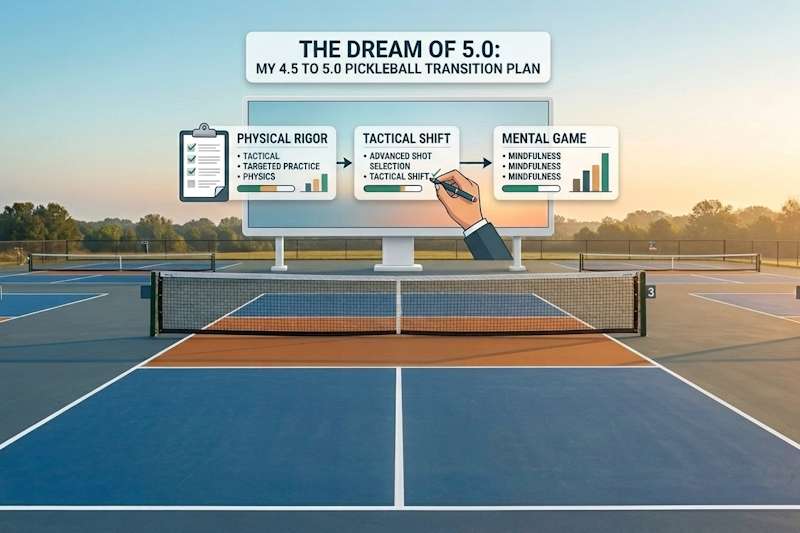
The Spark: Launching My Dream Journey to 5.0
So I have been stuck at a DUPR rating of 4.5 for several years now. I always wished to break past that rating and achieve elite status, 5.0 or higher. I flirted with taking a year off to improve my game but never could pull the trigger. Now I am ready!
I want to share this journey to 5.0 with you as a way to hold myself accountable, develop achievable goals, and follow a plan tailored to me. I am not selling anything, or asking for fees to view my program. I just looking at the research, science, and community to point me in the right direction.
Pickleball content is everywhere, but it isn’t one size fits all. Your body mechanics, physical restrictions, mental fortitude, and learning style are completely unique to you. Because of that, my approach focuses heavily on the engineering of the game. If you understand the fundamental how and why behind a choice, you can easily adapt it to fit your own physical style.
So learn from my mistakes, develop your own plan, run your own experiments, and drive your own self learning to master the court. Follow along with my complete, step by step training logs and match blueprints below as they drop in chronological order.
The Dream of 5.0: Will I Actually Make It?
Let’s be entirely honest: this is a dream journey, and there is no guarantee of success. Breaking past a years long plateau at 4.467 to establish a true, verified 4.5 to 5.0 pickleball transition is incredibly difficult. The math behind the DUPR algorithm gets brutal as you climb, and the technical margin for error shrinks to almost zero.
Will I actually make it? I don’t know.
But that uncertainty is exactly why I am doing this publicly. I want to find out if a disciplined, highly structured approach can actually rewrite muscle memory and break a hard plateau. I am willing to fall flat on my face, document my mechanical breakdowns, and share the ugly side of development if it means uncovering the real truth of how a player improves.
Pre-Training Contemplation & Getting Ready
Before striking a single ball, I am focusing heavily on preparation. Moving to the next level requires removing every single variable from the equation, and that starts with my gear and my approach to playing the game. Here is what I am currently mapping out to get my mind and body ready:
Standardizing the Equipment Arsenal
At the 4.5 level, it is incredibly easy to fall into the trap of buying every new paddle that hits the market, hoping it holds the secret to a better game. I am stopping that completely to focus on total consistency.
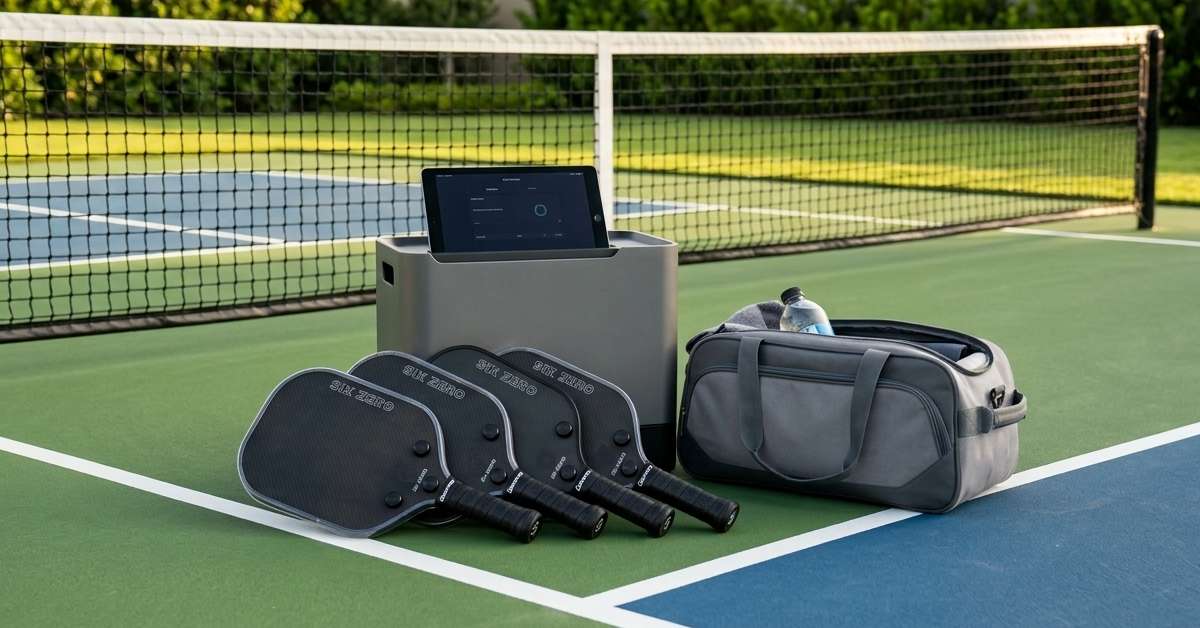
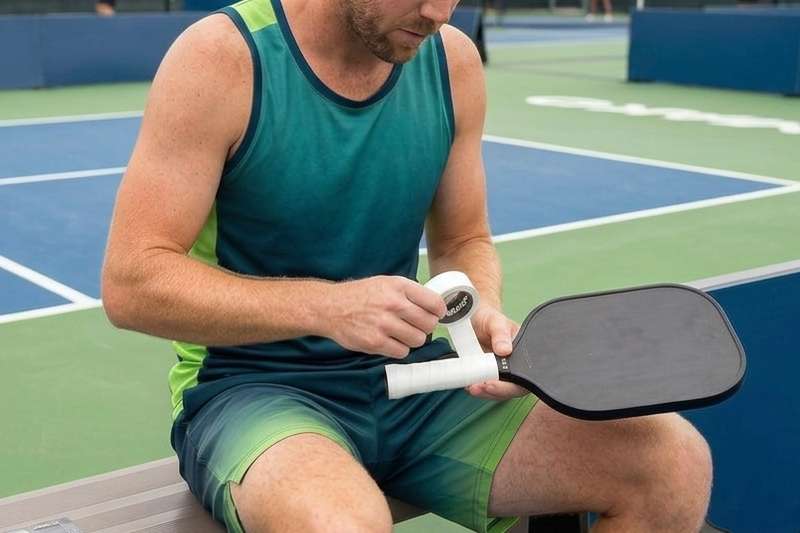
- The Paddle Setup: I am tracking down a single paddle model that fits my mechanics perfectly. I plan to buy identical duplicates and calibrate them to the exact same weight, balance point, and handle size. This means using the exact same overgrip tape and replacing it regularly before tackiness fades. By matching both the lead tape placement and the grip feel perfectly across every duplicate paddle, I can completely erase variable spin, power, and handle profiles.
- Premium Shoes: To move like an elite player, I need shoes built for rapid side to side changes of direction. Running shoes or generic sneakers are designed mostly for moving forward; they lack proper ankle support and can easily slide or fold when you try to change directions quickly. I am investing in high end court shoes that feature extra rubber and plastic support built right into the outer edges of the sole. Think of these outer edges as extra stability for your feet. They prevent the shoe from rolling over when making hard, sudden stops. Progressing to the 5.0 level means learning how to slam on the brakes quickly. Having rigid side supports protects my ankles, stops my feet from sliding inside the shoe, and prevents structural knee or joint injuries under heavy match pressure.
What to Read Next: Why I Chose the Selkirk ProStrike 3.0 to Fix My Footwork Problem
If you want an honest, unbiased look at why this is the exact shoe I ultimately chose for my 1 year journey, check out my full Selkirk ProStrike 3.0 Review. This deep dive breaks down the actual performance science behind its court traction, how its tight toe box redesign impacts wide feet, and how its strict 6 month sole warranty holds up under real match pressure.
- The Ball Machine Choice: I am heavily contemplating purchasing a high end ball machine. Human drilling partners are great, but a machine doesn’t get tired, doesn’t complain, and can feed the exact same spin, depth, and pace 10,000 times in a row. To rewrite muscle memory, I need that raw, robotic consistency.
Changing How I Play: Match Play as a Lab
The biggest mental shift I am forcing myself to make right now is how I view recreational and competitive match play. Up until today, I stepped on the court with one objective: win the match. If I won a messy match by hitting wild, low percentage scrambles, my brain counted it as a success.
That habit stops now. And believe me when I tell you that this is a lot harder to do than you would think. Ignoring the score in favor of progression is a very hard thing to do.
Moving forward, I am entirely decoupling my ego from the scoreboard. I am entering every competitive match with explicit, isolated skill targets. Winning or losing the game doesn’t matter; what matters is whether I hit my targets under pressure.
- If I lose a game 11-9 but let 100% of out-balls pass by, it’s a win.
- If I win a game 11-2 but panic and speed up three low balls from below the net tape, it’s a developmental failure.
- If I limit drives to 60% power, hit soft resets into the kitchen from the transition zone, and prioritize shot selection over ego, its a win.
Matches are no longer about points they are a live fire laboratory to test my technical discipline under duress.
Harnessing the Power of Club Film
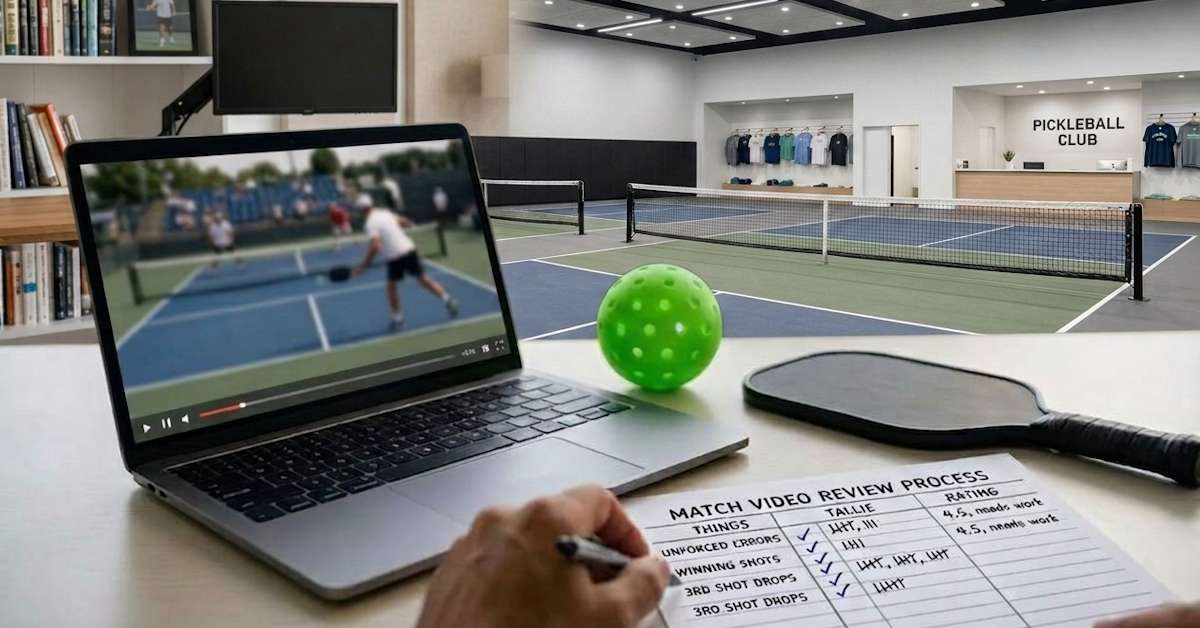
One of the biggest advantages I have in this journey is my pickleball club’s automatic recording system, which captures every single match I play. This completely eliminates the tech frustration of setting up tripods or managing camera settings. Instead, it gives me a steady, objective stream of research data ready to audit within hours of playing.
Moving forward, I am using this footage to run a highly simplified, visual tally mark review method. By analyzing the exact millisecond of ball contact against structural boundaries, I can instantly separate technical swing flaws from poor shot selection choices. This turns my match film into a precise blueprint for my next drilling session.
Core Targets for the 4.5 to 5.0 Pickleball Transition
Based on community research and elite match analysis, these are the non negotiable data targets I must hit during live fire testing to track my progression toward the next level:
- The 3rd-Shot Drop Cap: Hit an 80% shallow success rate into the kitchen during dynamic drills.
- The 60% Topspin Drive Regulation: Maintain an 85% success rate forcing low volleys without hitting the net tape at 60% power.
- The Mid-Court Reset Stabilizer: Achieve a 75% success rate turning aggressive opponent attacks into unattackable kitchen drops from the transition zone to completely reset point pressure.
- The Below-Net Attack Filter: Maintain 100% decision safety on any ball contacted below the net tape (zero unforced errors from premature speed ups).
- The Visual Out-Ball Pass: Achieve a 90%+ pass rate letting shoulder high, deep baseline flying balls drop out of bounds.
The Experiment Begins: Turning the Page
I know the odds are stacked against me. Breaking a multi-year plateau at 4.5 and stepping into the 5.0 tier means completely rewriting my court habits, my muscle memory, and my tactical processing. It means failing publicly, capturing my worst mechanical breakdowns on film, and letting go of the comfort of just playing to win the match.
But the plan is in motion. My equipment is on order, and thanks to my club’s recording system, the data is ready to review. I am forcing myself to stop guessing and start measuring every single variable. This isn’t about looking for a quick fix; it’s a massive, year long effort to see exactly how far structured self learning can take a player.
Can a 4.5 player actually engineer a path to elite status, or will I hit a hard ceiling? I honestly don’t know the answer yet, but I am ready to run the numbers and find out. The first steps start soon. So check back often and let’s see what’s possible.