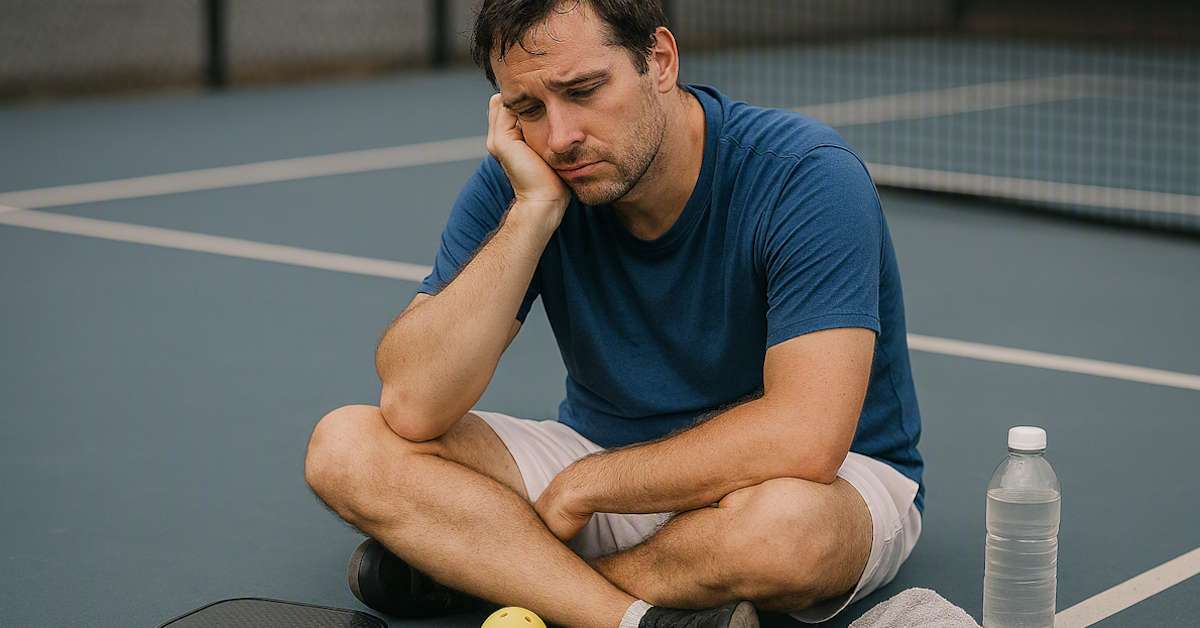
Pickleball Injury Report 2026: Recent Injury Data for Pickleball Players Over 50
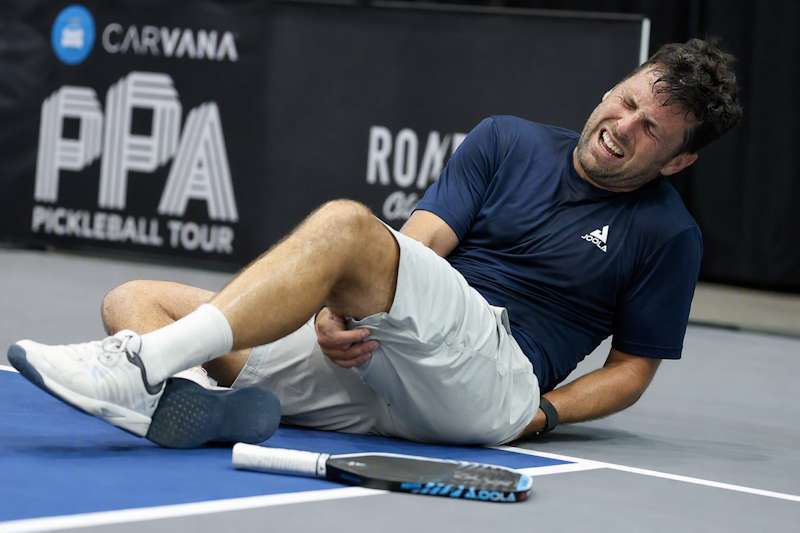
Pickleball Injury Report 2026: What the Research Actually Says
Pickleball has a reputation problem.
On one side, it’s the sport almost anyone can pick up: social, easy to learn, playable well into your 70s and beyond. On the other side, the injury numbers keep climbing, and they climb faster than the sport’s own explosive growth.
One nationwide study found that 68.5% of pickleball players reported an injury or physical complaint in the past 12 months. A ten year national emergency department analysis put the injury count at 77,963, with 91% occurring in players age 50 and older. And a newer line of research is tracking a problem that barely existed in the conversation five years ago: pickleball related eye injuries, which are rising faster than eye injuries in almost any other sport.
This is the our first edition of the Pickleball Injury Report 2026, an annual breakdown of what the current research actually says: where the numbers come from, why they vary so much, who’s most at risk, and what’s changed in the last year. No blame games over courts or players, no gear reviews. Just the data.
The Quick Answer
Pickleball is not an outlier among racquet or recreational sports in overall injury rate, but it is unusually concentrated in older adults, unusually prone to fractures caused by falls, and it has a fast growing eye injury problem that most players still aren’t protecting themselves against. The exact percentage you’ll see quoted (24%, 39%, 68.5%) depends almost entirely on how the study defined “injury” and who it surveyed, not on some contradiction in the underlying reality.
Pickleball Injury Report 2026: The Big Numbers
Three major sources currently anchor pickleball injury data, and each measures something different.
The nationwide player survey. A 2025 cross sectional study of 1,758 pickleball players nationwide (mean age 62.7) found a 12 month injury prevalence of 68.5%, counting any physical complaint tied to play. Of that group, 40.8% stopped playing for at least a day because of the injury, and 51.2% played through it. A follow up analysis of the same group of players, published in early 2026, looked specifically at injuries to the shoulder, elbow, and wrist, and found a 39.0% prevalence, higher in men (42.0%) than women (37.0%).
The emergency department data. A ten year national analysis of emergency department records (2013 to 2022) estimated 77,963 pickleball related injuries nationally, with fractures (27%) and sprains (27%) as the leading diagnoses and 91% of injuries occurring in players 50 and older. A separate, more recent analysis covering just 2020 to 2022 found that annual ED visits nearly doubled in two years, from an estimated 8,894 in 2020 to 16,997 in 2022, a 91% increase, while hospital admissions rose 257% over the same period, from 992 to 3,541. Players 65 and older were 2.48 times more likely to be hospitalized than younger players.
The emerging eye injury data. A 2025 JAMA Ophthalmology study using emergency department data from 2005 to 2024 estimated 3,112 pickleball related eye injuries nationally, including roughly 1,262 in 2024 alone, with the annual case count climbing by an estimated 405 injuries per year between 2021 and 2024. A 2026 follow up study found that despite this, only 38.81% of amateur players who wear any eyewear on court are wearing dedicated protective eyewear rather than regular prescription glasses.
The first lesson in reading pickleball injury statistics is simple: the number you see depends on what the researchers counted, not on a disagreement about reality. A study built around player surveys captures every sore elbow. A study built around emergency department visits only captures injuries serious enough to need a hospital visit. Neither is wrong. They’re measuring different slices of the same problem.
Why the Numbers Vary So Much
You’ll see pickleball injury rates quoted anywhere from roughly 24% to 68.5%, and it’s tempting to assume the research is inconsistent. It isn’t. It’s measuring different populations with different injury definitions.
- Nationwide surveys (like the 68.5% figure) count any physical complaint tied to play, including pain that never stopped someone from playing or seeing a doctor.
- Emergency department studies only capture injuries serious enough to require a hospital visit, a much narrower and more severe slice.
- Tournament and single institution studies capture players who were healthy enough to compete, or who sought care at one specific clinic or hospital system, which skews the population.
A player with a sore elbow who keeps playing shows up in a survey study. That same player will likely never appear in an emergency department database. Both are legitimate data points. They just aren’t the same data point, and conflating them is where most “pickleball is dangerous” headlines go wrong.
The Most Common Pickleball Injuries
The clearest current picture of which injuries are most common comes from the 1,758 player nationwide survey, the largest and most recent dataset of its kind. Its breakdown by body region:
| Body Region | 12-Month Prevalence | Notes |
|---|---|---|
| Knee | 29.1% | Highest reported prevalence of any single region in the survey |
| Lower extremity (thigh, leg, foot combined) | 26.9% | Falls and rapid changes of direction dominate |
| Shoulder | 22.2% | Overhead shots and falls |
| Back | 19.9% | Repeated rotation and bending |
| Elbow | 18.4% | Overuse from repetitive loading |
Emergency department data tells a related but distinct story, since it captures injury type (what got hurt) rather than body region alone, and it skews toward more severe cases:
| Injury Type | Share of ED Injuries | Source Study |
|---|---|---|
| Fractures | 27 to 29% | 10 year emergency department analyses, 2013 to 2022 |
| Sprains and strains | 21 to 33% | Range across emergency department studies of different periods |
| Contusions | About 11% | Study of senior players’ emergency department visits, 2010 to 2019 |
A caution on comparing these two tables: the survey table measures how often players report a problem in a given body region, including problems that never needed medical care. The emergency department table measures what type of diagnosis shows up when someone is injured badly enough to go to the hospital. A fracture will almost always show up in the emergency department table; a nagging shoulder ache will almost always show up in the survey table. Treat them as two different lenses on the same sport, not competing rankings.
Overuse injuries deserve their own call out. A 2025 study of 253 recreational players found 41% reported at least one injury to the shoulder, elbow, or wrist: 10% acute and 37.5% chronic or overuse related. Chronic injury was significantly more common among players who had played more than two years, played at a higher skill level, or played more than six hours a week. Playing longer or more frequent sessions raised injury risk by 1.51 to 1.53 times; playing on consecutive days raised acute injury risk nearly five fold (relative risk 4.97) compared with players who took rest days between sessions.
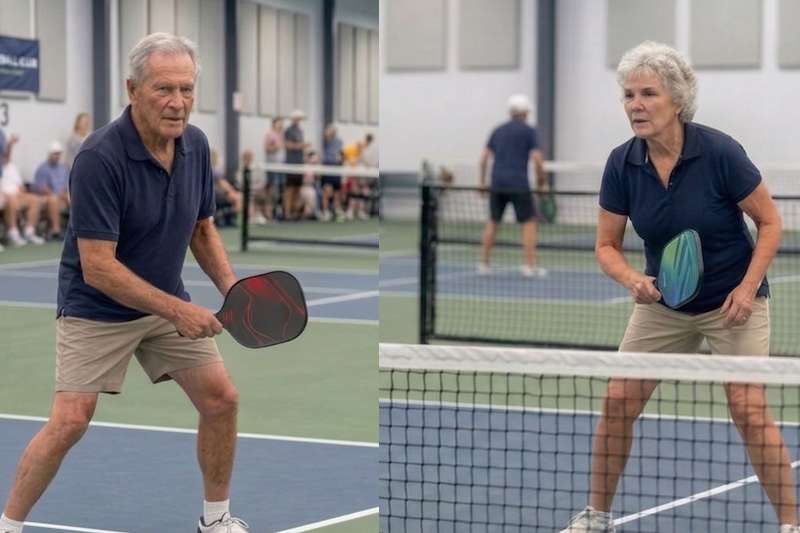
Injury Statistics by Gender
The gender picture is more nuanced than “one sex gets hurt more.”
- Overall injury prevalence skews slightly male. In the nationwide follow up study on shoulder, elbow, and wrist injuries, 42.0% of men reported an injury in the past year versus 37.0% of women.
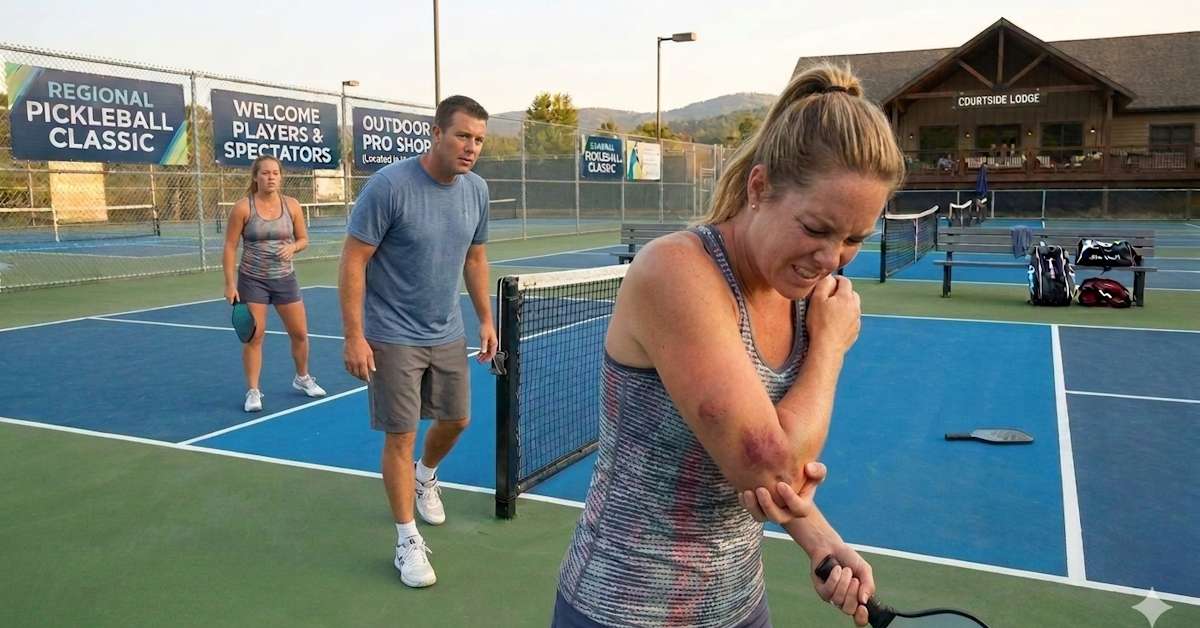
- Fracture cases skew female. A 2026 analysis of emergency department visits for shoulder, elbow, and wrist injuries from 2015 to 2024 found women accounted for 68.5% of those cases, and patients 60 and older accounted for 84.5%. Among those injuries, 45% involved the wrist and 68.7% were classified as fractures.
- One broader emergency department study found a nearly even split. A 2012 to 2022 analysis of orthopedic injury visits found a slight female predominance overall (51.2%), with fractures (39%) and sprains or strains (36%) as the leading diagnoses.
The practical read: men report a higher overall injury rate in survey data, but women are disproportionately represented in the more severe, fracture heavy end of the injury spectrum, particularly wrist fractures from falls. In short, men get hurt more often, but women face much more severe injuries.
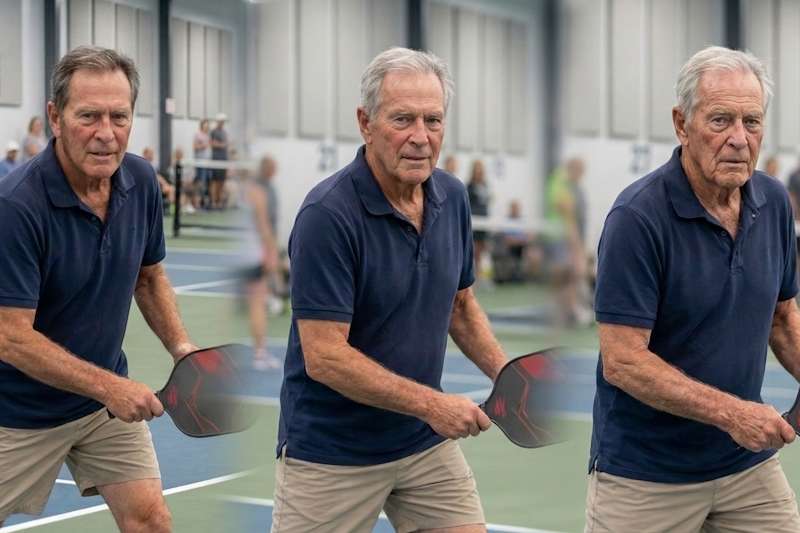
Injury Statistics by Age
Age is the single biggest driver in the emergency department data.
- 91% of injuries in the ten year analysis (2013 to 2022) occurred in players 50 and older.
- 73% occurred specifically in the 60 to 79 age range in the more recent 2020 to 2022 data.
- Mean patient age across emergency department studies ranges from about 62 to 67 years old.
- Players 65 and older were 2.48 times more likely to be hospitalized than younger players after a pickleball injury, according to the 2020 to 2022 analysis.
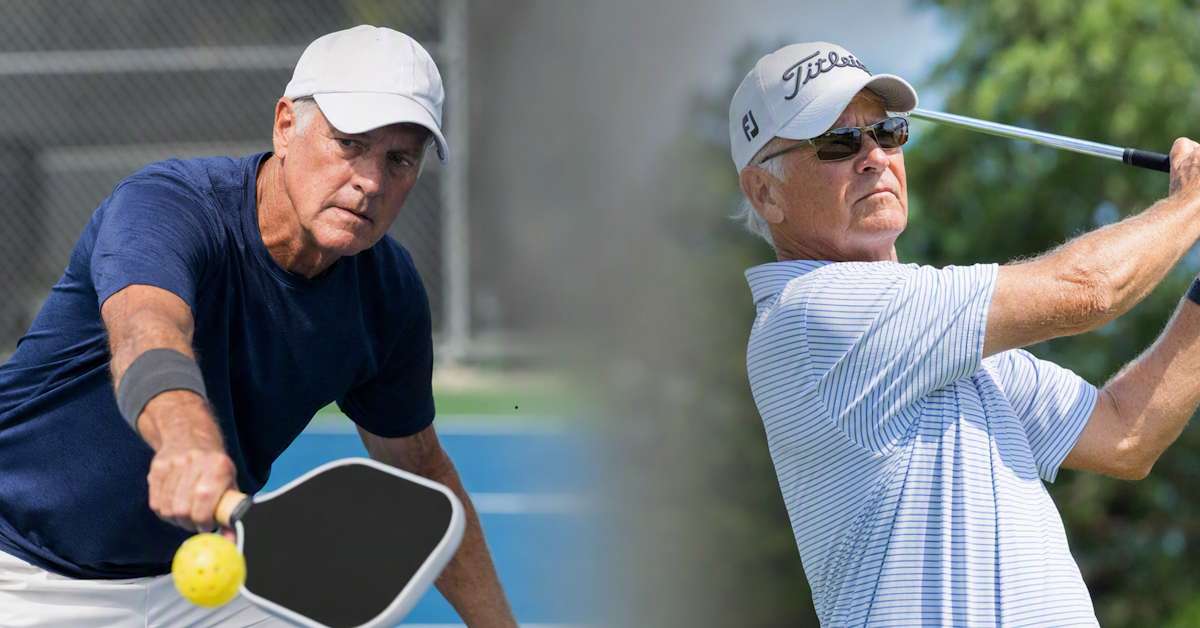
Context matters here: the player population itself skews older, so a higher raw injury count among older players is partly a function of who’s on the court. But researchers behind the nationwide survey also identified what might be called an adaptive play effect: evidence that the oldest players in the dataset didn’t necessarily carry the highest individual injury odds, suggesting that experienced older players may moderate their intensity, warm up more deliberately, and pace themselves in ways that offset some of the physical risk that comes with age. That’s a finding about behavior, not biology, and it’s one of the more interesting threads in the current research.
Does Skill Level Change Your Risk?
The research here is genuinely mixed, and that’s worth stating plainly rather than picking a side.
The 2025 study of everyday players highlights a clear trend: the better you are, and the more you play, the more likely you are to develop chronic shoulder, elbow, or wrist pain. Specifically, the risk jumps if you play for more than two years or put in over six hours a week. Surprisingly, stretching, strength training, or whether you are male or female didn’t seem to make a difference.
The big takeaway from these studies is that skill level isn’t actually what causes injuries. Better players simply get hurt more because they play longer, more often, and hit the ball harder putting way more wear and tear on their bodies. Beginners face a completely different problem: they get hurt because they use bad form, not because they are playing too much.
Eye Injuries: The Fastest Growing Category
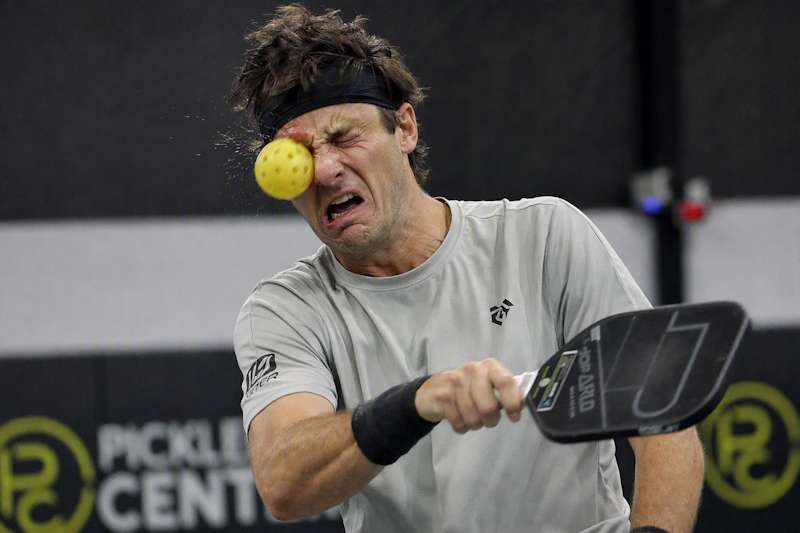
Eye injuries are not among the most frequent pickleball injuries by volume, but they’re the category with the steepest recent trajectory, and the one most players are currently unprotected against.
The 2025 JAMA Ophthalmology study (emergency department data, 2005 to 2024) found:
- An estimated 3,112 pickleball related eye injuries nationally over the 20 year window, with 1,262 in 2024 alone.
- The annual injury count grew by roughly 405 cases per year between 2021 and 2024, a period in which eye injuries in most other racquet and ball sports were flat or declining.
- Mechanisms: direct ball impact (43%), falls (28%), paddle impact (12%).
- Injury types: laceration around the eye (35%) and corneal abrasion (16%) were most common, but more serious outcomes also showed up, including orbital fracture (2%), retinal detachment (3%), and globe trauma (3%).
- Players 50 and older accounted for a disproportionate share of eye injuries; the mean age for eye injuries caused by falls specifically was around 68.
A 2026 follow up study examined why this keeps rising: it compared eyewear habits among professional and amateur players and found that most amateur players who wear any eyewear on court are wearing regular prescription glasses rather than eyewear rated for racquet sports. Only 38.81% of glasses wearing amateurs had dedicated protective eyewear. The American Academy of Ophthalmology has specifically recommended eyewear rated for pickleball given these trends.
This is arguably the single biggest gap between what the injury data shows and what players are actually doing about it.
What the Data Actually Tells Us
Pulling the year’s research together, a few patterns hold up across nearly every study design:
- The headline number depends entirely on the definition used. 24%, 39%, 68.5%: these aren’t contradictions, they’re different measurement scopes.
- Falls are the dominant mechanism behind serious injuries, especially for players 50 and older.
- Fractures are disproportionately consequential. They’re not always the single most common injury, but they drive most of the hospitalization and severity data.
- The knee and lower extremity carry the highest prevalence in survey data.
- Chronic overuse injury tracks with playing volume and skill level together, not skill level alone.
- Men report a higher overall injury rate; women are overrepresented in severe fracture and upper extremity cases.
- Players 50 and older dominate emergency department statistics, but the oldest players in survey data don’t automatically carry the highest individual risk. Behavior appears to modify it.
- Eye injuries are the fastest growing injury category in the current data, and protective eyewear adoption is lagging well behind the trend.
- The most recent data (2020 to 2022 injury counts, 2021 to 2024 eye injury counts) shows the injury burden accelerating faster than the growth in the number of players, per multiple independent analyses.
The most important number in this report may not be 68.5%, or 91%, or 77,963. It’s the trajectory: injury volume, hospitalization rates, and eye injury incidence are all rising faster than participation itself. That’s the story worth revisiting again next year.
What to Read Next
How pickleball’s injury rates actually stack up against tennis, golf, running, cycling, and weight training, and why age, not the sport itself, drives most of the real risk after 50.
Sources
- Owoeye et al. “Understanding Injury Patterns and Predictors in Pickleball Players: A Nationwide Study of 1,758 Participants.” Sports Medicine, Open, 2025.
- “Understanding Upper Extremity Injury Prevalence and Risk in Pickleball Players: A Nationwide Survey.” JOSPT Open, 2026.
- “Rising Orthopedic Injuries in Pickleball: Insights from a 10 Year National Study” (emergency department data, 2013 to 2022). American Orthopaedic Association affiliate summary, 2025.
- “A Substantial Increase in Injuries and Hospitalizations Associated With Playing Pickleball From 2020 to 2022.” Arthroscopy, Sports Medicine, and Rehabilitation, 2025.
- “Orthopaedic injuries in pickleball players: A 10 year epidemiologic study” (emergency department data, 2012 to 2022). ScienceDirect, 2025.
- “Non-fatal senior pickleball and tennis-related injuries treated in United States emergency departments, 2010 to 2019.” Emergency department analysis.
- “Clinical characteristics and annual incidence of pickleball-related upper extremity injuries among patients presenting to emergency departments, 2015 to 2024.” ScienceDirect, 2026.
- Lacher CR, Koc I, Tsui JC. “Pickleball-Related Ocular Injuries Among Patients Presenting to Emergency Departments.” JAMA Ophthalmology, 2025.
- Henick D, Debroff B, Tahvildari M. “Pickleball Players’ Reported Use of Protective Eyewear.” JAMA Ophthalmology, 2026.
- “Overuse Injuries and Epicondylalgia in Recreational Pickleball Players” / “Risk of Upper Extremity Injury in Recreational Pickleball Players.” Journal of Functional Morphology and Kinesiology, 2025.