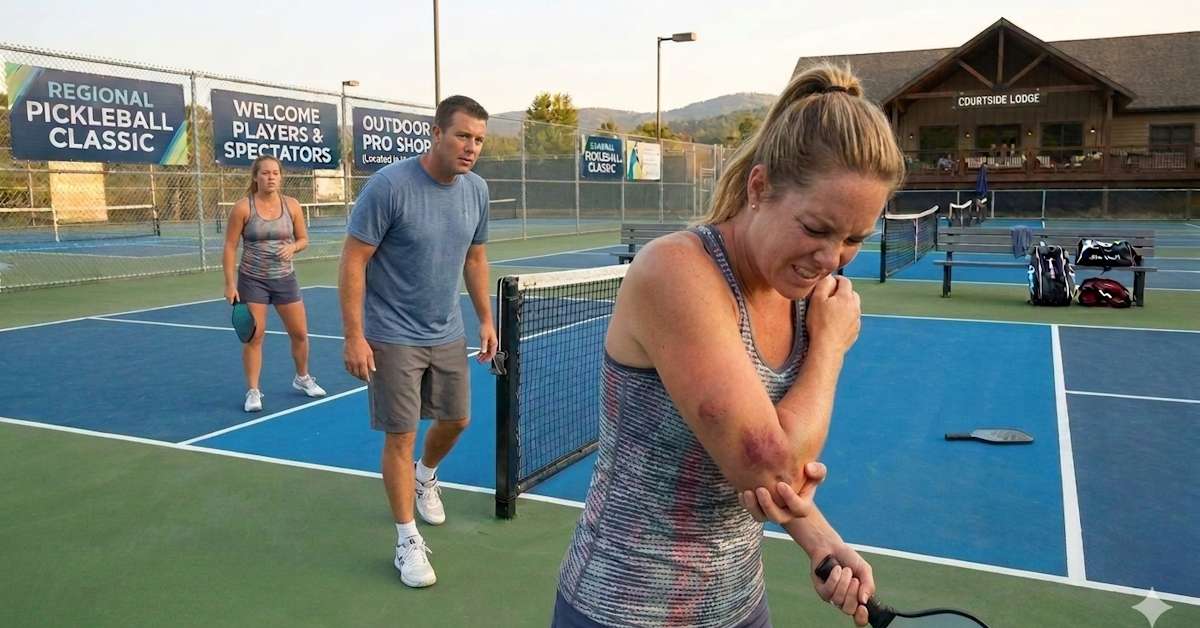
The Science of Heavy Legs: How to Fix Pickleball Muscle Fatigue Mid-Match
Overcoming Pickleball Muscle Fatigue: An Arizona Summer Wake-Up Call
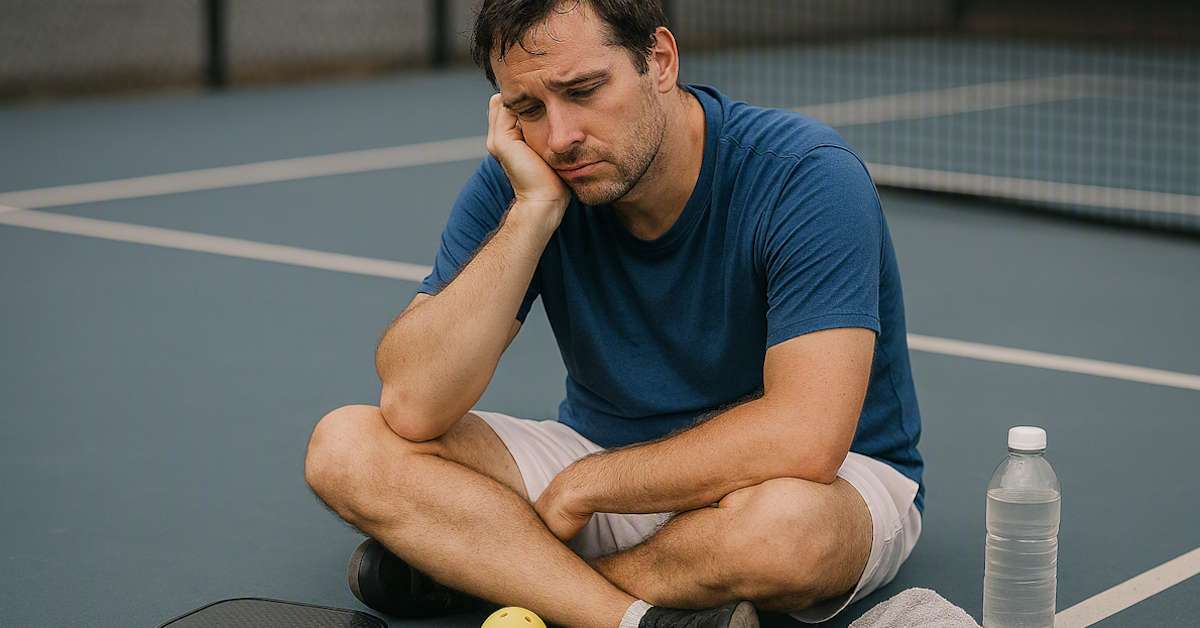
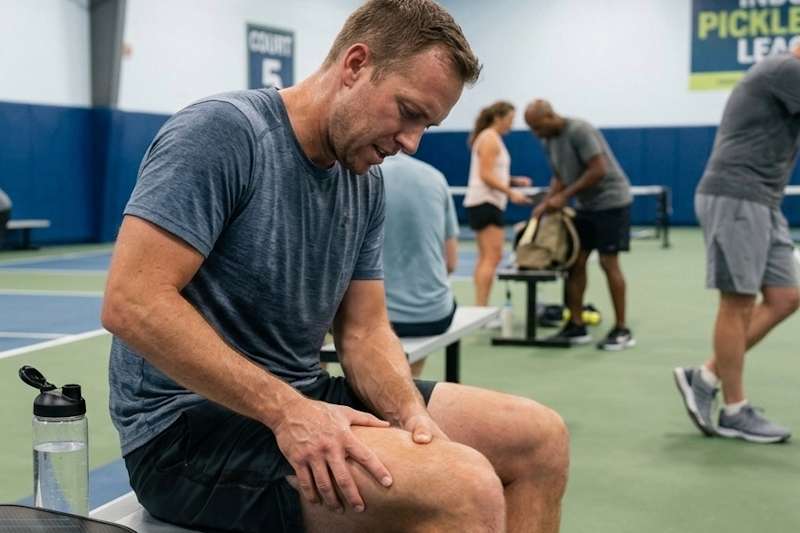
It starts as a gradual, heavy slowdown right in the upper thighs. Within an hour of play, that worn down sensation transforms into a deep, unresponsive deadness in the quadriceps. You try to explode forward from the kitchen line to cover a shallow drop shot, but your primary power muscles simply refuse to fire.
For a long time, I did not pay much attention to hydration. Like many players, I treated it as an afterthought, something to fix with a few casual sips of water if I felt thirsty between games. I blamed my heavy, unresponsive legs on poor conditioning or just a tough day on the court.
However, once the brutal Arizona summer heat arrived, my legs began hitting an absolute wall during my 7:00 AM to 9:00 AM indoor sessions. The gradual slowdown in my thighs became too severe to ignore.
Realizing I needed to make a radical change to save my game, I set out to fix the problem through serious hydration. I built what looked like a flawless routine: a sugar-free electrolyte and energy packet before stepping onto the court, and two scoops of an amino electrolyte sport blend in up to 48 ounces of water to sip during my matches. My calves felt fine and I rarely ever cramped, yet the heavy lock down in my thighs remained.
As a newcomer to specialized hydration, I quickly learned that fluid volume is only half the battle. Because I practice intermittent fasting, competing during hours 14 and 15 of a strict 5:00 PM to 11:00 AM fasting window, the combination of an empty glucose tank and an Arizona summer created a highly specific metabolic trap.
While my personal breakthrough required a unique night before carbohydrate loading strategy to protect my fasting lifestyle, my journey highlighted a universal truth that applies to every single player on the court: Most pickleball players are profoundly dehydrated, and they do not even know it.
For the masses who eat on a standard schedule, the science of court hydration operates on strict biological rules. Understanding the precise mechanics of fluid dynamics is the only way for any player to eliminate lag, prevent performance drop offs, and keep their muscles moving at peak velocity.
The Cellular Mechanics of Muscle Movement
To understand why dehydration causes your muscles to feel heavy and unresponsive, you have to look at how muscle fibers contract. Every step, split-step, and lunging volley requires an electrical signal to pass from your nervous system into your muscle fibers.
- The Sodium-Potassium Pump: Your muscle cells maintain an electrical charge across their membranes. When your brain signals a muscle to move, sodium rushes into the cell and potassium rushes out. This shift creates an electrical current.
- The Calcium Trigger: This current triggers the release of calcium within the muscle fiber, which allows the muscle proteins (actin and myosin) to bind and slide past one another, shortening the muscle.
- The Relaxation Phase: Energy (ATP) is then used to pump calcium away and reset the sodium and potassium levels.
When you are dehydrated, the fluid volume outside your cells drops. This shifts the concentration of these critical minerals, causing the electrical signals to misfire. The mechanism comes down to how muscles receive their contract and relax signals. Sodium, potassium, and magnesium are what your nerves use to fire signals to your muscle fibers.
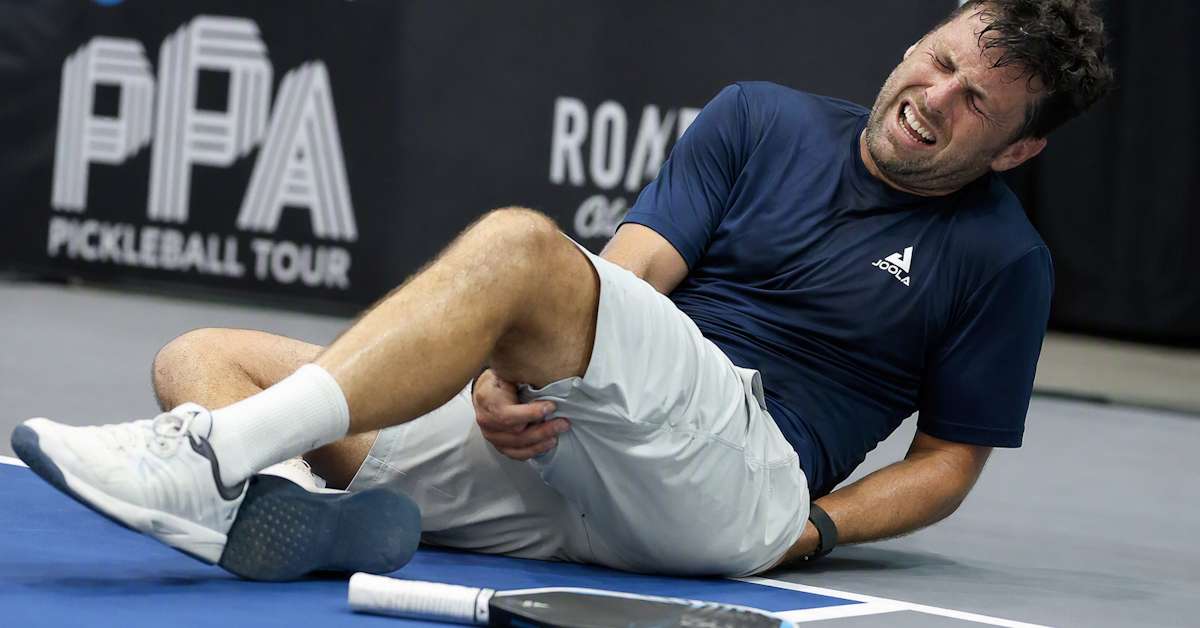
When those electrolytes are depleted, largely lost through sweat, not through breathing or urination, the signaling gets noisy. Muscles fire poorly or fail to relax properly. The result is systemic pickleball muscle fatigue that pulls down your physical output.
The Pickleball Micro Climate and Fluid Loss
Pickleball possesses a deceptive metabolic profile. Because the court is smaller than a tennis court, players often underestimate the physical exertion involved.
- High Frequency Deceleration: Pickleball requires near constant acceleration, sudden stopping, and lateral shuffling. This eccentric loading damages muscle fibers faster than straight line running, generating immense internal heat.
- The Kitchen Micro Climate: Standing at the non-volley zone line involves sustained isometric squatting. Your quads and calves remain under continuous tension, restricting localized blood flow and accelerating heat buildup in the lower extremities.
To cool itself, your body diverts blood away from your working muscles and toward your skin to produce sweat. If your blood volume drops due to fluid loss, your body can no longer effectively cool itself or deliver oxygen to your legs. Your muscles are starved of energy, leading directly to deep, aching leg pain and localized pickleball muscle fatigue.
Why Water Alone is Not Enough: The Hidden Performance Risk
Many players recognize they are sweating and respond by chugging gallons of pure water. On a hot day, this can actually make your performance worse.
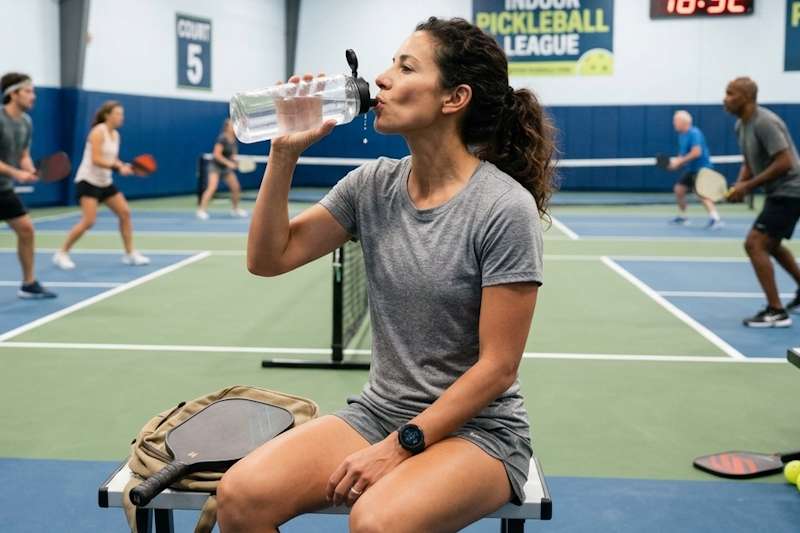
When you sweat, you lose both water and essential salts, primarily sodium. If you replace that loss with plain water, you dilute the remaining sodium in your bloodstream. This medical condition is known as hyponatremia. When blood sodium drops too low, water rushes into your cells to balance the concentration, causing the cells to swell. In your muscles, this disruption ruins the sodium-potassium pump mechanism.
Researchers at Edith Cowan University found that athletes who drank plain water during and after exercise in the heat were more prone to muscle issues than athletes who drank an electrolyte enhanced solution, even though both groups lost similar amounts of fluid. The lead researcher’s conclusion was pointed: a lack of electrolytes, not dehydration on its own, appears to be a bigger driver of physical failure than commonly assumed.
This lines up with a controlled study published in the Journal of the International Society of Sports Nutrition. After a run in the heat, athletes who rehydrated with an electrolyte solution showed decreased susceptibility to muscle failure, while athletes who rehydrated with plain water showed increased susceptibility, despite replacing the same volume of fluid. Their blood sodium and chloride levels told the story: they dropped after plain water, and held steady after the electrolyte drink.
The practical takeaway is this: replacing fluid without replacing sodium is an incomplete strategy, especially once you are sweating heavily for more than an hour.
The Heavy Legs Sensation: What the Cognitive Research Explains
The dull, heavy feeling I noticed in my thighs, with legs not responding and feet arriving a half-step late, has its own research trail. It is arguably more relevant to your actual win rate than acute cramping is.
Exercise physiologists generally treat a 2% loss of body mass through sweat as the threshold where measurable physical performance decline begins. This is the operating standard used by the American College of Sports Medicine. But cognitive and neuromuscular effects show up even earlier, at just 1% to 2% body mass loss. Multiple controlled studies have found that at this level:
- Vigilance and sustained attention decline measurably.
- Working memory and executive function take a hit.
- Reaction time slows and mood shifts toward increased fatigue and tension.
- Subjects report needing to exert more perceived effort to do the same cognitive task.
For context, a 1% body-mass loss for someone weighing 170 pounds is well under two pounds of sweat. This is easy to hit in under an hour on a hot court, and easy to not notice happening.
This is exactly what a heavy legs feeling looks like from the inside. It is not that your muscles have physically lost strength yet. It is that the nerve-to-muscle communication pathway is degraded and the whole system is working harder for the same output. Given how much of competitive pickleball depends on split second reads at the net, recognizing a speedup, adjusting a paddle angle mid dink, or closing on a short ball, a dehydration driven reaction time lag is a real, quantifiable disadvantage.
Heat Changes the Math
Playing outdoors in a hot climate compounds all of the above. Sweat rate is the body’s primary cooling mechanism, so higher heat and sun exposure mean a faster fluid and sodium loss rate for the same amount of activity.
Two players doing identical movement patterns, one on a shaded morning court and one on an exposed afternoon court, are not losing fluid at the same rate, even if their effort level feels the same.
This also means a single fixed “drink X ounces per hour” rule does not really hold up. Sweat rate varies enormously between individuals, by as much as double or more between two athletes doing the same activity.
This is why sports dietitians increasingly recommend a personalized approach:
- Weigh Yourself: Step on a scale immediately before and after a typical hour long session, without having eaten or urinated in between.
- Calculate the Deficit: Every pound lost equals roughly 16 ounces of fluid deficit.
- Find the Rate: That number, plus what you drank during the session, is a real estimate of your personal hourly sweat rate. This is a far better guide than a generic recommendation.
My Blueprint: How I Fixed My Fasted Thigh Breakdown
Because my body was completely out of carbohydrate fuel while fasting in the summer heat, my solution had to be engineered around my eating window to protect my muscles while honoring my lifestyle:
- The Overnight Fuel Load: I shifted my final meal before 5:00 PM to focus heavily on slow-digesting, complex carbohydrates, specifically doubling my portion of sweet potatoes alongside roast pork loin. This fully packed my thigh muscles with glycogen overnight without causing a blood sugar crash in the morning.
- The Overnight Mineral Lock: I heavily salted my night-before meal to force my body to hold onto fluid volume while I slept, preventing the natural overnight fluid flushing that happens during fasting.
- Symmetrical Mechanical Defense: I balanced my physical gear by wearing matching calf compression sleeves on both legs to equalize muscle vibration and shield my lower limbs from the chilling indoor AC air.
- The Kitchen Stand Up: I broke the blood-restricting isometric hold by forcing myself to stand completely upright and shake out my legs between every single rally.
The Kinetic Chain: How Footwear Unlocks the Thighs
The final, unexpected breakthrough in my movement puzzle had nothing to do with my nutrition, but everything to do with my feet. I had been wearing high performance court shoes, but switching to a model with a wider toe box completely altered how my upper legs handled the stress of indoor play.
When you wear a shoe with a narrow toe box, your toes are squeezed together, which locks up the natural arch mechanism of your foot. On a high traction indoor floor, if your foot cannot naturally splay out to absorb the shock of a sudden stop, that violent braking force is forced straight up your leg. My quadriceps were acting as the emergency brakes, leading to deep structural micro tears.
By switching to a wider toe box and wearing matching calf sleeves on both legs, my toes could finally splay and act as a natural coil spring to absorb the court shock. This shifted the physical workload away from my smaller quadriceps and redistributed it into my powerful hip and glute complex. The result was an immediate elimination of most of my thigh fatigue during long matches, leaving only a mild, healthy muscle engagement in my hips the following day.
A Practical Hydration Protocol for the Masses
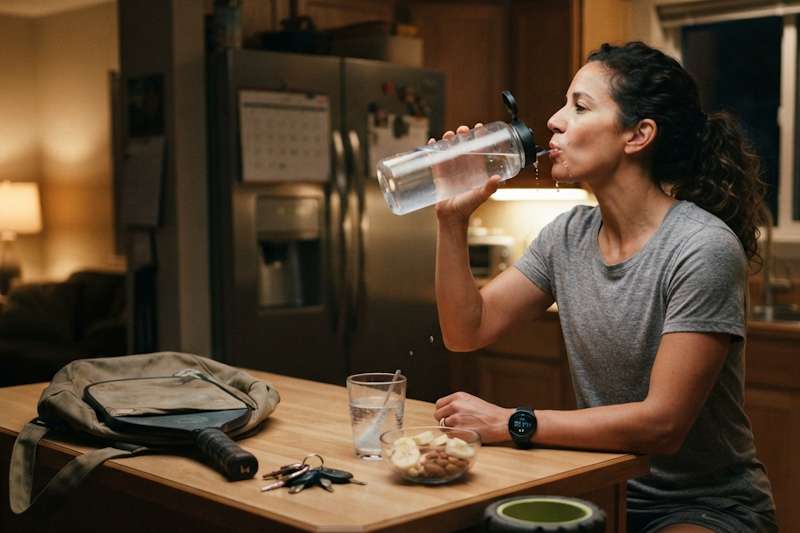
Translating clinical laboratory data into a winning court strategy requires moving away from generic recommendations and adopting a structured, timed schedule. For the everyday player who eats on a standard timeline, preventing muscle fatigue is a matter of maintaining consistent fluid pressure and mineral balance before your nervous system begins to lag.
By pulling the latest sports science research together, this straightforward guide translates complex fluid dynamics into an actionable, step by step blueprint built specifically to keep your muscles firing at peak velocity.
Pre-Hydration Strategy
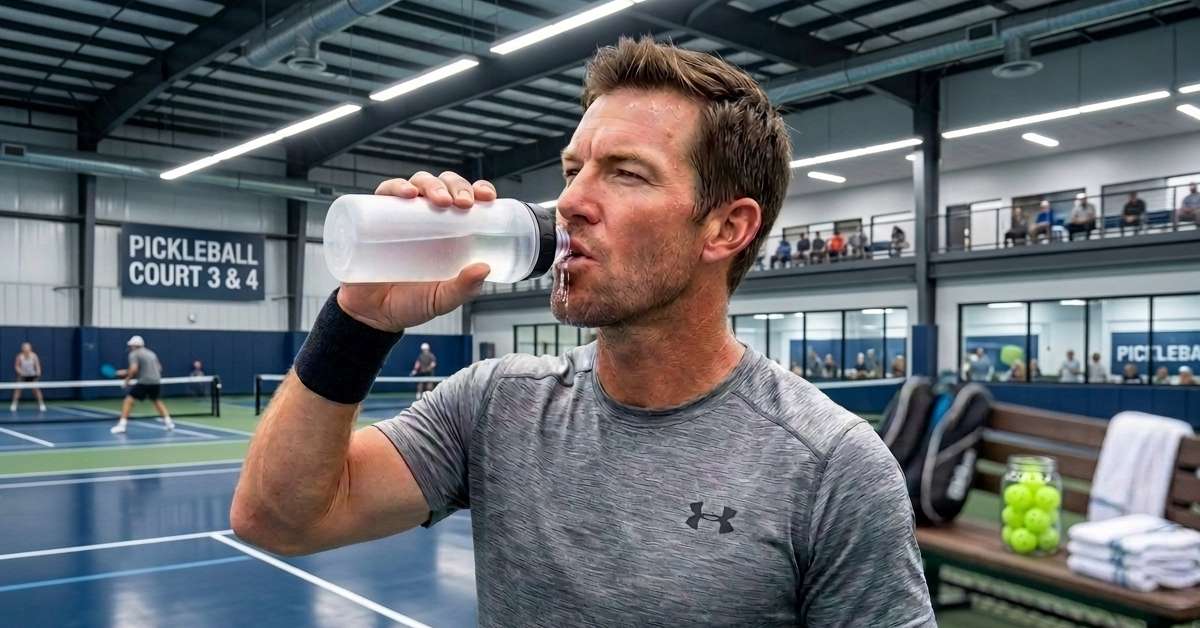
Do not start already behind. Drink roughly 7 to 10 ounces of fluid 10 to 20 minutes before you step on the court, especially if it is hot or you have not had water in a while.
Intra-Match Replenishment
Sip, do not chug, roughly 7 to 10 ounces every 15 to 20 minutes. Once you are past 60 minutes of play, or the heat is significant, that fluid should include sodium, not just be plain water. This is the point where the electrolyte research becomes directly relevant.
Of the electrolytes, sodium is the one sports dietitians consistently flag as the priority for athletes who sweat heavily. It is the one most responsible for fluid retention and performance protection. Potassium and magnesium play supporting roles. One study on marathon runners found a magnesium inclusive electrolyte mix roughly halved the incidence of muscle issues compared to water alone, though that is a single study and worth treating as suggestive rather than definitive.
Post-Game Recovery
Rehydrate with at least 16 to 20 ounces within 30 minutes, and more if your before/after weigh in shows a real deficit.
A caution worth taking seriously: more is not automatically better. Over hydrating with plain water without replacing sodium can, in rare but real cases, cause exercise associated hyponatremia. The goal is not maximum fluid intake; it is matched fluid and electrolyte replacement. If you are playing under two hours in moderate conditions, you likely do not need to overthink this. If you are doing back to back tournament matches in the heat, it becomes worth taking seriously.
Choosing the Right Product for Your Baseline
When implementing this routine, the best electrolyte option depends entirely on your daily nutrition and training style:
- The Mass-Market Default (Liquid I.V.): This is the single most popular option among recreational players on the sidelines. Its standard formulas rely on sugar to accelerate fluid transport through the gut, which works exceptionally well for casual players who eat on a regular schedule.
- The Muscle Fatigue Defense (XTEND Sport): For players undergoing longer, multi-hour court sessions, this formula couples a functional mineral blend with 7 grams of amino acids. These amino acids act as an alternative fuel substrate directly inside the muscle fibers when glycogen stores begin to run dry.
- The High-Heat Solution (LMNT Recharge): Engineered specifically for heavy sweaters, low-carbohydrate lifestyles, or athletes performing under extreme heat. It delivers a clinical payload of 1,000 mg of sodium to immediately stabilize the nervous system and offset heavy sweat losses without adding any sugar or artificial fillers.
📚 What to Read Next
Do you practice intermittent fasting?
If you play pickleball in a fasted state, standard hydration rules do not apply to your body. Fasting drops your insulin levels, forcing your kidneys to flush out crucial water and sodium while you sleep leaving your muscles running on empty before you even step onto the court.
Read our companion article, Fasted But Not Fatigued: How to Play High-Level Pickleball on an Empty Stomach, to discover the exact night before carbohydrate loading strategies, clothing adjustments, and recovery timelines needed to keep your game explosive without breaking your fasting window.
The Takeaway
The leg pain and the lack of responsiveness I used to write off as just needing to get in shape was not a conditioning problem. It was a fluid and electrolyte management problem, and the research backs up why.
Dehydration does not announce itself as thirst first. It shows up first as a lagging nervous system, then as heavy, unresponsive legs, and only later as a complete physical shutdown. By the time your performance drops, the reaction time and decision making cost has usually already been showing up in your game for the better part of an hour.
If there is one behavior change worth taking from the research, it is this: treat sodium as part of your hydration plan the moment a session crosses about an hour in the heat, protecting your body from pickleball muscle fatigue before your movement patterns slow down.
Sources referenced:
- Edith Cowan University (ScienceDaily)
- Journal of the International Society of Sports Nutrition (GSSI Sports Science Exchange)
- Journal of Exercise and Nutrition
- American College of Sports Medicine Position Stand on Exercise and Fluid Replacement
- British Journal of Nutrition
- American Journal of Physiology
- Johns Hopkins Medicine
Medical Disclaimer: The information provided in this article, including the author’s personal experiences with intermittent fasting, hydration protocols, and gear adjustments, is intended for educational, informational, and general performance-tracking purposes only. The author is not a licensed medical professional, sports dietitian, or certified personal trainer. This content is not intended to serve as a substitute for professional medical advice, diagnosis, or treatment. Always consult with a qualified physician or healthcare provider before beginning any new exercise routine, fasting schedule, or supplement plan, particularly if you have underlying health conditions or experience severe symptoms like reactive hypoglycemia or muscle cramping. Reliance on any information provided in this article is solely at your own risk.