Silencing the Inner Coach: How to Drop Overthinking and Shift Into a Pickleball Flow State
Master Your Pickleball Flow State to Eliminate Mid-Game Overthinking
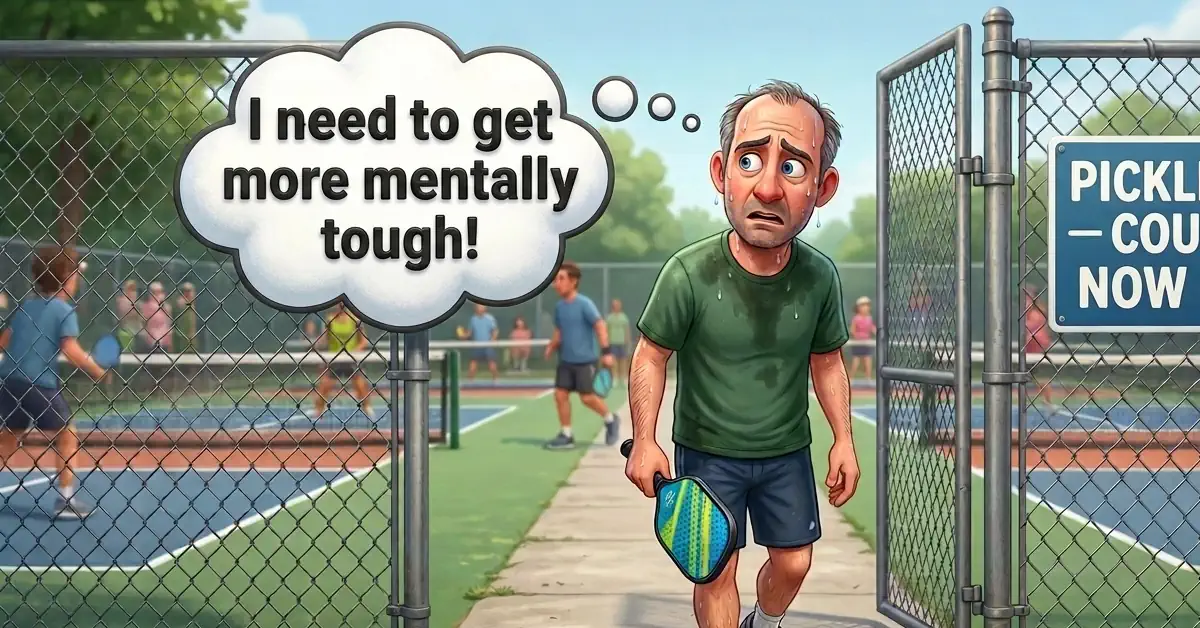
The absolute worst time to practice your technique is during the physical chaos of a fast-paced rally. Far too many recreational players attempt to analyze their strokes while the ball is actively moving across the net.
They shout internal instructions at themselves about keeping their paddle face closed or dropping their shoulders mid-point. This frantic inner commentary creates a fatal delay in your central nervous system, slowing down your hands and legs.
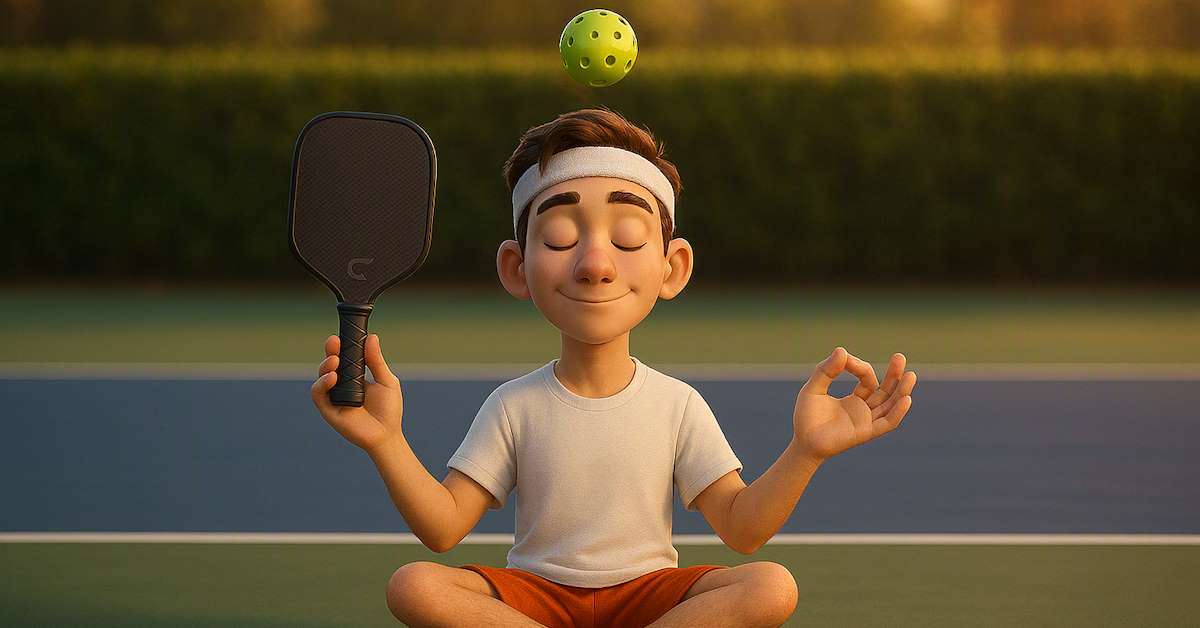
To find your true peak potential, you must actively learn how to switch off your analytical mind during high stakes play. By intentionally tapping into a deep athletic pickleball flow state, you allow your body to operate entirely on pure instinct.
This section by section masterclass will show you exactly how to quiet that intrusive inner coach for good. Instead of letting overthinking paralyze your reactions, you will unlock your hard-earned muscle memory and play with complete freedom.
Trusting Your Autopilot: Letting Go of Mechanical Instruction During Active Play
The Core Concept: Your conscious mind is far too slow to handle the lightning fast speed of an advanced kitchen exchange.
By choosing to completely trust your physical muscle memory during a point, you unlock an intuitive pickleball flow state that lets you react effortlessly without overthinking.
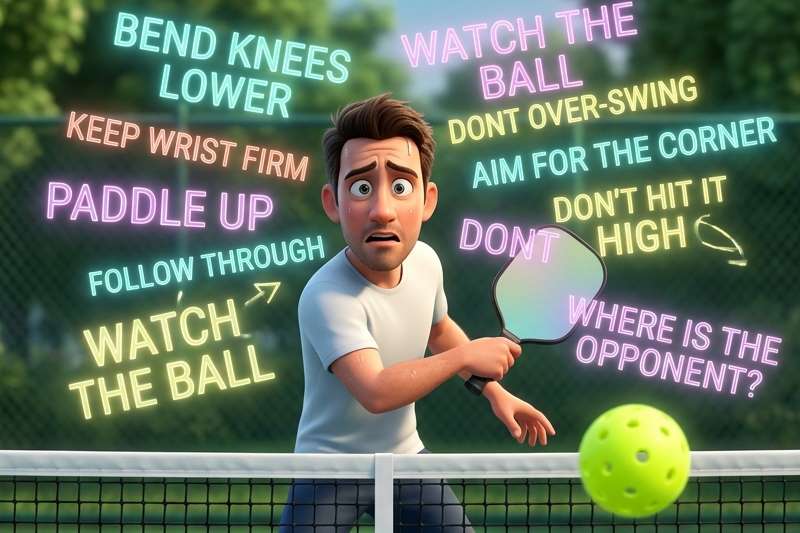
- The Coach’s Perspective: I see it all the time during recreational play when a student drops a routine reset straight into the bottom of the net mesh. They immediately groan and mutter, “I forgot to keep my wrist firm and bend my knees lower.”
They take that exact clinical checklist into the very next point, actively overthinking their joints as the serve flies over. As your coach, I am telling you that trying to critique your posture while a plastic ball is flying at your face is total madness.
Your practice sessions are meant for thinking, but your live competitive matches are meant for absolute execution. Trust the countless repetitions you have already put in at the courts during your drills. When the ball is live, let go of the steering wheel and hand the keys directly over to your body’s athletic autopilot.
Stop trying to manually guide your paddle to the ball and let your reflexes handle the work.
- The Science Behind It: This transition into an automated pickleball flow state relies heavily on shifting brain activity away from the Explicit Motor Learning System.
When you actively talk yourself through a stroke, you force your brain to use the Prefrontal Cortex to consciously plan and monitor your movement. This explicit pathway involves too many synaptic steps, resulting in heavily delayed reaction times and rigid, clunky muscle coordination.
Elite physical execution requires activating the Implicit Motor System, which relies entirely on the Cerebellum and motor cortex networks. These specialized motor areas process information exponentially faster, executing complex, multi joint movements on pure instinct.
Silencing your inner coach removes the conscious, rule based interference that comes from actively monitoring your own mechanics, letting movement patterns that are already trained run at their natural speed.
The Breakdown for the Court:
- Explicit Motor Learning System: This is your brain’s classroom mode where you break down a mechanical movement step by step. It is incredibly useful when you are learning a new shot during a lesson, but it is too slow for actual match play.
- Implicit Motor System (The Cerebellum): Think of this as your brain’s internal supercomputer for physical movements. It holds all of your automatic habits, allowing your body to drop a ball into the kitchen softly without needing conscious thoughts.
- The Thought Ban Ritual: Before you step up to receive the next ball, make a pact to stop analyzing your mechanics entirely. If you catch your brain trying to issue mechanical instructions, visualize zipping your lips shut and focus completely on the ball.
Shifting to External Targets: Directing Focus Away From Your Own Body and Onto the Ball
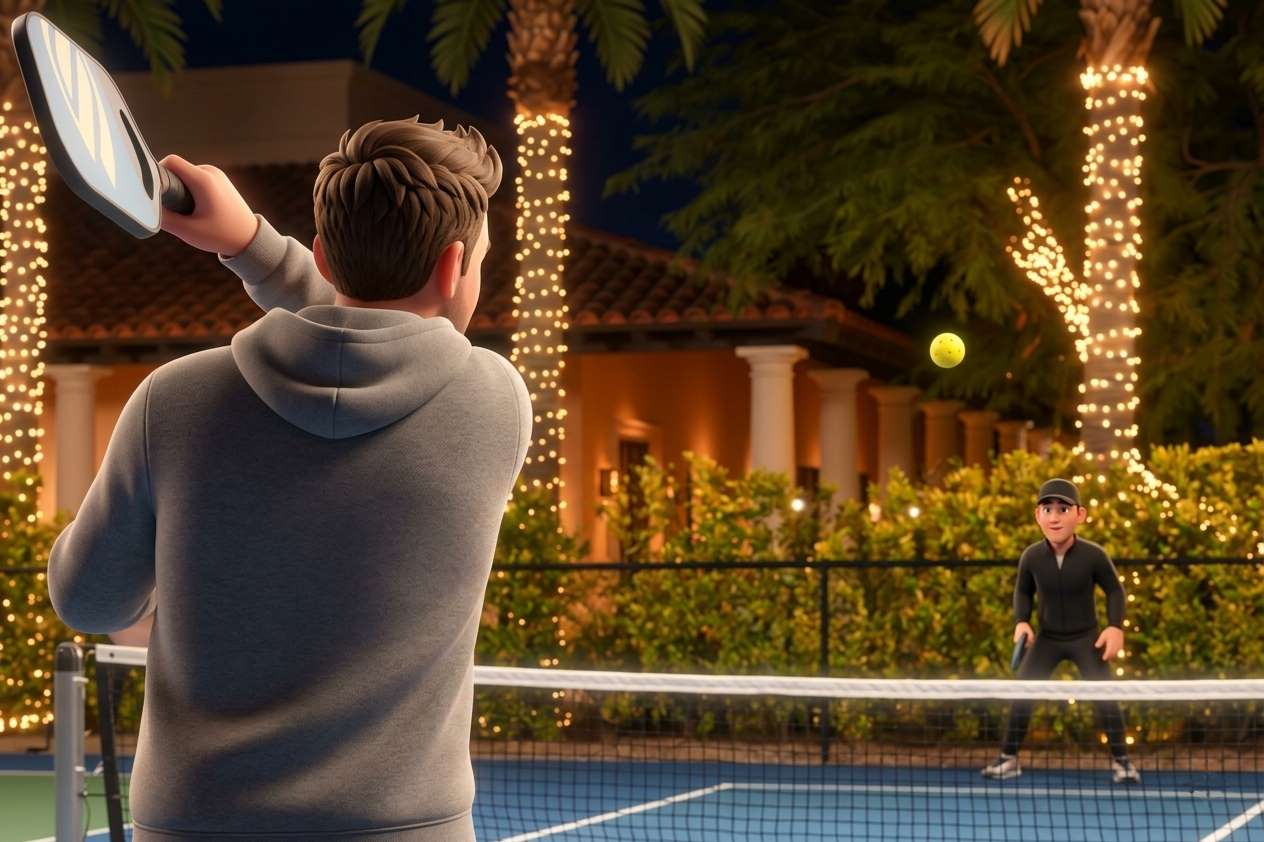
The Core Concept: Worrying about how your hands are moving physically pulls your brain out of the zone.
By actively shifting your focus away from your internal mechanics and directing it entirely toward an external target, you unlock a deeper pickleball flow state that lets your body execute shots naturally.
- The Coach’s Perspective: When players tell me they are overthinking, they are usually hyper focused on their own body. They are thinking about their elbow position, how hard they are gripping the paddle, or how low their knees are bent.
As your coach, I want you to completely flip your perspective and look outside of yourself. Stop focusing on how your body is moving and start focusing entirely on where you want the ball to go. Look at the target space right at the opponent’s feet, or look exclusively at the tiny green holes spinning on the ball.
When you give your eyes and mind a clear external destination, your body instinctively figures out how to get the ball there. Your muscles naturally loosen up, your strokes become smooth, and you stop getting in your own way.
- The Science Behind It: This tactical shift relies on a foundational concept in sports psychology known as the Constrained Action Hypothesis. When an athlete adopts an Internal Focus of Attention (focusing on body parts and movements), they inadvertently interfere with their automated motor control processes.
This internal monitoring causes different muscle groups to fight against each other, leading to rigid movements and missed hits. Conversely, adopting an External Focus of Attention (focusing on the flight of the ball or a specific spot on the court) allows the motor system to self-organize naturally.
This external focus relies on automated, subconscious control mechanisms to execute the necessary movement adjustments. By directing your mental spotlight onto an external target, you reduce conscious interference. This lets your body achieve maximum mechanical efficiency and helps you learn how to improve pickleball focus without stalling your reflexes.
The Breakdown for the Court:
- External Focus of Attention: This is when your mind is completely locked onto the target outside of your body. Think of it like throwing a crumpled piece of paper into a trash can; you don’t calculate your elbow angle, you just look at the bucket and let your arm toss it automatically.
- Internal Focus of Attention: This is when you are mentally checking in on your muscles and joints mid point. It is the equivalent of staring down at your own feet while trying to run through a crowded room, causing you to feel stiff, slow, and completely disconnected from the ball.
- The Target Lock Routine: Before the ball is served, pick one exact spot on the opponent’s court that you want to attack. Stare at that spot for one second to program your brain, and then transfer 100% of your visual focus onto the incoming ball, letting your body handle the physical adjustment on autopilot.
The “Quiet Eye” Technique: Locking Your Gaze Before Contact
The Core Concept: Your paddle face can only be as steady and calm as your visual focus.
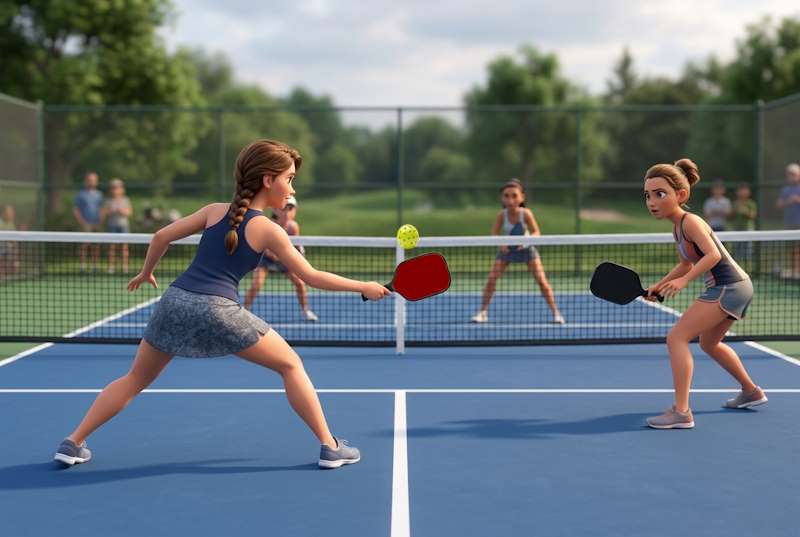
By stabilizing your gaze on the ball a fraction of a second longer before striking it, you deploy a highly advanced pickleball flow state technique that quiets your analytical brain and ensures crisp, clean contact.
- The Coach’s Perspective: Watch average players during a fast paced dink exchange, and you will see their eyes darting all over the place. They glance at the net, look up to see where the opponents are moving, or track the ball with lazy, panicked head movements.
Because their eyes are jumping around, their brain is swimming in chaotic data, which triggers immediate overthinking and frantic paddle adjustments. As your coach, I want you to master the art of the “Quiet Eye.”
When the ball comes toward you, lock your eyes onto a single point on its surface and hold your gaze perfectly still right through the moment of impact.
Do not look up early to see where your shot lands.Keep your chin down and your eyes fixed on the contact point for a split second after the ball leaves your paddle.
This visual discipline acts as a circuit breaker for your internal critic, instantly anchoring your body into an instinctive, unhurried rhythm.
- The Science Behind It: This visual component of how to achieve an athletic pickleball flow state relies on an elite sports psychology principle known as the Quiet Eye Period.
This represents the final, stable fixation of your gaze on a specific target before you initiate a physical movement. When you look frantically around the court, your eyes experience chaotic movements called Saccades, which send fragmented visual signals to your brain and spike your cognitive load.
Intentionally holding your gaze steady on the ball stabilizes your Foveal Vision and activates your brain’s Visuomotor Coordination Pathways. This prolonged visual fixation down regulates the sympathetic nervous system and provides a mechanical blueprint for how to improve pickleball focus.
By keeping your eyes completely quiet, you give your motor cortex the steady, high quality data it needs to organize and execute a flawless, automatic stroke without any conscious guesswork.
The Breakdown for the Court:
- Foveal Vision: This is the absolute center of your gaze that provides high-definition, razor-sharp visual clarity. Think of it like the pristine center lens of a professional camera, while your peripheral vision acts like a blurry background. When you lock your foveal vision directly onto a specific green hole on the ball, your brain instantly prioritizes that high-quality data above everything else. This intense visual lock gives your brain one clear, high quality source of information to work from instead of several competing ones, which leaves less room for scattered, analytical thoughts to take over.
- The Contact Point Freeze: Make it a non negotiable habit to watch your paddle strike the ball, and keep your eyes focused on that exact empty space for one extra heartbeat after it’s gone. This visual anchor forces your head to stay still, keeps your shoulders level, and completely silences the analytical voice in your head.
- The Quiet Eye Period: This is your brain’s optimal calibration window. It is the precise duration of time your eyes stay completely locked onto the ball right before contact, allowing your brain’s internal supercomputer to calculate the perfect paddle angle.
- Saccades: This is the scientific term for fast, jerky eye movements. It is the equivalent of trying to record a high speed pickleball point with a shaky, bouncing cell phone camera, resulting in blurry information that causes you to misread the ball’s bounce.
- Visuomotor Coordination Pathways: This is the ultra fast neural highway connecting your eyes directly to your hand muscles. Your eyes and hands are connected by a fast, well trained coordination loop that mostly runs without conscious input. Introducing verbal, step by step instructions mid movement forces that loop through a slower, conscious channel instead, which is what actually costs you reaction time, not some vague mental “bottleneck.” By quieting your mind and trusting these advanced pathways, you allow your hands to react automatically to high-velocity drives. This visual to muscle connection is the exact engine that drives a peak pickleball flow state, unlocking split-second counter-attacks at the kitchen line.
Conclusion: Trusting Your Athletic Instincts
Shifting into a true pickleball flow state requires you to intentionally silence your inner critic and stop trying to coach yourself mid-point.
By trusting your autopilot, focusing entirely on external court targets, and anchoring your eyes with the quiet eye technique, you free your body to move with maximum speed and fluid coordination.
Peak performance happens when you stop thinking about how to play and simply allow your hard-earned muscle memory to execute the shot.
Clear the mental clutter, look at your target, and let your body play the game it already knows how to win.
Looking Ahead to Mindset #6: Tactical Pickleball Mindset: Adopting High Shot Tolerance
You have successfully unlocked the secrets to finding your own individual flow state and quieting your analytical mind during high velocity rallies. Your body is moving fluidly and your reflexes are fully dialed into the present moment. However, playing fluidly is only half the battle; you must also possess the extreme mental patience required to construct a point without rushing the outcome.
In our next article, we are going to dive deep into the ultimate competitive separator: shot tolerance. We will unpack the sports psychology secrets behind outlasting your opponents in grueling, extended rallies without breaking down mentally. You will discover exactly how to conquer on-court boredom, shift your identity from an aggressive attacker to a patient strangler, and implement practical mental boundaries that force your opponents to make the final unforced error.
Ready to Outlast Your Opponents in Every Rally?
Don’t let impatience or early attack panic throw away another close game. Click the link below to discover the exact mental discipline secrets elite tournament players use to stay patient, embrace long dink battles, and break down their opponents’ focus.
Read the Next Chapter: Pickleball Mindset #6: Tactical Pickleball Mindset: Adopting High Shot Tolerance