Adopting High Shot Tolerance: The Tactical Pickleball Mindset That Outlasts Your Opponents
Master Your Pickleball Shot Tolerance to Dominate Extended Rallies
The true dividing line between recreational players and tournament champions is rarely a matter of raw athletic talent or faster hand speed.
Instead, the ultimate competitive edge belongs to the competitor who possesses the extreme mental discipline required to construct a point without rushing the final outcome. Far too many intermediate players find themselves building excellent court position, only to give away a free point simply because they get bored during a long exchange and attempt an aggressive, low-percentage winner.
Developing an unshakeable pickleball shot tolerance means mastering your mind so that you can comfortably execute an identical, highly disciplined stroke ten, fifteen, or twenty times in a single rally without breaking down.
By shifting your approach away from instant offense and fully committing to an elite level of pickleball rally patience, you systematically take the game out of your opponent’s comfort zone. Instead of playing right into their hands by forcing premature attacks, you use deliberate consistency to quietly suffocate their focus, ensuring you remain completely calm while forcing them to make the final unforced error.
Demolishing the Boredom Trap: How to Maintain Pickleball Shot Tolerance in Long Points
The Core Concept: On-court boredom is the ultimate silent killer of your competitive rating. By actively reframing extended exchanges as an intense battle of psychological attrition rather than a monotonous chore, you protect your tactical discipline and maintain your pickleball shot tolerance through the longest points of the match.
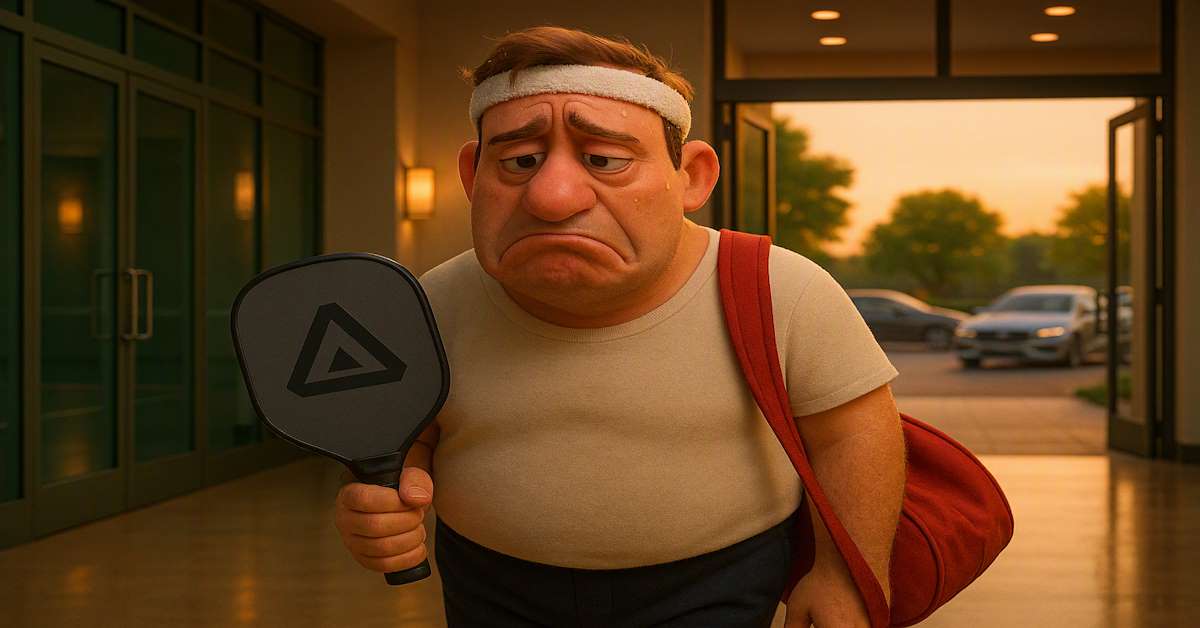
- The Coach’s Perspective: I watch this exact scenario unfold during recreational open play every single day. A point crosses the seven-shot mark, a beautifully controlled cross-court dink rally develops at the kitchen line, and suddenly one player mentally checked out.
They get bored of hitting the exact same safe, soft placement, their brain craves an instant hit of adrenaline, and they try to speed up a ball that is barely an inch above the net tape. Clank. The ball catches the plastic, or worse, they get completely blasted by an easy counter-attack from a waiting opponent.
As your coach, I need you to realize that boredom is a choice, and it is a choice that loses close matches. The moment you enter an extended exchange, you must lock yourself into the rhythm of the game. Do not view a repetitive dink battle as an obstacle to getting a point; view it as the absolute path to victory.
True competitive mastery means falling in love with the unglamorous work of hitting a safe, reliable ball one extra time, over and over again, until your opponent’s patience inevitably breaks down.
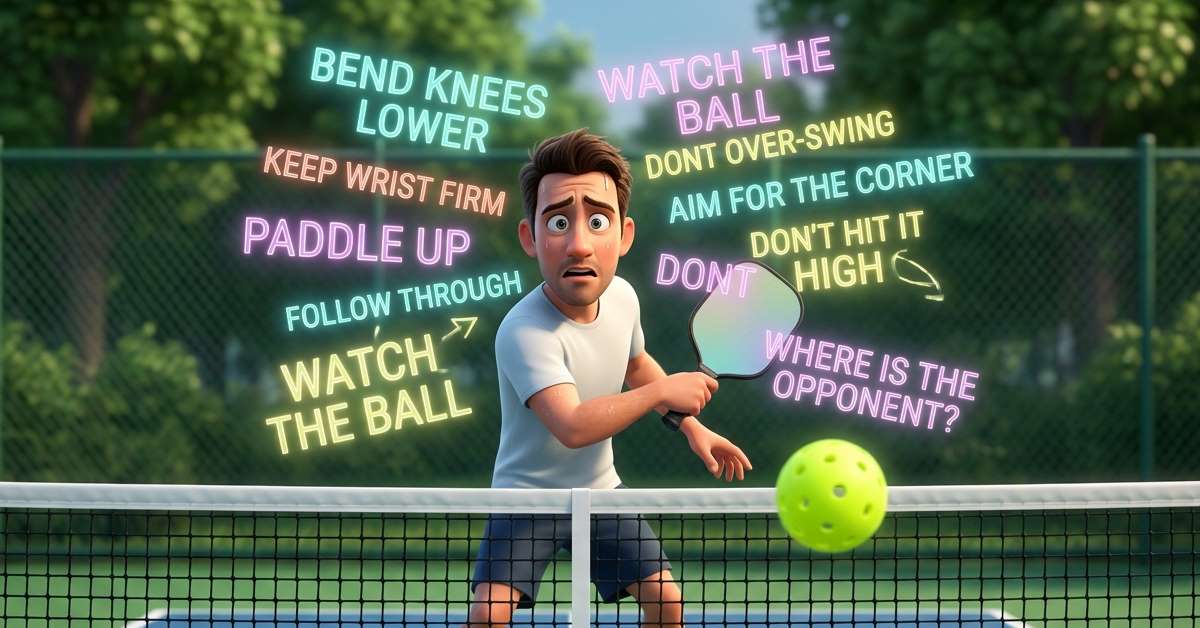
- The Science Behind It: This phase of mastering your pickleball rally patience relies heavily on overriding a built-in neural trap called Dopamine-Driven Impulsivity.
When you perform a repetitive, non-novel movement like executing multiple safe dinks in a row, your brain’s reward centers experience a rapid drop in dopamine transmission. This chemical dip signals to your prefrontal cortex that the current activity is low-reward, triggering a severe sensation of restlessness and boredom.
To escape this uncomfortable dip, your subconscious mind experiences an aggressive urge to hit a high-risk, low-percentage winner purely to stimulate a fast neurochemical reward spike. Elite sports performance requires training your Executive Attention Network to consciously suppress this primitive dopamine craving.
By intentionally celebrating the execution of a safe, defensive stroke as a massive cognitive victory, you manually stabilize your internal dopamine loops. This psychological conditioning down-regulates impulsive behavior, allowing your motor cortex to maintain optimal mechanical efficiency through an infinite number of repetitive contacts.
The Breakdown for the Court:
- Dopamine-Driven Impulsivity: This is your brain’s internal toddler screaming for immediate satisfaction mid-rally. It is the exact chemical force that makes you try to hit a spectacular, line-painting baseline drive on the twentieth shot of a rally, even though you are completely off-balance and running backward.
- Executive Attention Network: Think of this as the stern, disciplined manager sitting inside your brain’s command center. The manager’s only job is to slap the hand away from the big, shiny red button labeled “Premature Attack” so your body can stay low in its stance and execute another perfect, boring cross-court reset.
- The Rhythmic Counting Drill: To physically force your brain past the boredom barrier and maintain your pickleball shot tolerance, start counting your team’s successful touches out loud during practice dink rallies. Reaching ten consecutive, unattackable dinks should be celebrated like a gold medal, training your mind to find deep emotional satisfaction in clean defensive discipline rather than reckless offensive risk.
Shifting From Aggression to Suffocation: Using Pickleball Rally Patience to Force Errors
The Core Concept: True court dominance is not about blasting your opponents off the line with raw power; it is about taking away their tactical options until they feel completely trapped.
By shifting your mental identity from an aggressive attacker to a patient suffocator, you maximize your pickleball rally patience and watch your opponents beat themselves.
- The Coach’s Perspective: Most intermediate players have an absolute obsession with hitting winners. They think a great pickleball player is someone who can hit a flashy, hard drive down the line or a rolling dink that kisses the sideline.
As your coach, I want you to completely flip that mindset on its head. In high-level pickleball, points are rarely won by spectacular winners; they are almost always lost due to unforced errors. I want you to stop trying to win the point with a single heroic swing.
Instead, I want you to suffocate them with your consistency. Every time you return their best shot with a safe, unattackable ball deep into the kitchen, you are turning the vice grip just a little bit tighter. You are telling them, “Nothing you hit is going to give you an easy point today.”
When you adopt this mindset, you pull the psychological weight right off your own shoulders and place it directly onto theirs. Eventually, they will panic under that heavy blanket of pressure and try a desperate, low-percentage shot that flies two feet out of bounds.
- The Science Behind It: This tactical shift leverages a profound sports psychology concept known as Locus of Control Shift paired with Opponent Cognitive Exhaustion.
When you play with high pickleball shot tolerance, you deliberately keep your brain in an Internal Locus of Control, meaning your emotional state is dictated entirely by your own discipline, not the scoreboard. Meanwhile, you force your opponents into an External Locus of Control, where they feel completely helpless against your unyielding wall of defense.
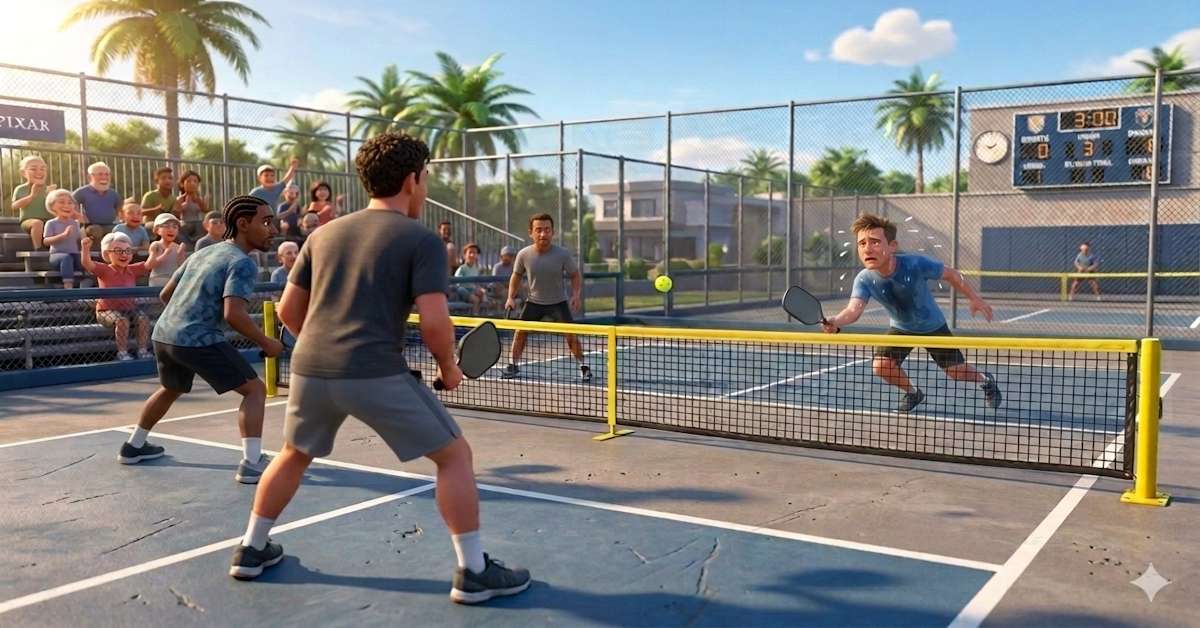
Every single time your opponent hits an aggressive shot and you comfortably return it to a safe target, their brain is forced to perform a massive Cognitive Re-Evaluation. This continuous loop of frustration drains their prefrontal cortex of glucose, inducing severe decision fatigue and micro-panic.
By maintaining a slow, suffocating tempo, you trigger a breakdown in their spatial awareness and motor control, forcing their nervous system into a state of mechanical collapse while you remain perfectly calm.
The Breakdown for the Court:
- Cognitive Re-Evaluation Fatigue: Think of this as your opponent’s mental battery draining to zero mid-game. Every time they think they’ve hit a point-ending ball and you miraculously slide over to drop it softly back into the kitchen, their brain short-circuits from sheer exhaustion, leading directly to a massive unforced error on the very next hit.
- Locus of Control Shift: This is the psychological transition between driving the car and being trapped in the trunk. When you maintain your composure and keep returning the ball, you are firmly behind the wheel. Your opponents, however, feel completely helpless and trapped, causing them to panic because their best shots aren’t working.
- The Depth Lock Tactic: To put this suffocating strategy into practice and lock in your pickleball shot tolerance, make it a mandatory rule to keep your baseline drops and resets landing in the back half of the kitchen. Forcing your opponents to hit every single ball from below their own knees completely neutralizes their offensive power and breaks their mental stamina.
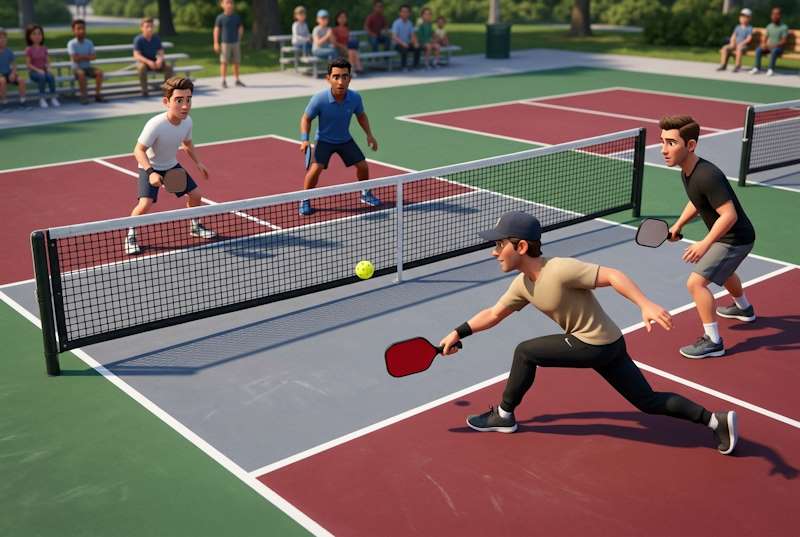
The 10-Dink Rule: Tactical Mental Benchmarks to Safely Increase Your Pickleball Shot Tolerance
The Core Concept: Your mind requires a structured, numerical boundary to prevent it from guessing when to attack. By enforcing a hard, self-imposed contact threshold at the kitchen line, you provide your brain with a clear tactical benchmark that protects your pickleball shot tolerance and prevents premature, anxiety-driven speed-ups.
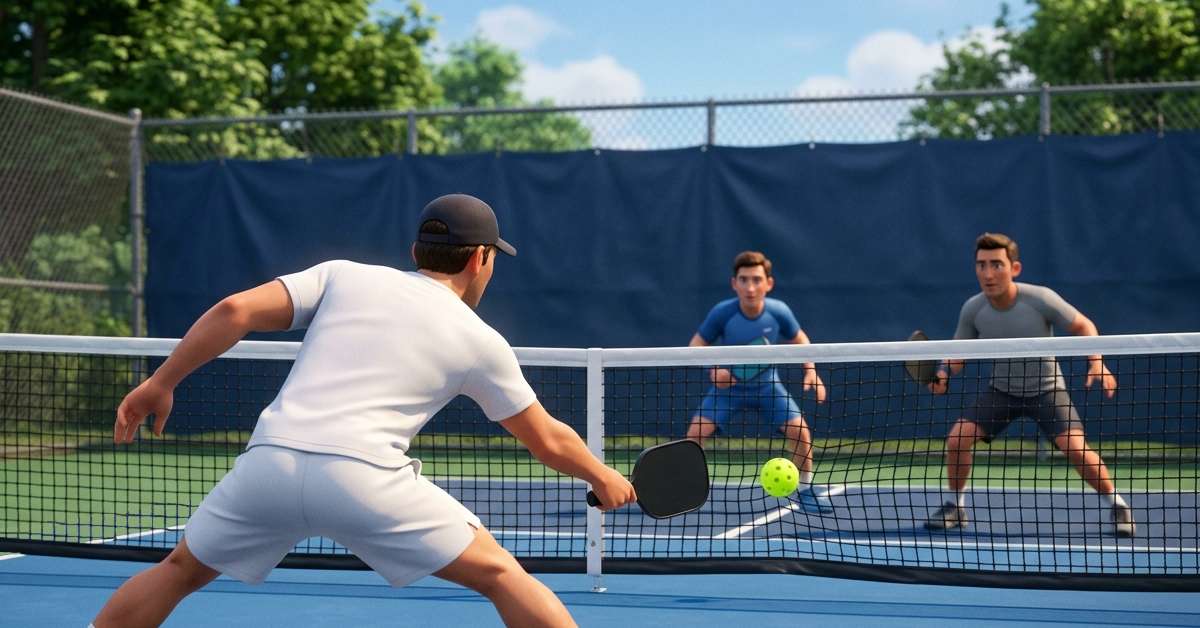
- The Coach’s Perspective: When players ask me how to build pickleball rally patience during an intense kitchen standoff, I tell them to start counting in their heads the moment the dink battle begins.
Most intermediate players hit two or three good dinks, get incredibly anxious because everyone is leaning forward, and then lash out blindly at the fourth ball just to end the tension. As your coach, I want you to start using the “10-Dink Rule” during your non-volley zone exchanges.
Before you even think about accelerating the pace, pulling off an aggressive roll, or pushing a ball down the line, your team must hit ten consecutive, unattackable dinks into the kitchen. Treat those first ten balls as absolute structural setup work. By giving your brain a specific numerical milestone to hit, you completely remove the temptation to force an early, panicked attack.
You train your mind to stay low, breathe through the tension, and let the rally mature naturally until an obvious high-percentage opening presents itself.
- The Science Behind It: This rule relies heavily on a neurological process known as Cognitive Intercalation and the stabilization of your Pre-Motor Cortex Planning Loops.
When you enter a high-stress kitchen exchange, your brain’s threat-detection software naturally triggers an aggressive urge to execute a rapid action to escape the stressful situation. This survival response creates a massive rush in your pre-motor cortex, tempting you to fire off a premature physical stroke before your spatial tracking has accurately calculated the ball’s trajectory.
Introducing a fixed numerical threshold like the 10-Dink Rule acts as a powerful cognitive override. It shifts your mental focus from an unstructured threat landscape to a highly organized, sequential counting task. This mental shift calms the over-excited neurons in your motor planning loops, allowing your brain to accurately judge ball height and paddle mechanics.
This systematic structure drastically reduces erratic movement impulses and helps you preserve high pickleball shot tolerance under heavy competitive pressure.
The Breakdown for the Court:
- Cognitive Intercalation: This is the act of wedging a structured mental task like counting your dinks from one to ten directly between your physical movements. By giving your brain a clear numbers game to play, you effectively block out the stressful noise of the match, keeping your nervous system perfectly steady.
- Pre-Motor Cortex Planning Loops: Think of this as your brain’s internal assembly line for drafting your next shot. When you get anxious, the assembly line starts moving way too fast, pushing out sloppy, rushed strokes that clip the net tape. Counting your hits slows that assembly line down to a perfect, rhythmic tempo.
- The Milestone Trigger: As you practice this rule on the court, let number ten be your official green light to scan for an attack. If you hit ten clean dinks and the ball is still landing low under your knees, reset your counter to one and keep building the point, forcing your opponents to break down under the weight of your discipline.
Conclusion: Winning the Battle of Discipline
Mastering your pickleball shot tolerance is the ultimate secret weapon for outlasting impatient opponents and forcing frustrating unforced errors. By intentionally conquering on-court boredom, adopting a suffocating style of play, and utilizing the 10-Dink Rule, you transform yourself into an unshakeable wall of consistency.
You do not need to hit flashy, high-risk winners to dominate the court. True competitive success belongs to the player who can calmly execute one extra safe, disciplined stroke over and over again. Commit to an elite level of pickleball rally patience, trust your baseline mechanics, and let your superior mental discipline carry you to victory.
Looking Ahead to Mindset #7: Surviving the Mid-Match Grind: Keeping Your Intensity Alive
You have successfully unlocked the secrets to maintaining deep tactical patience and high shot tolerance during grueling, extended rallies. Your discipline is sharp, your unforced errors are down, and you have built a strong position in the match. However, as the games stretch on and the initial wave of adrenaline wears off, you enter the most dangerous phase of the competition: the mid-match grind. This is the exact moment where mental fatigue creeps in, your movements slow down, and your competitive focus begins to drift.
In our next article, we are going to dive deep into how to protect your energy and keep your intensity alive during the middle stages of a tough match. We will unpack the sports psychology secrets behind beating cognitive fatigue when your body starts to tire. You will discover exactly how to trigger instant bursts of physical energy, use personal motivational cues to lock down your focus, and maintain a high level of competitive fire to finish the match strong.
Ready to Beat Fatigue and Finish Your Matches Strong?
Don’t let a mid-match energy crash throw away your hard-earned lead on the court. Click the link below to discover the exact intensity-boosting routines elite tournament players use to fight off mental exhaustion, maintain sharp footwork, and close out tough victories.
Read the Next Chapter: Pickleball Mindset #7: Surviving the Mid-Match Grind: Keeping Your Intensity Alive