Surviving the Mid-Match Grind: The Sports Psychology Secrets to Keeping Your Intensity Alive
Beat Mental Fatigue to Keep Your Intensity Alive During the Mid-Match Grind
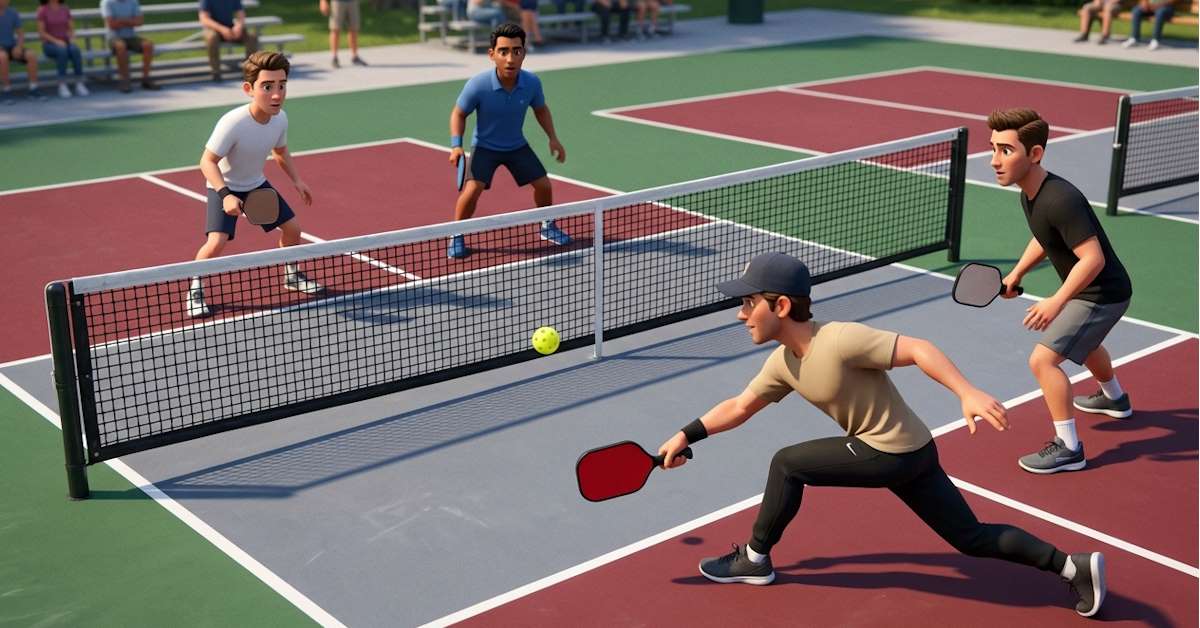
The opening game of a competitive pickleball match is always fueled by a massive rush of natural adrenaline. Your legs feel incredibly light, your eyes track the ball effortlessly, and your strategic discipline is fully dialed into the present moment. However, as the games stretch past the thirty-minute mark and that initial physiological wave begins to recede, you enter a dangerous competitive twilight zone known as the mid-match grind.
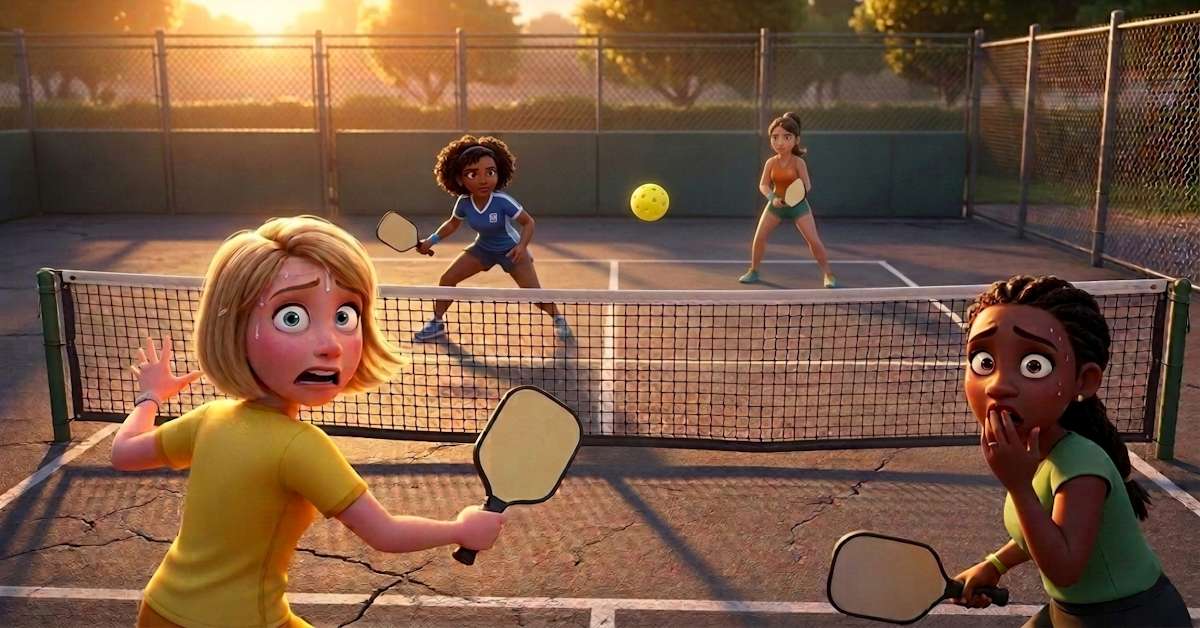
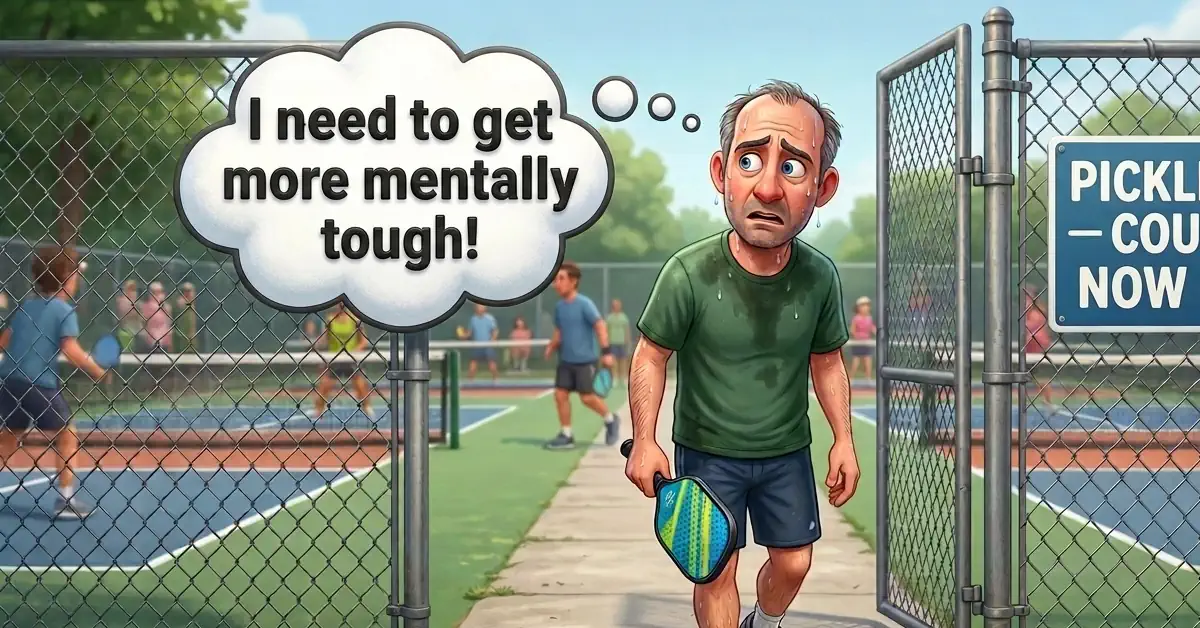
This is the exact moment where physical exhaustion subtly transitions into a profound layer of mental exhaustion, causing your reactions to stall, your footwork to turn flat-footed, and your unforced errors to mount. Surviving this brutal middle phase of a tournament bracket requires you to possess a highly trained layer of pickleball mental stamina.
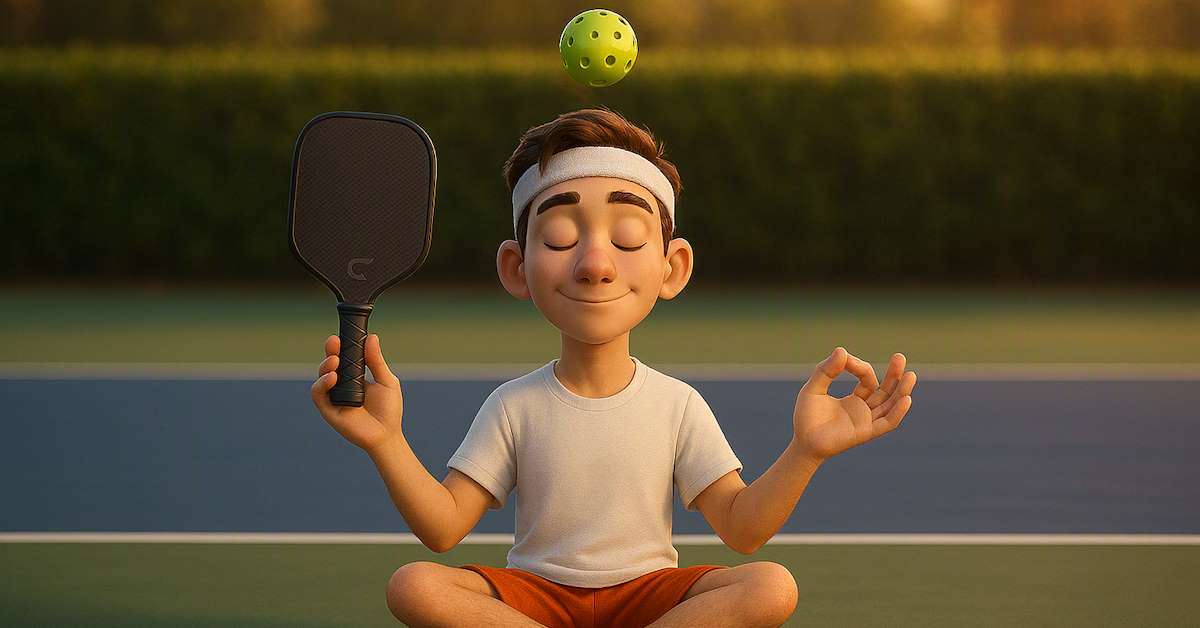
True court mastery is not just about having the cardiovascular endurance to sprint across the baseline; it is about having the psychological focus to keep your executive brain sharp when your body is screaming for a break. By implementing advanced cognitive protection routines, you can actively shield your central nervous system against pickleball mental fatigue.
Instead of letting a drop in blood glucose slow down your shot selection or lower your competitive intensity, you build an unyielding psychological engine that allows you to maintain a high level of competitive fire and confidently close out tough victories.
Beating Cognitive Fatigue: How to Protect Your Decision-Making Power and Maintain Pickleball Mental Stamina
The Core Concept: Your executive brain burns an immense amount of energy calculating ball trajectories and court positions.
By actively identifying the warning signs of mental depletion early in the second game, you can deploy targeted focus resets to preserve your decision-making accuracy and protect your pickleball mental stamina through the final point.
- The Coach’s Perspective: I see it happen all the time when a tight tournament match heads into the middle of the second game. A player who was hitting flawless third-shot drops and playing clinical pickleball suddenly starts making incredibly lazy, unforced errors.
They miss a routine return of serve deep, leave a high ball floating right over the middle of the kitchen, or hit an impatient drive straight into the net. They aren’t missing because their mechanics broke down; they are missing because their brain is completely out of gas.
When pickleball mental fatigue sets in, your mind naturally looks for shortcuts, which causes you to stand straight up in your stance, stop moving your feet, and make terrible tactical choices. As your coach, I want you to recognize when your focus begins to drift so you can actively push back.
The very second you catch yourself staring blankly at the floor or rushing your pre-serve routine, take a deep breath and give yourself a direct verbal command to lock back in. Force your knees back down into a low athletic base, tell your feet to bounce, and treat the very next point like it is the first rally of the entire day.
- The Science Behind It: This tactical intervention relies heavily on understanding a psychological phenomenon known as Ego Depletion and its impact on your Prefrontal Cortex.
Your brain accounts for only two percent of your total body weight, but it consumes over twenty percent of your body’s resting glucose reserves during intense cognitive tasks. Constantly tracking a high-velocity plastic ball while managing court positioning and partner communication aggressively drains these glucose stores.
As your prefrontal cortex runs out of premium fuel, your brain experiences a severe drop in its Cognitive Control Capacity, making it physically harder to suppress impulsive, high-risk behaviors. This chemical depletion directly slows down your neural processing speed, leading to a visible lag in your visual-motor reaction times.
By consciously recognizing this energy dip and utilizing a structured, localized mental reset, you engage your brain’s Locus Coeruleus-Norepinephrine System. This targeted neurological spike stimulates a fresh release of attention-boosting neurotransmitters, allowing you to effectively bypass executive exhaustion and preserve your pickleball mental stamina.
The Breakdown for the Court:
- Cognitive Control Capacity: Think of this as your brain’s internal bandwidth for staying disciplined. When pickleball mental fatigue shrinks this bandwidth, your focus gets incredibly narrow and slow, turning a routine baseline leave into a panicked, mistimed shoulder volley.
- Ego Depletion: This is the scientific term for your willpower and decision-making battery running completely down to zero. It is the exact mental drain that causes you to abandon your patient dink strategy and slap wildly at a low ball, purely because your brain lacks the energy to sustain another long rally.
- The Stand-Tall Alert: Use your physical posture as an early warning system for your mind. The very second you catch your hips rising and your legs standing perfectly straight between points, treat it as a flashing red light that your brain is entering a depleted state. Drop back into your wide, low kitchen stance immediately to physically force your brain’s attention systems back into high alert.
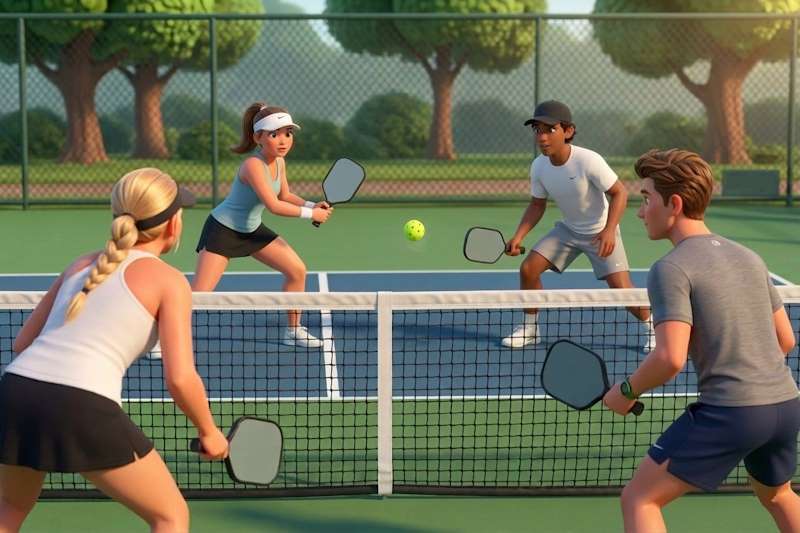
The Physical Spiking Routine: Triggering Instant Neurological Energy to Fight Pickleball Mental Fatigue
The Core Concept: When your energy hits a mid-match wall, you cannot just wait for your brain to recover on its own.
By using a deliberate combination of intense physical movements and targeted sensory inputs between games or during timeouts, you create an artificial adrenaline spike that instantly wakes up your nervous system and boosts your pickleball mental stamina.
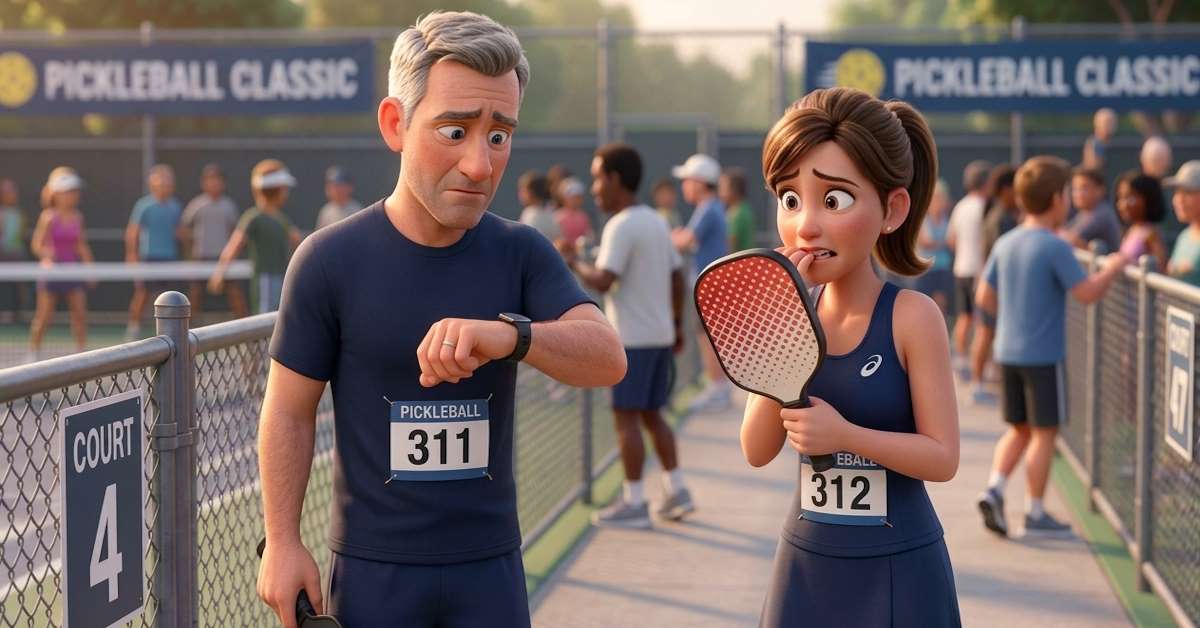
- The Coach’s Perspective: When a match enters the deep water of the second or third game, you will see exhausted players start to sag. Their heads hang low, they trudge slowly over to the bench, and they slump into their chairs like they are about to take a nap.
If you sit on that bench looking defeated, your brain takes that as a clear signal that the match is over, and your competitive fire will completely die out. As your coach, I want you to use your timeouts and side-changes as an active launching pad to fight off pickleball mental fatigue.
Do not just sit there staring at your shoes; I want you to deliberately shock your body back into high gear. The moment you walk over to your bag, squeeze some freezing cold water right onto the back of your neck or splash it onto your face. Before you step back onto the court lines, stand up straight, slam your open palm against your thigh, and hop aggressively on your toes three or four times.
This quick physical routine physically wakes your muscles up, clears the fog out of your head, and tells your brain it is time to go back to war.
- The Science Behind It: This aggressive physical intervention utilizes a process called Somatic Afferent Stimulation to rapidly alter your brain’s internal chemistry. When you apply a sudden physical shock to your body like freezing water on your skin or jumping explosively on your toes you activate your Autonomic Somatosensory Pathways.
These pathways send immediate, high-velocity electrical signals directly up your spinal cord and into your brain’s Reticular Activating System (RAS). The RAS responds to this sudden flood of intense physical data by instantly triggering a fresh release of epinephrine (adrenaline) and norepinephrine into your bloodstream.
This fast neurochemical spike bypasses your prefrontal cortex’s exhaustion entirely, immediately dilating your pupils, sharpening your spatial awareness, and increasing your heart rate variability. By manually forcing your nervous system back into a high-arousal state, you successfully wipe away the chemical buildup of exhaustion, giving you an immediate boost in your pickleball mental stamina.
The Breakdown for the Court:
- Reticular Activating System (RAS) Spike: Think of this as your brain’s internal volume knob for overall energy. When pickleball mental fatigue dials that knob down to a quiet murmur, hopping on your toes and slapping your thighs physically cranks that volume knob right back up to ten.
- Somatic Afferent Stimulation: This is the medical term for using a sudden physical sensation to shock your brain awake. It is the exact biological reason why splashing freezing water on your face instantly clears away mid-game mental fog, forcing your brain out of a sluggish state and back into athletic high-alert.
- The Cold-Shock Ritual: Keep an insulated flask filled with ice-water right next to your paddle bag during every tournament. During every single timeout or side-change in a grueling match, firmly press a freezing cold, damp towel directly against the base of your skull for five seconds to instantly reboot your vision and reaction speed.
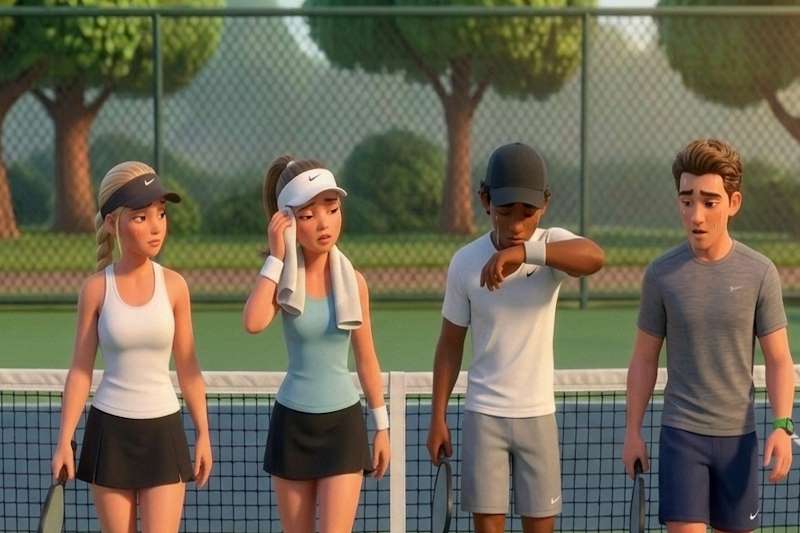
Intrinsic Motivational Cues: Using Personal Self-Talk to Protect Your Pickleball Mental Stamina
The Core Concept: External drivers like the final score line or tournament medals lose their motivating power when your body is completely exhausted.
By anchoring your mind to deeply personal, identity-based reminders during side-changes, you tap into an internal reserve of psychological energy that shields your brain from pickleball mental fatigue.
- The Coach’s Perspective: When you are deep in the third game of a grueling match, and your lungs are burning, your brain will naturally start looking for a way out. If your only reason for playing is to see a higher number on the scoreboard, your mind will easily convince you to quit when the physical price becomes too high.
It will whisper, “It’s just a recreational game, it doesn’t matter if we lose this one.” As your coach, I want you to build a personal mental shield against that voice before the point even begins.
Stop thinking about the gold medal, and start talking to yourself about who you are as a competitor. Give yourself an identity-driven command between points like, “I am a grinder,” “I don’t give away free points,” or “I am the toughest player on this court.”
When you tie your execution directly to your personal pride, you tap into a hidden well of energy that fatigue cannot touch. You stop worrying about the final outcome, and you focus entirely on defending your reputation as a disciplined competitor on every single ball.
- The Science Behind It: This self-talk strategy relies on a psychological concept known as Autonomous Motivation Integration and the activation of your brain’s Mesolimbic Reward Pathway. When you rely on extrinsic motivators like winning a trophy or avoiding criticism, your brain experiences heightened activity in its external threat networks, which aggressively burns through glucose.
When exhaustion hits, these external motivators fail to provide enough neural drive to overcome physical pain. Conversely, focusing on intrinsic, identity-based cues engages your Medial Prefrontal Cortex, which handles self-schema and personal values.
This shift activates a steady release of dopamine from the ventral tegmental area directly into your nucleus accumbens. This localized dopamine release acts as a powerful neurochemical shield that lowers your Perceived Rate of Exertion (RPE).
By manually altering how hard a task feels, you successfully preserve your decision-making sharpness and lock down your pickleball mental stamina through the toughest stretches of a match.
The Breakdown for the Court:
- Autonomous Motivation Integration: This is the psychological transition from playing for a prize to playing for your own identity. It is what separates players who collapse the second they fall behind from the stubborn competitors who fight twice as hard because they refuse to let down their personal standards.
- Perceived Rate of Exertion (RPE): Think of this as your brain’s internal difficulty slider for a physical task. When pickleball mental fatigue sets in, that slider naturally climbs to a ten, making a simple kitchen reset feel incredibly heavy and exhausting.Using positive, intrinsic self-talk physically slides that difficulty level back down to a manageable five.
- The Grip-Tape Anchor: Write a single, high-intensity action word like “Grind,” “Relentless,” or “Lock In directly onto the edge guard of your paddle or your overgrip tape using a marker. Every single time you walk backward to the baseline to receive a serve, look directly at that word to immediately fire up your intrinsic motivation networks and reset your competitive intensity.
Conclusion: Outlasting the Grind Through Mental Toughness
Surviving the brutal middle stages of a tournament bracket is never just a matter of who has more cardiovascular endurance.
It is decided entirely by the competitor who possesses the superior level of pickleball mental stamina needed to keep their brain fully turned on when their body is screaming for a break.
By actively recognizing the early warning signs of cognitive depletion, using aggressive physical spiking routines to shock your nervous system awake, and anchoring your mind to deeply personal, identity-based cues, you successfully insulate your game against pickleball mental fatigue.
You do not need to feel physically perfect to win a tough match.
Drop low into your stance, look down at your paddle anchor, splash some cold water on your neck, and outlast the grind one single point at a time.
Looking Ahead to Mindset #8: Tactical Flexibility: Navigating In-Match Adjustments When Being Targeted
You have successfully unlocked the secrets to maintaining an unyielding engine of mental stamina and keeping your competitive intensity alive through the absolute deepest, most exhausting waters of the mid-match grind.
Your mind is sharp, your energy is rebooted, and your body is fully prepared to fight through the final game of the bracket.
However, as the next game begins, a glaring tactical nightmare suddenly unfolds across the net: your opponents have completely stopped hitting the ball to your partner.
Every single serve, deep return, heavy drive, and delicate cross-court dink is being ruthlessly funneled directly to you in a systematic attempt to isolate and break you down.
In our next article, we are going to dive deep into the high-pressure psychological reality of being isolated on the court.
We will unpack the advanced sports psychology secrets behind handling the extreme cognitive and physical load of taking eighty percent of the shots in a doubles match.
You will discover exactly how to manage the sudden emotional weight of being targeted, how to execute sharp, in-match tactical adjustments to disrupt your opponents’ strategy, and how to stay completely composed when you are under a non-stop, targeted offensive siege.
Ready to Break Free When Your Opponents Isolate You?
Don’t let a relentless, targeted attack overwhelm your focus or break down your physical positioning during a high-stakes match.
Click the link below to discover the exact strategic pivots and mental armor elite tournament players use to stay calm, turn an opponent’s isolation strategy into a massive disadvantage, and reclaim control of the court.
Read the Next Chapter: Pickleball Mindset #8: Tactical Flexibility: Navigating In-Match Adjustments When Being Targeted