Conquering Pre-Match Jitters: The Mindful Pickleball Warm-Up Strategy That Locks in Focus
Conquering Pre-Match Jitters: The Mindful Pickleball Warm Up Strategy That Locks in Focus
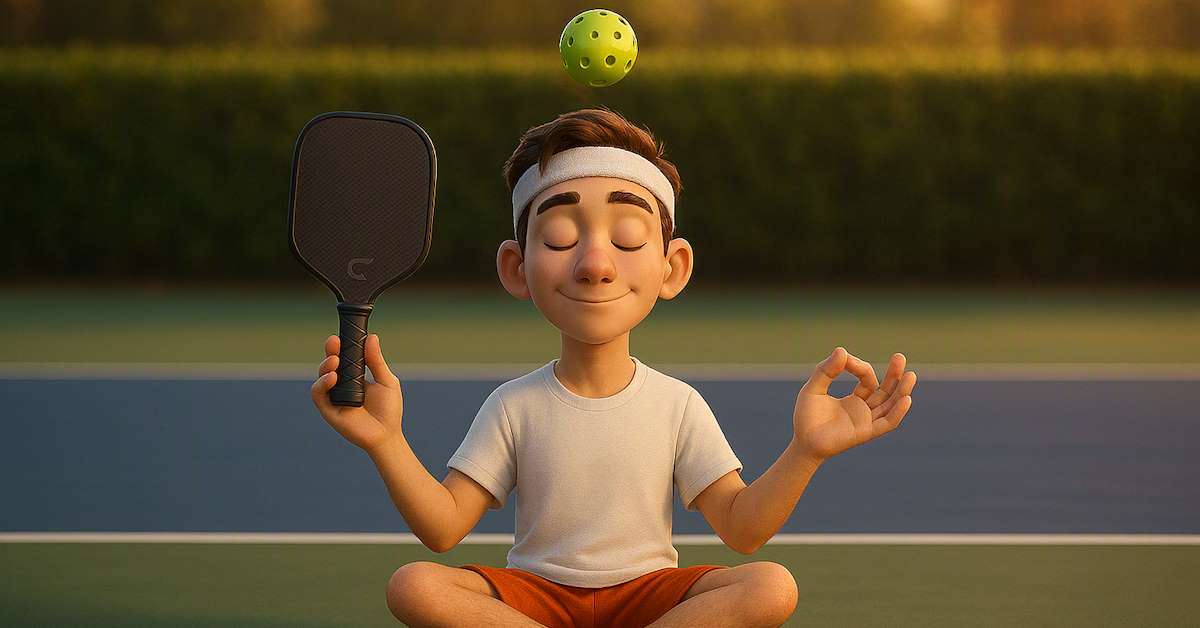
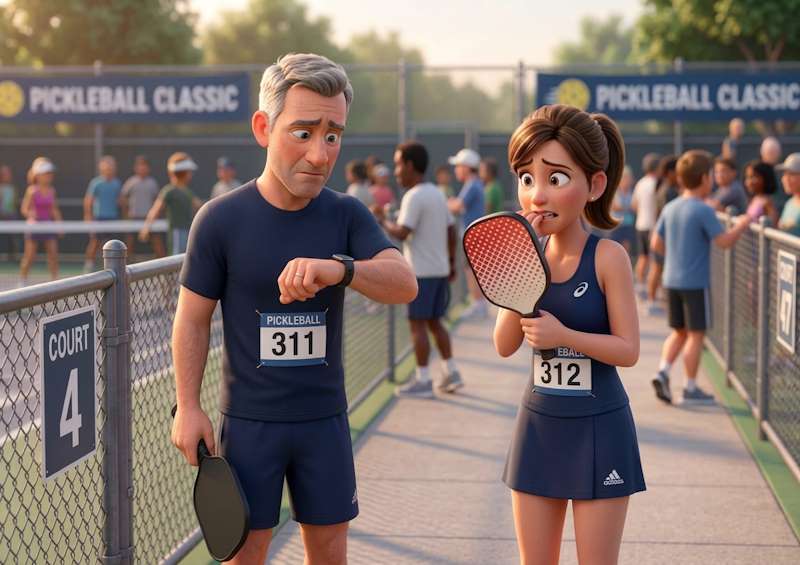
That sudden, fluttering wave of adrenaline you feel in your stomach as you unpack your gear isn’t a sign of fear it is your body preparing for battle. The true secret to high level pickleball performance doesn’t lie in trying to eliminate that nervous energy, but in channeling it directly into your paddle face.
When you blend a deliberate mental reset with a structured, rhythmic physical warm-up, you stop playing on your heels and transition seamlessly from a state of anxious panic into a zone of fluid, instinctive execution.
By taking control of your warmup window, you protect your focus from court side distractions and ensure your eyes, mind, and hands are completely locked onto the ball from the very first rally.
The Psychological Reframe: Turning Performance Threat into a Competitive Challenge
The Core Concept: That fluttering feeling in your stomach, your racing heart, and the sudden burst of nervous energy before a match are not signs of weakness. By actively changing how you interpret these physical symptoms, you transform raw performance anxiety into an explosive athletic weapon.
- The Coach’s Perspective: Every player, from local recreationalists to top tier touring pros, gets nervous before a big match.
If someone tells you they don’t, they are lying. The difference between choking under pressure and thriving in the zone isn’t the presence of jitters it’s how you look at them.
When you feel your pulse spike as you watch your opponents walk onto the court, don’t tell yourself, “Oh no, I’m too nervous to play well.” Instead, flip the switch.
Smile, shake out your arms, and tell yourself, “My body is waking up. It’s getting ready to play fast, move explosively, and react sharply.” Reframing this physical energy turns a mental wall into a performance catalyst.
- The Science Behind It: This practice uses a foundational sports psychology technique known as Anxiety Reappraisal.
Physiologically, anxiety and excitement are nearly identical: both activate the sympathetic nervous system, releasing a flood of catecholamines like epinephrine (adrenaline) and cortisol.
Because the body’s physical state is the same, your mind can easily relabel the experience. If you label it as a “Threat” (performance anxiety), your brain experiences a drop in Task Relevant Cognitive Resources because it is wasting energy trying to defend your ego.
If you intentionally label it as a “Challenge” (excitement), your brain enters an Approach Motivated State, which maintains cognitive control, enhances motor planning, and prepares the physical body for peak physical execution.
The Breakdown for the Court:
- Anxiety Reappraisal: Think of your pre-match adrenaline like the physical power behind a hard overhead smash. If you don’t control the angle of your paddle face, that raw power sends the ball flying deep into the fence (panic). Anxiety reappraisal is the act of angling your mental paddle face so that all of that raw physical power gets directed downward into a crisp, controlled, explosive shot.
- Threat vs. Challenge States: Walking onto the court in a “threat state” is like playing a point with your weight completely on your heels, constantly terrified of making an error. Entering a “challenge state” means sinking low into your athletic stance, leaning forward over the kitchen line, and eagerly looking for a pop-up ball to attack.

Centering the Autonomic Nervous System: Tactical Breathing to Lower Your Heart Rate
The Core Concept: When pre-match nerves turn into overwhelming panic, your body physically locks up, neutralizing the effectiveness of your physical preparation.
By utilizing deliberate, tactical breathing patterns as part of your pickleball warm up strategy, you can directly override your body’s stress response, forcing your heart rate down and learning how to beat pickleball jitters before the first serve is struck.
- The Coach’s Perspective: When the pressure mounts, you can always spot the players who don’t have a reliable routine. Their shoulders drop to their ears, their grip on the paddle turns into a death-grip, and their breathing gets shallow and fast.
They are completely at the mercy of their nerves. As your coach, I want you to realize that you cannot think your way out of a physical panic attack; you have to breathe your way out of it. The secret to an elite pickleball warm up strategy isn’t just hitting balls it’s taking control of your lungs.
Take deep, slow belly breaths while you are moving. This intentional breathing acts like an internal volume knob, turning down the noise in your head, loosening your tight muscles, and showing you exactly how to beat pickleball jitters so your hands can stay soft at the kitchen line.
- The Science Behind It: This breathing component of your pickleball warm up strategy relies on stimulating the Vagus Nerve, the main highway of the Parasympathetic Nervous System (your body’s internal braking system).
When you experience intense match anxiety, your sympathetic nervous system puts you into fight or flight, spikes your heart rate, and limits your peripheral vision.
By intentionally lengthening your exhalations during your physical preparation specifically through techniques like Physiological Sighs (two quick inhales followed by a long, slow exhale) you trigger a biological mechanism called Respiratory Sinus Arrhythmia.
This signals your brain that you are safe, providing a physiological blueprint for how to beat pickleball jitters by immediately slowing your heart rate and restoring your full visual field.
The Breakdown for the Court:
- Vagus Nerve Stimulation: Think of your nervous system like a car engine. Adrenaline is the gas pedal, flooring your heart rate and making you rush your shots. Incorporating deep breathing into your pickleball warm up strategy is the physical act of stepping on the brake pedal so you don’t slam your resets straight into the net.
- Peripheral Vision Dilation: When you don’t know how to beat pickleball jitters, your brain gives you “tunnel vision,” making you stare strictly at the ball while completely losing track of the court. Activating your parasympathetic nervous system opens your vision back up, allowing you to easily spot an open alley or notice an exposed gap.
- Respiratory Sinus Arrhythmia (RSA): Despite the scary-sounding name, RSA is a completely healthy athletic phenomenon where your heart rate naturally speeds up when you breathe in and slows down when you breathe out. By intentionally extending your exhale during a physiological sigh, you maximize this reflex, signaling your vagus nerve to instantly lower your heart rate, flush out court anxiety, and restore your focus before the next serve.
The Mindful Physical Warm-Up: Connecting Your Eyes, Body, and Paddle at the Kitchen
The Core Concept: A rushed, careless warm-up breeds a rushed, careless mindset.
To execute an elite pickleball warmup strategy, you must treat your physical preparation as a moving meditation where your absolute focus is on syncing your vision with your paddle face, giving you a repeatable blueprint for how to beat pickleball jitters.
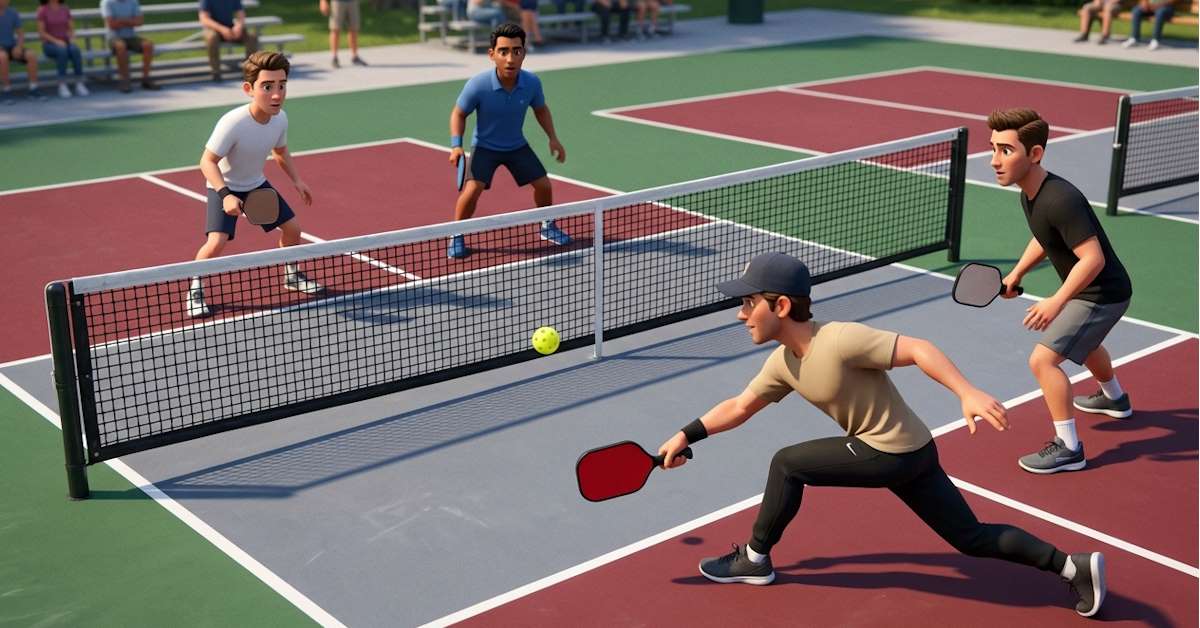
- The Coach’s Perspective: Too many recreational players treat their pre-match routine like a casual chat. They stand at the kitchen line, halfheartedly slapping at the ball while talking about the weather, and then wonder why they miss their first five third-shot drops of the actual game.
As your coach, I want you to treat your dinking warmup as a sacred mechanical dial in. Do not try to win points or hit flashy rollers right now. Instead, use these few minutes to lock your eyes onto the ball. Watch the plastic holes spin. Feel the ball compress against your paddle face.
By treating this time with absolute concentration, you naturally quiet your racing thoughts and anchor your body into a smooth, unhurried, rhythmic tempo.
- The Science Behind It: This phase of a high performance pickleball warm up strategy activates your Visual-Motor System and triggers a neurological phenomenon known as Proprioceptive Tuning.
When match anxiety strikes, your brain’s spatial processing can become uncalibrated, causing micro errors in judging distances. Intentionally slowing down your repetitive dinking strikes fires up your mechanoreceptors (pressure sensors in your hand and wrist) and links them directly to your Visual Cortex.
This visual-motor integration calms the nervous system, providing a physical mechanism for how to beat pickleball jitters by establishing immediate, reliable muscle coordination before high velocity play begins.
The Breakdown for the Court:
- Visual-Motor System: This is the seamless communication highway between your eyes and your hands. In a fast-paced hand battle, you don’t have time to consciously think about your paddle position; your eyes must automatically guide your arm to the ball. A focused dinking routine primes this engine so it’s firing instantly on the first point.
- Proprioceptive Tuning: Think of this as calibrating a highly sensitive scale. It’s the split-second subconscious feeling of exactly how hard you need to push your shoulder forward to lift a ball cleanly over a 34 inch net without popping it up for an easy smash.
Establishing a Ritual of Readiness: Consistent Habits to Beat Pickleball Jitters
The Core Concept: Unpredictable environments are fuel for match anxiety. By building a highly consistent, predictable pre-game routine into your broader pickleball warm up strategy, you can successfully trick your brain into a state of familiar comfort, locking down a reliable formula for how to beat pickleball jitters regardless of how high the stakes are.
- The Coach’s Perspective: Think about what happens when you arrive at a chaotic tournament or a crowded public park. Courts are packed, people are yelling, and the atmosphere feels completely out of your control.
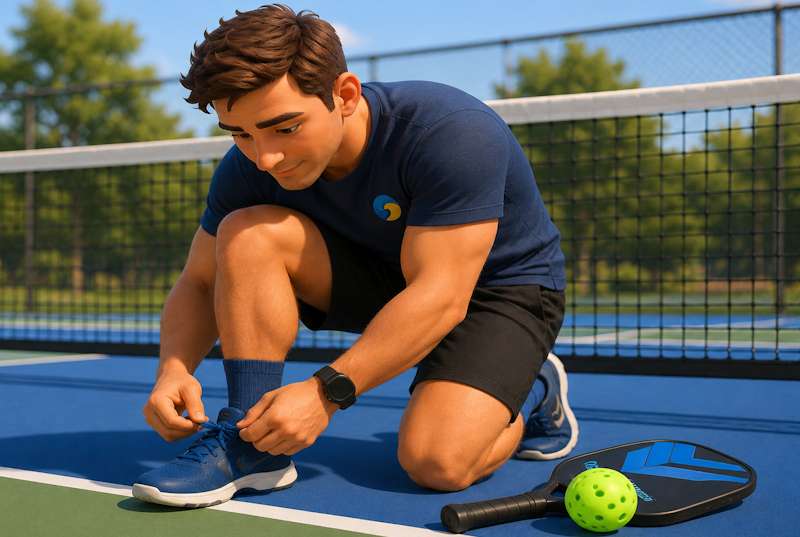
If your preparation is just as chaotic, your game will be chaotic too. I want you to create a personal “Ritual of Readiness.” Control what you can control. Zip your bag the same way, check your paddle grip, drink your water, and lace your court shoes exactly the same way before every single session.
When your body experiences the exact same steps every single time, it sends a powerful message to your brain: “I’ve done this a thousand times before. I am safe, I am ready, and it’s just another game of pickleball.”
- The Science Behind It: This behavioral aspect of a successful pickleball warm up strategy is known in sports psychology as a Pre-Performance Routine (PPR). Evolutionary psychology shows that the human brain naturally perceives unfamiliar or unpredictable settings as survival hazards, triggering an automatic stress response.
Executing a highly structured, repeatable sequence of habits activates the brain’s Basal Ganglia (the seat of habit execution) while down regulating the prefrontal cortex’s threat detection mechanisms.
This systematic habituation reduces cognitive load and prevents distracting thoughts, giving your mind a clear, repeatable path for how to beat pickleball jitters and move directly into an athletic flow state.
The Breakdown for the Court:
- Pre-Performance Routine (PPR): This is your personal protective shield against a hostile or distracting environment. Whether you are playing on center court with hundreds of people watching, or playing a high-stakes recreational challenge match, your exact same physical habits keep your brain grounded in familiarity.
- The Trigger Action: This is the exclamation point at the very end of your routine. It could be a double paddle slap with your partner, spinning your paddle in your hand, or hopping twice on your toes. This final, deliberate movement serves as a clear neurological boundary wall that tells your subconscious mind: The preparation phase is officially over, and it is time to compete.
Conclusion: Transforming Tension Into Tactical Dominance
Your pickleball warm up strategy is far more than a way to get your blood flowing; it is the ultimate tool for controlling your internal chemistry.
By reframing your adrenaline spikes, utilizing tactical breathing patterns, grounding your senses at the kitchen line, and locking into a strict pre-performance routine, you discover exactly how to beat pickleball jitters from the inside out.
You do not need to fight your nerves; you just need to channel them.
When you step up to the baseline to hit that very first serve, you are no longer a victim of high stakes pressure you are an athlete operating with complete physiological control.
Looking Ahead to Mindset #3: Settling In Safely Over the First 3 Points
You’ve mastered your pre-game routine and executed a flawless, mindful warmup. Your body feels explosive, your mind is sharp, and you are officially ready to step onto the court to start the match.
But as the referee calls the score, a brand new psychological trap emerges: the frantic rush to score immediately. In our next article, we are going to break down the critical opening two minutes of play.
We will reveal an essential pickleball match strategy designed to protect your focus during the first three points of the game.
You will discover exactly how to play with high safety court margins, accept early physical rust without self-judgment, and use dynamic footwork triggers to instantly overcome early game anxiety before a slow start puts you in a hole.
Ready to Master Your Early Game Focus?
Don’t let early match panic throw away your hard-earned momentum before you even find your rhythm.
Click the link below to discover the exact strategic adjustments elite tournament players use to stay calm, protect their unforced error margin, and command the baseline right from the very first serve.
Read the Next Chapter: Pickleball Mindset #3: Settling In: How to Deal with Pickleball Anxiety in the First 3 Points