Age Isn’t the Ceiling: The Real Science Behind Pickleball Plateaus
The Age Proof Pickleball Player: Why Some Keep Improving
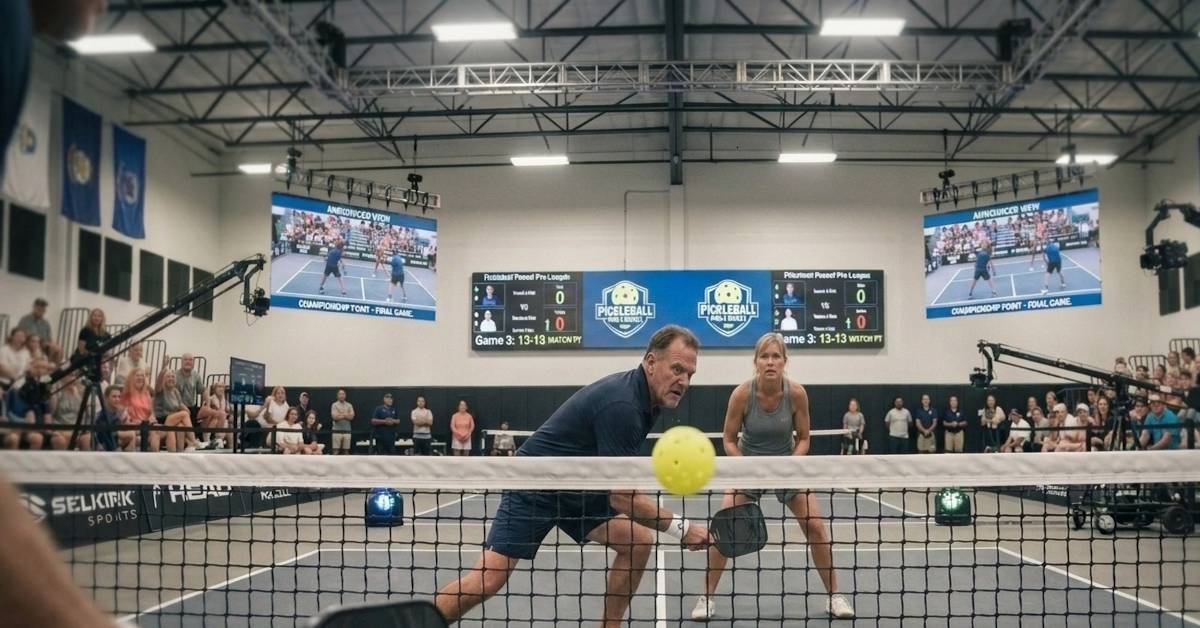
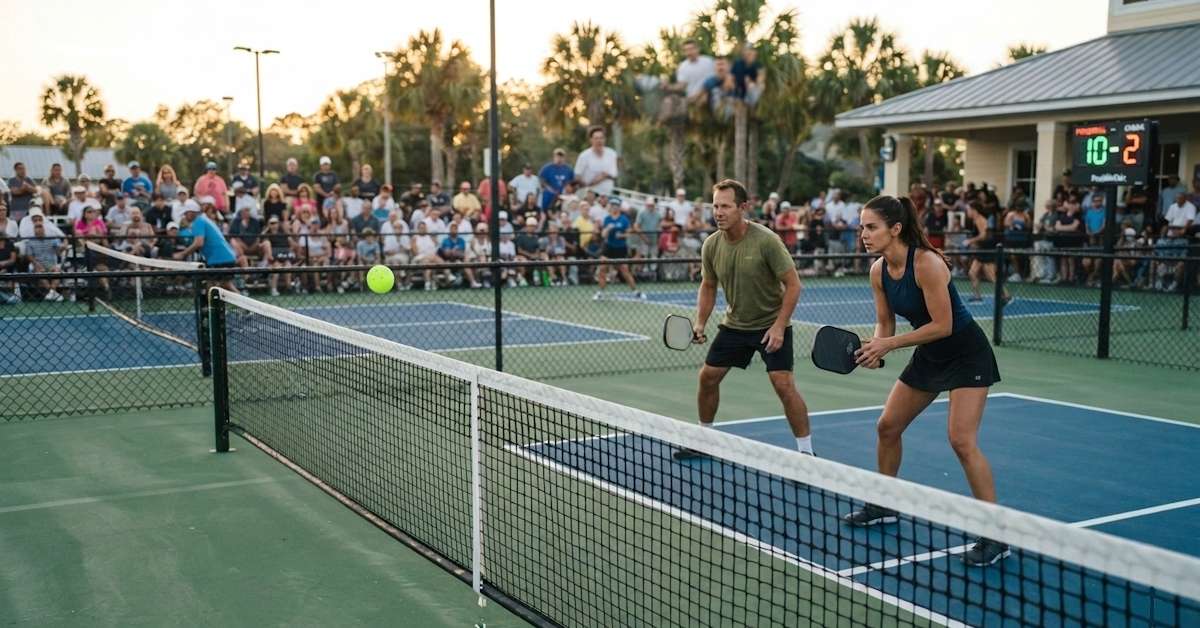
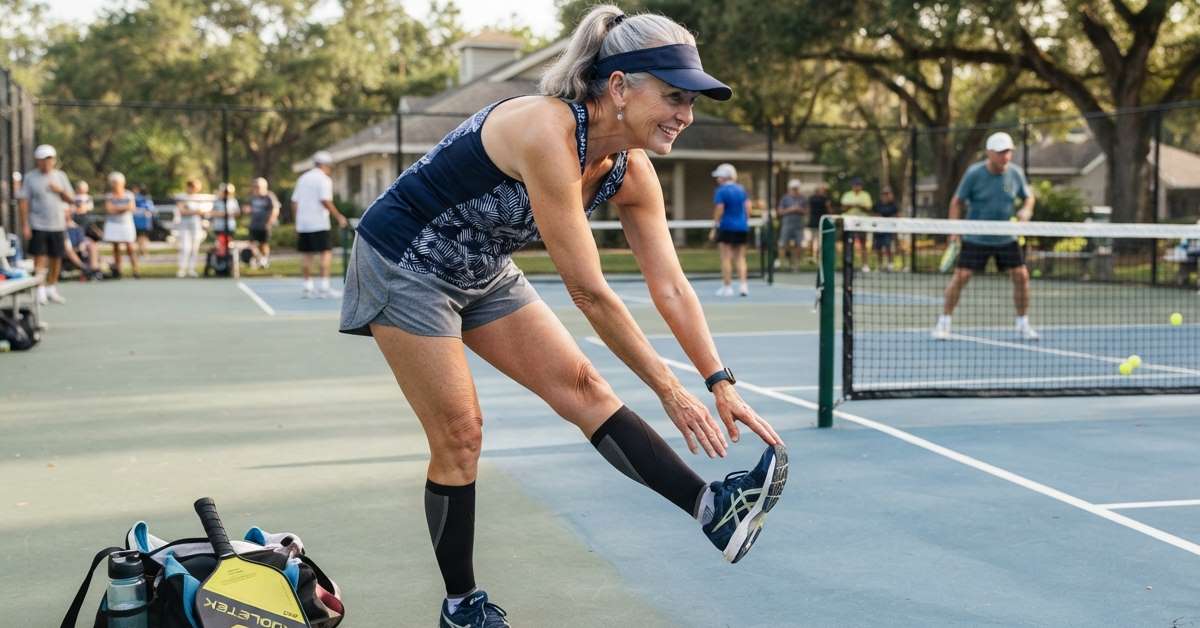
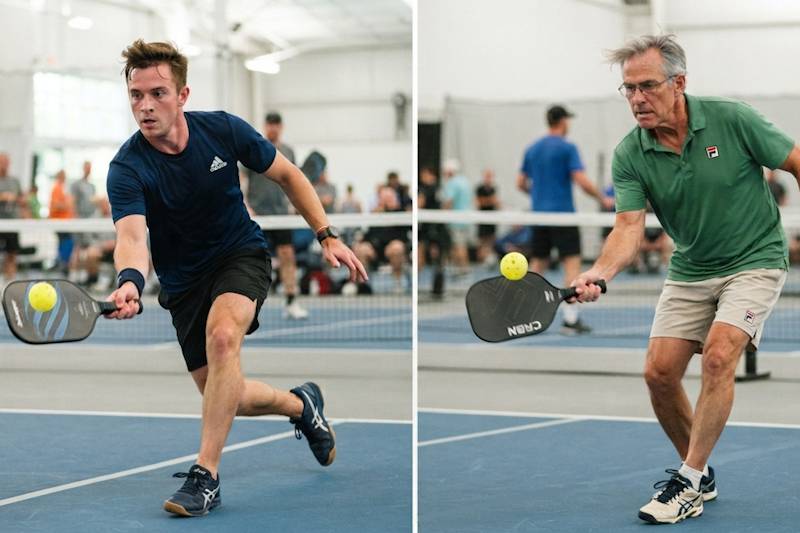
A 58 year old walks onto the court. Two years ago she was a mid 3.5. Today she is closing in on 4.5, still adding shots to her game, still asking her coach what to fix next. On the next court is a 28 year old who hit 4.0 eighteen months ago and has not moved a rating point since. Same number of years playing. Same amount of court time each week. Completely different trajectories.
It is tempting to explain that gap with age. Younger body, faster reflexes, more improvement left in the tank. But that story does not hold up against what the research on skill acquisition, motor learning, and expertise actually shows.
Age is not the variable that predicts who keeps climbing and who plateaus. What actually makes someone an age proof pickleball player is a handful of specific, learnable factors. This article breaks down what those factors are, backed by the science of how skill develops across a lifespan, and looks specifically at how they play out differently for players over 50 and players still in their 20s and 30s.
The Real Science of a Plateau
Every player, regardless of age, eventually runs into the same wall. Skill improves quickly at first, then the rate of improvement slows, then it can flatten out almost entirely. Researchers call this the power law of practice, and it has been documented in everything from typing speed to Morse code operation to elite golf.
For a long time the explanation was simple: the better you get at something, the more automatic it becomes, and automatic performance takes less conscious effort. Effortlessness gets treated as the mark of expertise. But a 2025 paper in the journal Synthese pushes back on that idea directly. Its authors argue that the players who keep improving past the point where most people plateau are not the ones who found an effortless groove. They are the ones who kept exerting real, focused effort in both practice and competition long after the skill became comfortable enough to coast on. Automaticity is what makes a plateau possible. Deliberately fighting the pull toward autopilot is what breaks through it.
That reframes the plateau question entirely. It is not “why did my body stop letting me improve.” It is “at what point did I start coasting on what already works, and am I willing to make myself uncomfortable again.”
What Aging Actually Does, and Does Not Do, to Learning
Here is where the research gets more interesting than the usual assumptions. It is true that healthy aging is associated with some reduction in raw motor learning speed. Reviews of aging and brain plasticity confirm that motor performance in older adults typically involves slower and less accurate movement, and that the brain regions and neurochemical processes involved in learning a new motor skill do shift somewhat with age.
But that is only half the picture, and it is the half that gets all the attention. The same body of research is equally clear that older adults retain a real, meaningful capacity to learn new motor skills, and that training still produces the kind of structural and functional brain changes seen in younger learners.
Even more telling is a study on upper extremity motor skill learning in healthy older adults, which found that within a group of older adults, chronological age itself had a minimal effect on how well someone learned and retained a new motor skill. In other words, once you are looking at a population of healthy older adults, the number of years since their birthday stopped being a useful predictor of who improved fastest.
Something else was driving the difference.
For pickleball, that lines up with a pattern we have written about before. In the data behind our Pickleball Injury Report 2026, the oldest players in the survey did not carry the highest individual injury odds, a finding we called the adaptive play effect: experienced older players tend to moderate intensity, warm up more deliberately, and pace themselves more carefully than the data would predict.
The same instinct that protects an older player’s body may also be protecting their ability to keep learning, simply by keeping them in the game long enough to keep practicing.
Where Younger Players Actually Have the Edge
To be fair to the 28 year old on the next court, younger players are not without real advantages. Recovery between hard training sessions tends to be faster. Reaction time, on average, skews quicker. And younger players are often more willing to absorb high volumes of repetitive practice, logging hours of drilling or open play without the same physical cost that an older body pays for the same volume.
None of that guarantees improvement, though. Volume without structure just produces a player who is very practiced at their existing habits, good and bad alike. Which is exactly where a lot of younger plateaued players get stuck.
Where Over 50 Players Actually Have the Edge
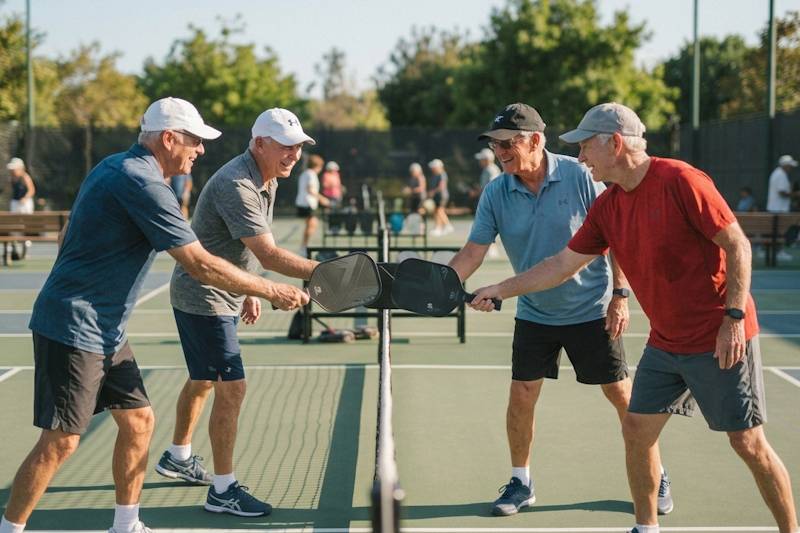
Older players bring something that raw physical training cannot manufacture quickly: pattern recognition built from thousands of points, more disciplined shot selection, and, per the adaptive play data, a tendency toward smarter pacing that keeps them healthy enough to keep training consistently.
A 50 year old who has spent five years reading dink patterns and shot selection often sees the game a beat ahead of a physically faster but less experienced opponent. That experience is not automatically permanent, though.
Earlier we cited a 2025 study published in the journal Synthese, which found that players who keep improving are the ones who keep exerting real effort instead of coasting on what already works. The same rule applies to an experienced 50 year old’s pattern recognition.
It only keeps paying off for an age proof pickleball player who keeps testing and sharpening it. Left unchallenged, that same pattern recognition can just as easily calcify into a set of habits a player stops questioning.
Differentiator 1: Deliberate Practice vs. Just Playing
This is the single clearest line between improving players and plateaued ones, at any age. Anders Ericsson’s deliberate practice framework distinguishes casual play, which is done for enjoyment, from deliberate practice, which is structured specifically to target weaknesses under expert feedback. It is uncomfortable by design.
Pickleball’s own coaching community has converged on nearly the same conclusion independently. A recurring theme across coaches and instructors is that players who cycle endlessly through casual play and tournaments, without dedicated drilling time, tend to plateau even as their match count climbs. The advice shows up again and again in slightly different words: two to four hours a week of focused drilling moves a player’s rating faster than almost anything else, including simply playing more games.
The age split here tends to show up in the type of drift each group falls into. Younger players often default to volume as a substitute for structure, assuming that enough reps will eventually sand off the rough edges. Older players more often default to social, low intensity play, valuing the community and movement benefits of the game (both real and worth keeping) without carving out separate time for the more uncomfortable work of structured practice.
Differentiator 2: Specific, Immediate Feedback
Deliberate practice does not work without feedback, and vague feedback barely works at all. Ericsson’s research stresses that improvement stalls without specific, detailed information about what to fix, not just a general sense of whether a session went well. “Good game” tells a player nothing they can act on. “Your paddle is dropping below your wrist on the backhand reset” does.
This is part of what is driving the recent growth in video based coaching tools built specifically for pickleball, which let players review actual points and get shot level feedback instead of relying on memory and gut feel. For older players, one real barrier can be access.
Fewer instructors build programs specifically around the goals and physical considerations of a 50 plus competitive player. For younger players, the more common barrier is impatience. It is easy to treat a single lesson or a few drills as a fix rather than an ongoing feedback loop.
Differentiator 3: Growth Mindset and Getting Comfortable Being Uncomfortable
Carol Dweck’s research on growth mindset, and its well documented overlap with deliberate practice, helps explain why some players seek out hard feedback and tough matchups while others quietly avoid them.
Players with a growth mindset treat a difficult loss or a blunt piece of coaching feedback as information. Players without it treat the same experience as a threat to their sense of ability, and start avoiding the situations that would actually help them improve.
The specific fear driving this differs by age group. For a lot of over 50 players, the hesitation is tied to injury risk or ego around being outplayed by a much younger opponent. For younger players, it more often shows up as impatience: quitting on a drill, a lesson plan, or a training block the moment progress slows down, right before the gains that structured practice is built to eventually produce.
Differentiator 4: Playing Up
A theme that shows up constantly in pickleball coaching content is the instruction to deliberately seek out better opponents rather than staying comfortable at your current level. It works as a feedback mechanism as much as a confidence test. Playing someone better exposes the exact gaps in your game that casual play with equally matched partners will not.
The barrier to doing this looks different depending on age. Older players more often self select into lower intensity games out of legitimate caution about injury risk, which is a reasonable instinct but one that can be managed rather than avoided entirely, for example by playing up in doubles with a stronger, more mobile partner.
Younger players are more likely to avoid age diverse games specifically, assuming an older opponent has less to teach them, which the pattern recognition advantage described above suggests is often a mistake.
Differentiator 5: Pacing and Injury Avoidance as an Improvement Strategy
This differentiator matters for every player, but it carries the most weight for players over 50, and it connects directly to two pieces we have already published. The adaptive play effect documented in our Pickleball Injury Report 2026, and explored further in Adaptive Play in Pickleball, shows that older players who train and compete for years tend to do so by moderating intensity and pacing themselves rather than by avoiding hard play altogether. That pacing is not a concession. It is what keeps a player on the court long enough to accumulate the repetitions that deliberate practice depends on.
Younger players are not exempt from this. Overuse injuries from unmanaged volume, especially in players trying to substitute repetition for structure, can just as easily stall a training block and erase months of progress.
Putting It Together
The age proof pickleball player over 50 player tends to look like this: pacing deliberately, playing up in skill level with a supportive partner, seeking specific feedback from a coach who understands their goals, and treating experience as a foundation to keep building on rather than a finished product.
The younger age proof pickleball player tends to look like this: trading some raw volume for structured, feedback driven drilling, seeking out tougher matchups including experienced older opponents, and staying patient through the discomfort of a plateau instead of abandoning the process right before it pays off.
Different starting points, different specific barriers, but the same five levers underneath.
Practical Takeaways for the Age Proof Pickleball Player
For players over 50:
- Build in one to two dedicated drilling sessions a week, separate from social or league play, focused on a specific weakness rather than general practice.
- Play up with a stronger doubles partner rather than avoiding tougher competition altogether. It manages risk while still exposing you to a faster pace of play.
- Ask your coach for specific, shot level feedback rather than general encouragement, and track it session to session.
- Treat your pacing instincts as an asset, not a limitation. Protecting your body is part of what keeps you improving long term.
For younger players:
- Trade some of your open play volume for structured, feedback driven drilling. More reps on the same habit will not fix the habit.
- Seek out experienced older opponents specifically. Their pattern recognition will expose gaps that speed alone will not.
- Push through the early part of a plateau rather than switching approaches or giving up. Deliberate practice research suggests the gains often show up after the discomfort, not before it.
- Get a coach or video review tool that can give you specific feedback, not just a general sense of whether you played well.
This section is offered as practical, informed extrapolation built on the research above, not as a direct finding from any single study.
Conclusion
Age does not set the pickleball skill plateau on a player’s improvement. The research is fairly clear on that point, and so is the pattern in your own game if you look closely at who around you keeps climbing and who has quietly stopped.
What sets the ceiling is whether a player keeps exerting real effort instead of coasting on automatic habits, whether their practice is structured and specific instead of just repeated, whether they seek out feedback and tougher competition instead of comfort, and whether they manage their body well enough to stay in the game long enough for any of that to compound.
Those levers are available at 28 and at 58 alike. The only question is which ones you are actually pulling to become the ultimate age proof pickleball player.
References
- Victory at all costs: the role of effort in expert action. Synthese, 2025.
- K. Anders Ericsson, deliberate practice and sport: Contributions, collaborations and controversies. Journal of Expertise, 2021.
- Aging, brain plasticity, and motor learning. ScienceDirect, 2024.
- Rapid responsiveness to practice predicts longer term retention of upper extremity motor skill in non demented older adults. PMC.
- Mindsets: Developing Talent Through a Growth Mindset. Carol S. Dweck.
- Growth Mindset Scale: reliability and validity of a new 8 item scale assessing growth mindset. ScienceDirect, 2024.
- Pickleball Injury Report 2026 (internal research, gchanmako.com).
- Adaptive Play in Pickleball (internal research, gchanmako.com).