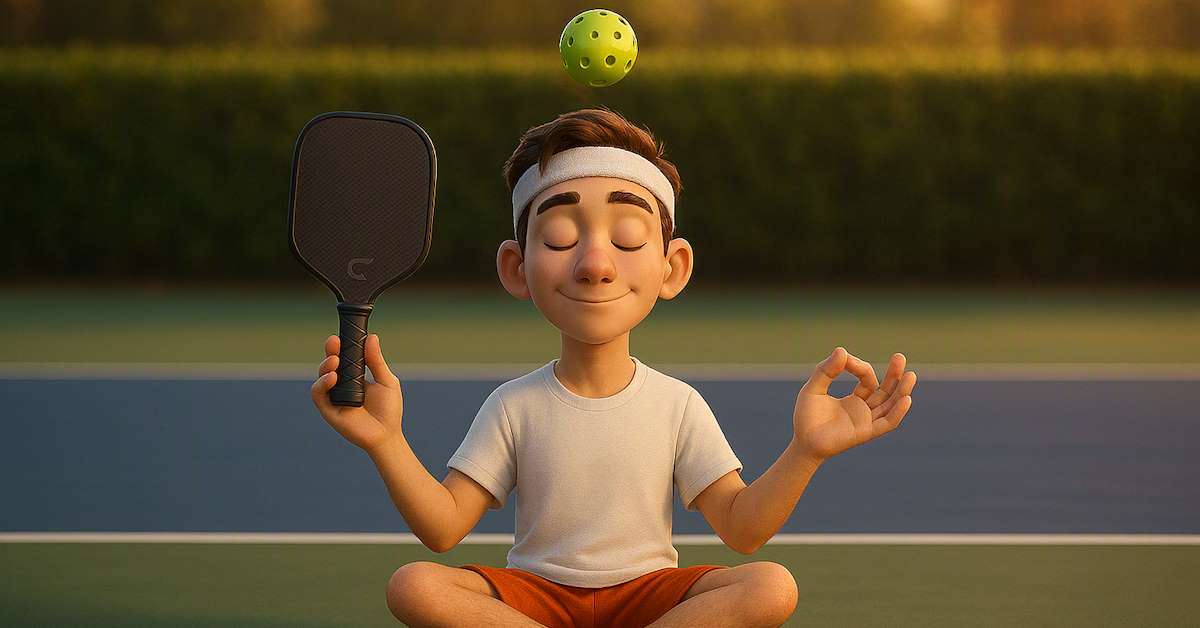
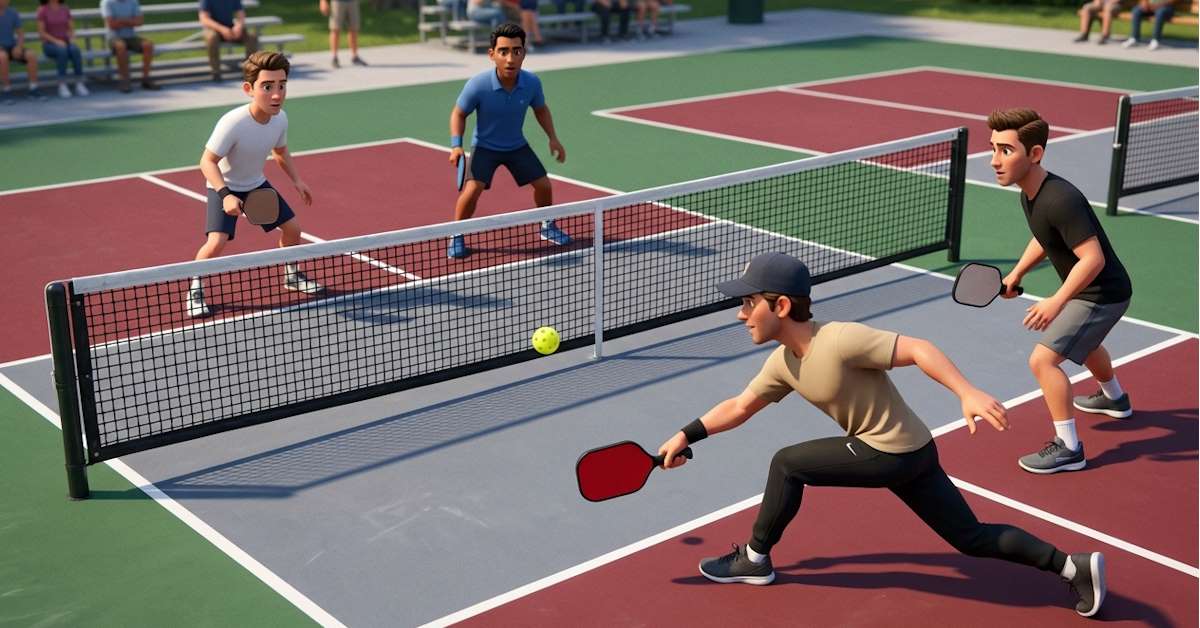
The 5-Second Flush: The Micro-Routine Elite Players Use Between Points to Stay Focused

Master Your Pickleball Between Points Routine for Unshakeable Focus
The true battlefield of competitive play does not exist during the physical madness of a fast-paced hand battle. Instead, it exists entirely in the brief, quiet window of time right after a rally comes to a definitive end.
Far too many recreational players carry the lingering ghost of a missed shot or a frustrating unforced error directly into the next serving sequence. This mental drag creates a domino effect of bad hits that can quickly throw away an entire match.
Learning how to completely detach your mind from a bad play requires a disciplined, structural approach to your on-court behavior. By executing a highly predictable pickleball between points routine, you give your brain a literal five-second boundary wall to completely wipe away past frustration.
This simple, in-game habit ensures that you approach the next point with an unshakeable sense of clarity and presence. Instead of letting a single error turn into a cascading run of points for your opponents, you lock down your emotional focus and consistently dictate the tempo of the court.
The Physical Anchor: Using Equipment Adjustments to Kickstart Your Pickleball Between Points Routine
The Core Concept: Your mind cannot simply stop thinking about a frustrating error on command; it requires a physical action to interrupt the negative loop.
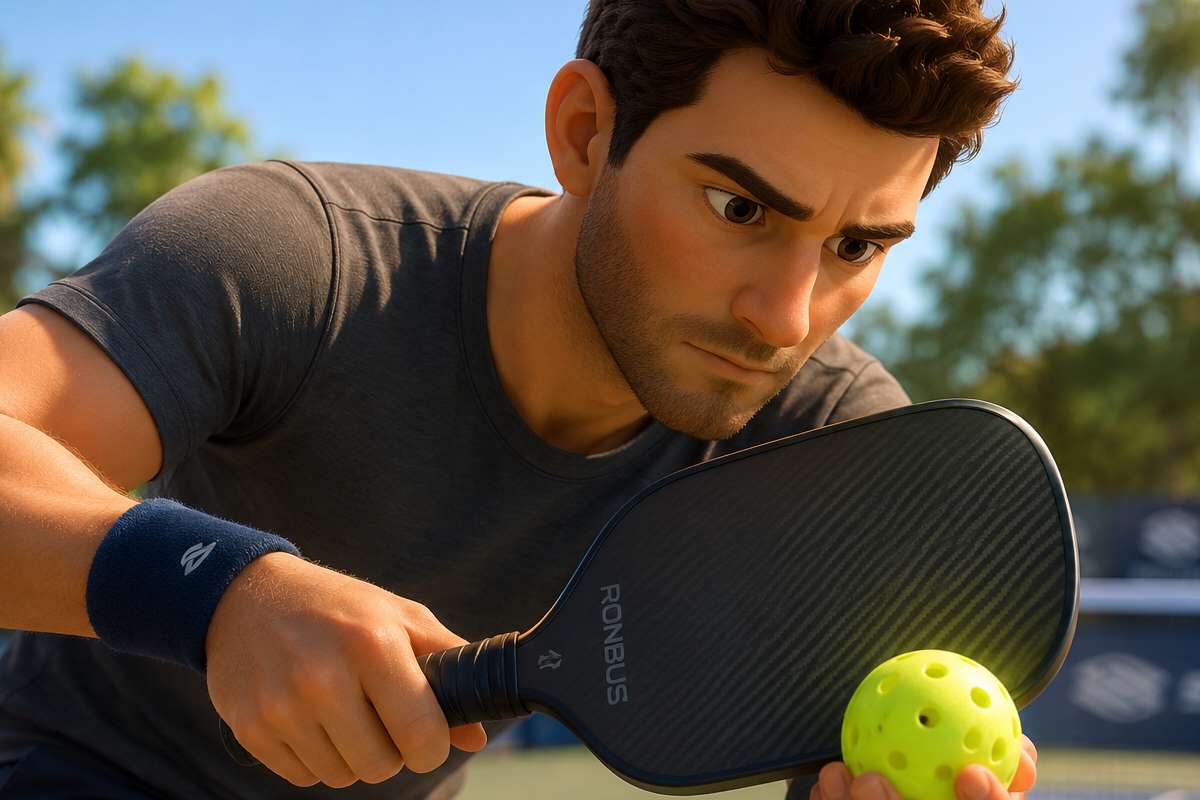
By tying a specific movement like adjusting your wristband or tapping your paddle to your pickleball between points routine, you create a physical anchor that forces your brain to dump the past and snap back to the present.
- The Coach’s Perspective: Think about what most players do immediately after they hit a routine volley deep into the fence. They slam their hand against their thigh, roll their eyes, and stare up at the sky while walking backward to the baseline.
Their mind is still trapped in the past, completely rewriting the mistake over and over again. As your coach, I want you to stop treating the space between rallies as dead time. The very second a point ends, you need to execute a physical reset action that signals the absolute death of that rally.
Turn your back to the net, look directly down at your paddle face, and adjust your grip or fiddle with the edge guard. Make that simple movement your personal behavioral boundary line.
The rule is non-negotiable: the moment your fingers finish that physical adjustment, the previous point is completely dead and buried, and your mind is clean for the next serve.
- The Science Behind It: This behavioral phase of your pickleball between points routine leverages a classic cognitive behavioral technique known as Somatic Anchoring and Stimulus-Response Conditioning.
When you make an error, your neural pathways instantly begin looping a script of self-criticism, which burns up processing speed in your working memory.
By deliberately engaging in a highly specific, tactile physical movement, you introduce a mechanical Neurological Pattern Interrupt. This tactile feedback forces your sensory cortex to process a brand-new, immediate physical sensation the rough texture of your grip or the tight elastic of your wristband.
This somatic grounding trick pulls electrical activity away from the emotional centers of the brain.It effectively shuts down the rumination cycle, freeing up your cognitive bandwidth so your brain can prepare for the next physical action.
The Breakdown for the Court:
- The Gear Fiddle Technique: Find a specific piece of equipment to focus on during your pickleball between points routine. Whether it is wiping your sweaty hands on your shorts, checking the tension of your paddle face, or adjusting your visor, do it intentionally after every single rally to serve as your clean slate trigger.
- Neurological Pattern Interrupt: Think of your brain like a record player that gets stuck scratching on a bad groove over and over again. A pattern interrupt is the physical act of lifting the needle off that scratched record.Looking down and adjusting your equipment is that physical bump, completely stopping the scratch of self-criticism.
- Somatic Anchoring: This means using a physical touch point to lock your floating mind back down to earth. It is the psychological equivalent of pulling your emergency brake to stop a car from rolling down a hill, physically stopping an anxious brain from drifting backward into the previous point.
- Stimulus-Response Conditioning: This is the psychological science behind creating an automatic habit. Think of it like training a puppy to sit every single time you show it a treat. On the court, you are training your own brain to execute a specific response (calming down and resetting) whenever it experiences a specific stimulus (fiddling with your paddle edge guard). By practicing this exact pairing after every single rally, you build a powerful habit loop. Eventually, simply touching your paddle or adjusting your grip will automatically trigger a wave of calm focus across your entire mind, without you having to fight your thoughts to get there.
The Internal Breath Release: Reclaiming Calm and Clarity Within Your Pickleball Between Points Routine
The Core Concept: A physical anchor stops the mental bleeding, but a neurological release resets your biological chemistry.
By pairing your tactile gear adjustments with an intentional, sharp exhalation, you flush out residual toxic stress, providing a clean physical slate for your pickleball between points routine.
- The Coach’s Perspective: Once you have turned your back to the net and looked down at your paddle face, your body needs to drop the physical weight of that last exchange.
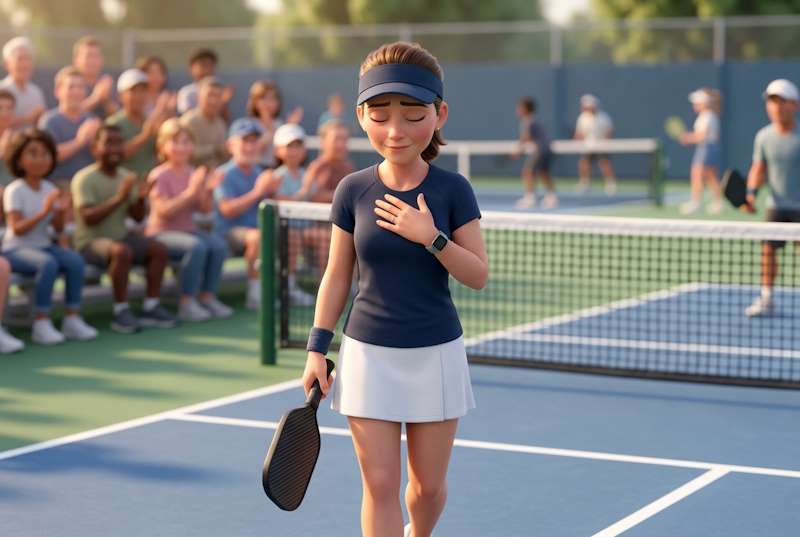
I want you to take a deep, silent breath in through your nose, hold it for just a split second, and then let out a forceful, audible sigh through your mouth. Imagine that physical sigh is literally blowing the smoke away from a fired gun.
Too many players hold onto their air when they get frustrated, keeping their chests tight and their blood pressure high. When you choke off your breath, you choke off your physical talent.
Dropping that heavy breath between rallies forces your shoulders to drop, unlocks your rib cage, and lets your hands relax. It is the fastest way to strip the panic out of your body before your opponent calls the next score.
- The Science Behind It: This respiratory component of your pickleball between points routine activates a powerful biological reset called the Physiological Sigh.
When you make a high-stress mistake, your lung’s tiny air sacs collapse, causing a sudden, microscopic buildup of carbon dioxide in your bloodstream. This chemical imbalance triggers your brain’s Medullary Respiratory Center to immediately signal a low-grade panic state, locking your muscles up.
Taking a double-inhale followed by an extended, sighing exhalation instantly reinflates those collapsed air sacs and dumps the excess carbon dioxide. This breathing pattern stimulates your Parasympathetic Nervous System, triggering an immediate drop in your resting heart rate.
By using this precise mechanism, you overwrite your brain’s fear response with an artificial wave of calm, restoring the baseline neurological harmony required for fine motor precision.
The Breakdown for the Court:
- Medullary Respiratory Center: Think of this as your brain’s internal carbon dioxide alarm system. When you hold your breath out of frustration, this alarm starts blasting, making your heart race and your muscles lock up. A sharp, sighing exhale physically turns off that alarm so your body can move freely again.
- Physiological Sigh: This is your body’s built-in emergency exhaust valve for emotional pressure. It is the quickest way to dump toxic carbon dioxide from your blood, preventing your brain from going into full panic mode after a bad unforced error.
- The Exhaust Valve Drill: Make it an absolute rule to never look at your partner or step back to the line until you have physically sighed out your breath. Let that audible exhalation be the definitive, final cleanup crew for the last point, leaving your lungs and your mind entirely clear for the next exchange.
Setting the Micro-Goal: Directing Focus and Finalizing Your Pickleball Between Points Routine
The Core Concept: A clean mind is only useful if it is immediately directed toward an actionable task.
By feeding your brain a single, highly specific technical objective as you finalize your pickleball between points routine, you block out future-focused anxiety and ensure your body operates with complete confidence.
- The Coach’s Perspective: Now that you have anchored your body with your gear and flushed your lungs with a deep breath, you need a plan for the next five seconds.
Many players do the hard work of resetting their minds, but then they step up to the line completely blank. A blank mind is an invitation for doubt to creep back in. As your coach, I want you to give your brain a specific job to do before the ball is served.
Do not think about winning the game or winning the next point. Pick one tiny micro-goal that you can execute on the very next hit. Tell yourself, “I am going to keep my paddle up,” or “I am going to hit the center of the kitchen.” Giving your mind a narrow target locks you into the present moment and keeps your muscle memory flowing beautifully.
- The Science Behind It: This final directional component of your pickleball between points routine engages a brain mechanism called the Reticular Activating System (RAS).
The RAS acts as your brain’s internal filtering software, deciding which environmental inputs to notice and which to ignore. When you don’t give your brain a specific focus, the RAS naturally defaults to scanning for immediate threats.
This means your mind fixates on things like an aggressive banger cracking a ball on a nearby court, a loud paddle slam, or a player shouting on an adjacent court. By consciously setting an immediate micro-goal, you employ Intentional Attentional Control to manually program your filtering software.
This mental programming blocks out external distractions and hyper-focuses your visual cortex on task-relevant cues. This systematic focus channels neural energy into the prefrontal cortex, suppressing the emotional interference that causes athletes to choke under heavy pressure.
The Breakdown for the Court:
- Intentional Attentional Control: Think of this as taking over the steering wheel of your own mind. Instead of letting your thoughts drift aimlessly toward past mistakes, you are forcing the car to turn down a specific, productive road.
- Reticular Activating System (RAS): This is your brain’s search engine. If you don’t type a specific search query into it, it defaults to looking for things to worry about, like the wind or the scoreboard. Giving it a micro-goal is the equivalent of typing a highly specific instruction into your search bar, forcing your brain to only look at what matters.
- The One-Word Cue: Choose a single action word to repeat to yourself as you finish your pickleball between points routine and step up to the line. Whispering words like “Feet,” “Paddle,” or “Soft” gives your brain a simple, clear blueprint to execute on autopilot from the very first strike.
Conclusion: Mastering the Silence Between the Storms
The true differentiator between average players and elite competitors is not what they do while the ball is in the air. It is entirely defined by how they manage the quiet vacuum of time after the rally has ended.
By systematically building a disciplined pickleball between points routine, you take complete control of your internal environment. You use your gear to anchor your drifting thoughts back to earth.
You use your breath to chemically flush panic out of your blood. Finally, you use a single micro-goal to point your mental search engine exactly where it needs to go.
You cannot always control how the last rally ended, but you have absolute authority over how the next one begins. Flush the past, breathe out the pressure, lock your eyes on your target, and dictate the match one single point at a time.
Looking Ahead to Mindset #5: Shifting into Flow State and Silencing Your Inner Coach
You have officially mastered the art of managing your internal state during the brief spaces between rallies.
Your mind is a clean slate, your body is anchored, and your focus is locked into the present moment.
But the second the ball is served and a high-velocity exchange begins, a new mental trap opens up.
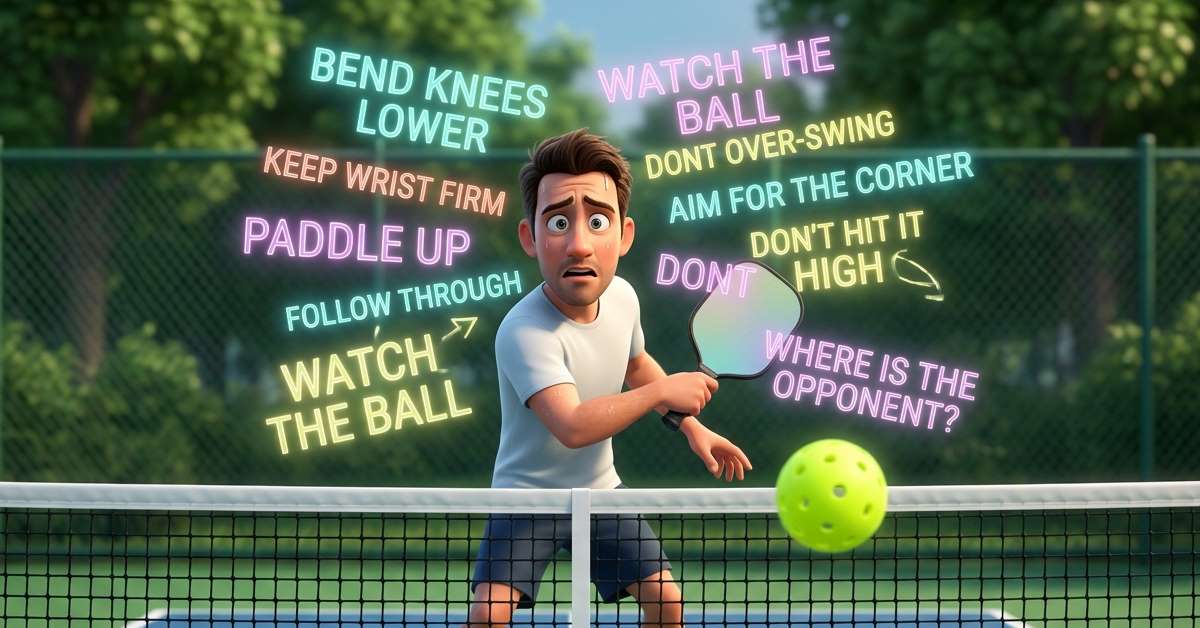
Your brain begins to overthink your physical mechanics mid-point, shouting internal corrections about your wrist angle or your foot positioning.
This internal commentary creates a fatal delay in your reactions, destroying your touch and fluid movement.
In our next article, we are going to dive deep into the ultimate peak performance zone.
We will unpack the sports science secrets behind shutting down that analytical inner voice so you can play entirely on pure instinct.
You will discover how to unlock a true athletic pickleball flow state, allowing your hands and legs to execute advanced plays naturally without your thoughts getting in the way.
Ready to Stop Overthinking and Trust Your Instincts?
Don’t let your own inner critic slow down your reaction speed during fast-paced kitchen battles.
Click the link below to discover the exact cognitive shifts elite tournament players use to quiet their analytical minds, unlock their muscle memory, and enter the zone.
Read the Next Chapter: Pickleball Mindset #5: Shifting into Flow State and Silencing Your Inner Coach