Pickleball Injury Statistics Compared to Other Sports: Tennis, Golf, Running and More
Pickleball injury statistics compared to other sports tell a story most headlines get wrong. Every pickleball player eventually asks some version of the same question: is pickleball actually more dangerous than the sports others play? Tennis. Golf. Running. Cycling. Weight training. Is pickleball really worse, or does it just feel that way because everyone’s suddenly talking about it?
The honest answer depends entirely on one variable most headlines skip: age. Once you separate that out, the comparison splits into two completely different stories.
The Quick Answer: Pickleball Injury Stats Compared to Other Sports
For adults of all ages, pickleball is not one of the most dangerous recreational sports. A 2026 analysis of nearly 793,000 U.S. emergency department visits from racket and paddle sports found tennis accounted for 61.7% of injuries, versus 13.1% for pickleball [1]. Basketball, soccer, running, tennis, and cycling all generate bigger injury totals across the general population, mostly because more people play them, more often, for more years.
For adults 55 and older, the picture flips. A 10-year NEISS analysis of 12 popular sports found pickleball’s injury incidence rate climbed 925% since 2014 (from 0.92 to 8.52 per 100,000 people), and by the most recent years studied, it had overtaken golf as the sport with the single highest injury rate in that age group [2]. Golf still edges pickleball on raw share of injuries (22.8% vs. 17.0%), but pickleball is the one accelerating [2].
The mechanism matters as much as the numbers. In players 60 and older, 63.3% of pickleball injuries came from a slip, trip, fall, or dive, not contact and not overexertion, but a loss of balance [3]. That’s the real story here: it’s not that pickleball is inherently reckless. It’s that a fast growing sport built on lunges, sudden stops, and lateral scrambling is being played, in huge numbers, by bodies that haven’t been asked to move that way in years.
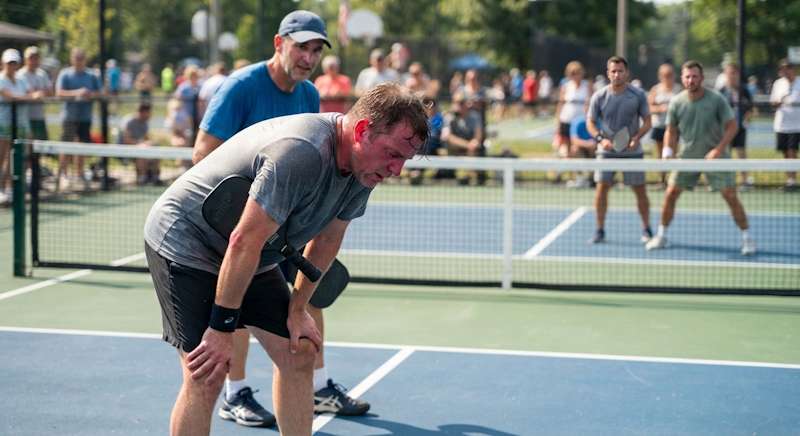
Among Adults of All Ages, Pickleball Isn’t the Outlier You’d Think
If you look at recreational injury data across every age group, pickleball doesn’t crack the top of the list. Basketball, soccer, running, tennis, and cycling all produce bigger injury burdens, for reasons that have nothing to do with pickleball at all.
Basketball combines jumping, cutting, and contact. Soccer adds kicking and collisions. Running creates enormous repetitive load simply because the same motion repeats thousands of times per session; one large survey of recreational runners found 44.6% had experienced a running related injury in the past year [4]. Tennis layers rapid lateral movement onto repetitive upper body loading, with injury incidence estimates running as high as roughly 3 per 1,000 hours of play in some studies [5].
Pickleball is different mainly because of volume, not danger per rally. The 2000 to 2023 racket and paddle sport ED study found tennis responsible for 61.7% of the nearly 793,000 injuries analyzed, with paddleball/squash/racquetball at 15.6% and pickleball at 13.1% [1]. Pickleball ranks there almost entirely because participation has exploded, not because an hour on a pickleball court is unusually dangerous for the average adult player.
So for adults of all ages, the data don’t support calling pickleball one of the five most dangerous recreational sports. That claim is simply broader than the evidence allows.
After Age 50, the Story Changes Completely
This is where pickleball actually separates itself, and where most “is pickleball dangerous” articles miss the real headline.
A 10 year NEISS database analysis of orthopedic injuries in adults 55 and older, covering 12 popular sports from 2014 to 2023, found:
| Rank | Sport | Share of injuries |
|---|---|---|
| 1 | Golf | 22.8% |
| 2 | Pickleball | 17.0% |
| 3 | Tennis | 13.4% |
| 4 | Weight lifting | 12.9% |
(Source: 10-year NEISS analysis, adults 55+, 12 sports [2])
Golf still has the bigger raw share. But raw share only tells you where injuries are concentrated right now; it says nothing about direction. When researchers instead tracked incidence rate (injuries relative to population, tracked year over year), pickleball’s trajectory stood apart: a 925% increase since 2014, climbing from 0.92 to 8.52 injuries per 100,000 people, enough to pass golf as the sport with the single highest injury rate in this age group by the most recent years studied [2].
Put simply: golf still has more total cases piled up over the decade. Pickleball is growing faster and hitting harder, year over year, than anything else on that list.
The injury type backs this up. Sprains and strains were the most common injury overall across all 12 sports (56.9%), but fractures, a more serious outcome and a longer recovery for an older player, were the predominant injury specifically in pickleball [2]. A related analysis reinforces how concentrated this is: 91% of pickleball injuries occur in players 50 and older, with an 88% increase in injury rates since 2020 [6].
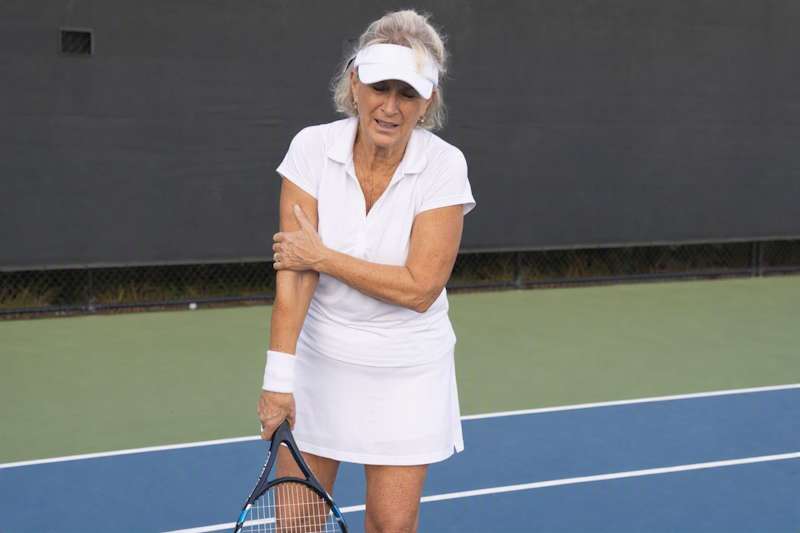
Pickleball Injury Statistics Compared to Tennis
Tennis is the closest comparison pickleball has, with similar court geometry, similar lateral movement demands, and a lot of players who split time between both sports.
A study of adults 60 and older tracking U.S. emergency department visits from 2010 to 2019 found an estimated 28,984 pickleball injuries against 58,836 tennis injuries over that period [3]. On raw numbers, tennis looks considerably more dangerous. But by 2018, the annual number of senior pickleball injuries had already reached parity with senior tennis injuries [3], a sport that barely existed at scale a decade earlier catching up to one of the most established recreational sports in the country.
The injury pattern also diverges in a way that matters for prevention. Among players 60+, 63.3% of pickleball injuries stemmed from a slip, trip, fall, or dive, with strains/sprains (33.2%), fractures (28.1%), and contusions (10.6%) as the leading diagnoses [3]. There’s also a sharp gender split worth knowing: men were about 3.5 times more likely to suffer a strain or sprain, while women were roughly 3.7 times more likely to sustain a fracture, and about 9 times more likely to sustain a wrist fracture specifically [3]. A blanket statement like “men get hurt more than women” doesn’t survive contact with that data. It depends entirely on which injury you’re asking about.
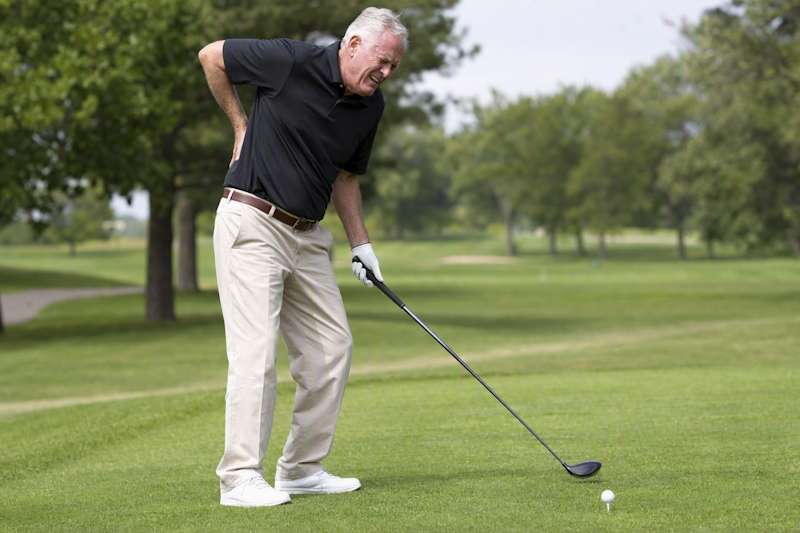
Pickleball Injury Statistics Compared to Golf
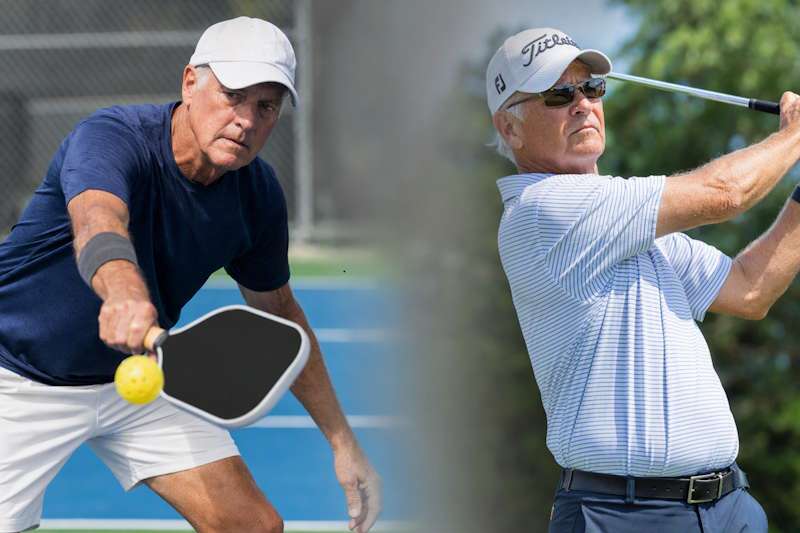
Golf is the sport that makes people question their assumptions. It doesn’t involve lunging around a 20 by 44 foot court or reacting to a ball coming at your body, yet it still produced the single largest share of orthopedic injuries among adults 55+ in the 10-year NEISS study, at 22.8% versus pickleball’s 17.0% [2].
That’s a reality check for anyone assuming a sport has to look athletic to generate a real injury burden. Golf injuries come from repetitive swing mechanics, overuse, falls, and being struck by equipment or balls, mechanisms that have nothing to do with lateral court movement.
The important twist: by the most recent years in the same study, pickleball had overtaken golf in injury incidence rate among older adults [2]. So “golf is safer because it’s less athletic” doesn’t hold up as a clean conclusion. Golf still has the bigger accumulated injury share, but pickleball is closing that gap faster than any other sport in the dataset.
Why the Raw Numbers can be Misleading…
Golf and pickleball don’t just produce different injuries, they’re played on completely different schedules. A recreational golfer might play one 18 hole round a week, roughly four hours, much of it spent riding in a cart, waiting, or walking slowly between shots. A dedicated pickleball player might play three or four two hour sessions a week, and nearly all of that time involves actual athletic movement: accelerating, stopping, lunging, and changing direction. As a rough illustration, that works out to roughly 208 hours of golf a year versus 364 hours of pickleball, with a far higher share of pickleball’s hours spent in high intensity movement.
The same NEISS study behind the numbers above puts this in context: golf produced an estimated 65,615 injuries among adults 55+ over the decade studied, versus 48,908 for pickleball [2]. Golf still has more total cases, but pickleball’s injuries are concentrated into a fraction of the playing time, and its incidence rate is the one climbing fast enough to pass golf’s [2].
The injury types also diverge sharply. Golf’s injuries tend to build from the repetitive rotational load of the swing, stressing the lower back, elbow, shoulder, and wrist over hundreds of repetitions. Pickleball’s injuries skew toward falls instead: 63.3% of pickleball injuries in players 60+ came from a slip, trip, fall, or dive [3]. Golf, in other words, is low impact but not low stress. It substitutes whole body movement for repeated, high speed rotational loading during the swing. Pickleball trades that for constant reactive movement, and the fall risk that comes with it. Neither mechanism is harmless. They just demand different things from an aging body, which is why the more useful question usually isn’t “which sport is more dangerous” but “is my body prepared for the specific demands of the sport I’m playing.”
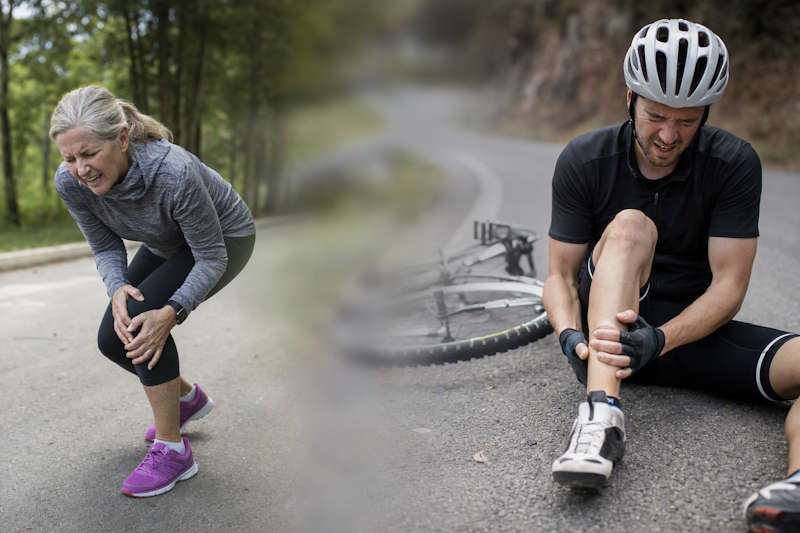
Pickleball Injury Statistics Compared to Running and Cycling
Running operates on a completely different injury model. There’s no opponent, no paddle, no ball coming at you, just repetitive loading, stride after stride, thousands of times per run. That’s why running is so strongly tied to overuse injuries in the knee, lower leg, ankle, and foot: one recreational runner study found 44.6% reported an injury in the past year [4]. That doesn’t make running “more dangerous” than pickleball; it means the mechanism is different. Running injuries build gradually from repetitive load. Pickleball injuries tend to come from the combination of repetitive load plus sudden deceleration, lateral movement, and falls, a mechanism that hits older, less conditioned bodies much harder.
Cycling has yet another risk profile: falls and collisions dominate, not repetitive joint loading. A cycling injury can range from a minor scrape to a severe traumatic injury, and the risk swings enormously based on where and how someone rides. A neighborhood cruise is not the same exposure as mountain biking or aggressive road riding. That variability is exactly why cycling resists being slotted into a single “danger ranking” alongside court sports.
Pickleball Injury Statistics Compared to Weight Training
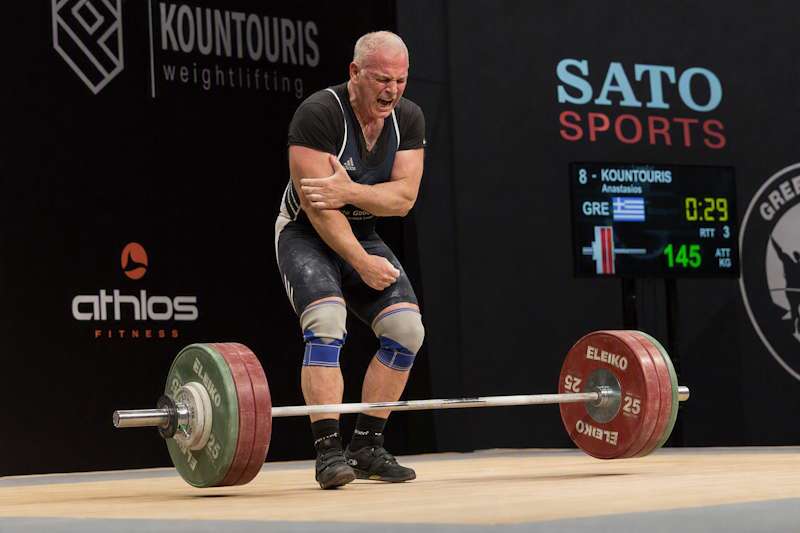
Weight training is the outlier on this list for a good reason: it’s the one activity here that’s arguably part of the solution rather than the problem.
Resistance training injuries do happen. Sprains, strains, and overuse from poor programming are real risks. But properly programmed strength training builds almost every physical quality pickleball demands: pushing, pulling, squatting, lunging, rotating, decelerating, balancing, reacting. That overlap is the whole argument for using it as injury prevention, not just a separate hobby with its own separate risk column.
The Ironic Case for Weightlifting and Pickleball – the Ying and Yang
Weight training may seem like the complete opposite of pickleball. One involves standing in a gym and deliberately moving resistance through controlled movements, while the other involves chasing a plastic ball around a court, reacting to an opponent and trying not to trip over your own feet. But there is an interesting irony when we look at pickleball injury prevention. Resistance training injuries commonly involve sprains, strains and overuse, yet properly programmed strength training may actually be one of the best tools we have for preventing many of the injuries that occur on the pickleball court.
Think about what pickleball asks your body to do. You have to push, pull, squat, lunge, rotate, decelerate, balance and react, often within a few seconds. Those are not random movements. They are physical demands that can be specifically trained. A well designed resistance training program can build the leg strength needed to absorb force, the hip and core strength needed to control rotation, the upper body strength needed to handle repetitive paddle movements, and the balance and stability needed to control those awkward lunges and sudden changes of direction.
This creates one of the great ironies of pickleball injury prevention: the activity that looks like the opposite of pickleball may actually be one of the best ways to prepare your body for it.
The goal of strength training is not to turn every pickleball player into a bodybuilder. It is to increase the amount of physical stress your body can safely tolerate. Stronger legs can help you decelerate. Stronger hips can help control lateral movement. A stronger core can help transfer rotational forces efficiently. Stronger shoulders and forearms can help tolerate the repetitive demands of hitting. And better overall strength can give you a larger margin of error when a point suddenly turns into a scramble.
For older pickleball players, this becomes even more important. Age does not mean you have to move less. It means you need to prepare more deliberately for the movements you are asking your body to perform. Strength, balance and movement control can help turn pickleball from a sport your body simply has to survive into a sport your body is actually prepared to play.
What This Actually Means for Your Risk
There’s no single scientific ranking of “the most dangerous recreational sport.” Researchers measure different things: total injuries, injuries per participant, injuries per 1,000 hours of exposure, ER visits only, or self-reported aches included. Those numbers don’t collapse cleanly into one leaderboard, and any article that hands you a confident top 5 list is smoothing over that mess.
What the data supports is this: pickleball is not unusually dangerous for adults in general, but it is genuinely one of the fastest rising injury risks for adults over 50. Not because there’s something uniquely hazardous about picking up a paddle, but because the sport’s movement demands (rapid lateral shifts, lunges, sudden stops, occasional dives) are colliding with a huge wave of players whose bodies haven’t trained for that pattern in years.
That’s a modifiable problem, not a fixed one. You can’t change your age. You can change your strength, balance, footwork, warm up habits, playing volume, and recovery, the same physical preparation covered in Pickleball Injury Statistics: It’s Not The Court applies just as much here. The goal was never to find a sport with zero risk. It’s to understand the risk profile of the sport you love and train for it accordingly.
📌 Related reading: If you want the deeper dive into why pickleball injuries are climbing and why it’s player conditioning, not court surface, driving most of it read Pickleball Injury Statistics: It’s Not The Court.
Sources
- Racket and paddle sports-related injuries treated in United States emergency departments, 2000–2023. ScienceDirect, 2026. https://www.sciencedirect.com/science/article/pii/S073567572600313X
- Qi A, Saggar R, Fee B, et al. Sports-Related Orthopaedic Injuries in the Older Athlete: A 10-Year NEISS Database Analysis. 2025. https://pmc.ncbi.nlm.nih.gov/articles/PMC12536138/
- Weiss H, Dougherty J, DiMaggio C. Non-fatal senior pickleball and tennis-related injuries treated in United States emergency departments, 2010–2019. Injury Epidemiology, 2021. https://pmc.ncbi.nlm.nih.gov/articles/PMC8091689/
- Running-Related Overuse Injuries and Their Relationship with Run and Resistance Training Characteristics in Adult Recreational Runners. 2023. https://pubmed.ncbi.nlm.nih.gov/37754962/
- Epidemiology of musculoskeletal injuries in tennis players: risk factors. https://pubmed.ncbi.nlm.nih.gov/31311243/
- Rising Orthopedic Injuries in Pickleball: Insights from a 10-Year National Study. American Osteopathic Academy of Orthopedics, 2025. https://aoao.org/2025/03/21/rising-orthopedic-injuries-in-pickleball-insights-from-a-10-year-national-study/