Stop Blaming the Court: Pickleball’s Injury Epidemic Is a Player Problem
Hard Courts Are the Easy Excuse. Pickleball Injury Statistics Point Somewhere Else Entirely.
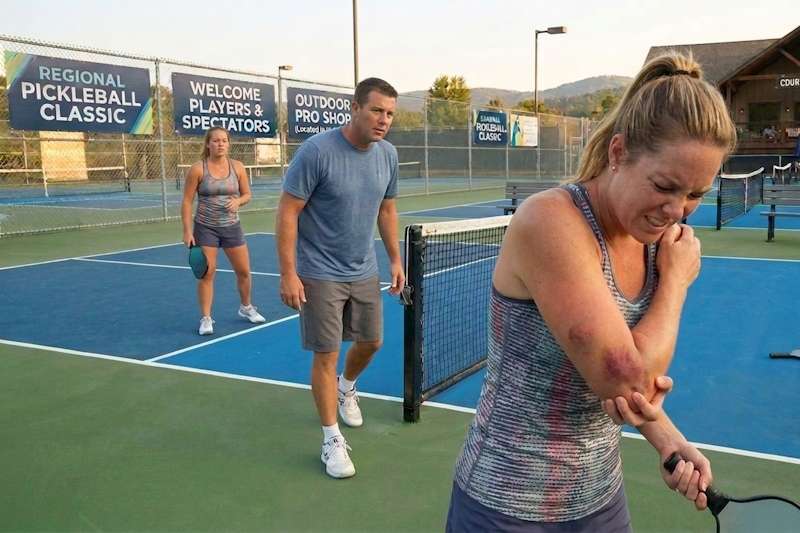
Every few months, another headline blames pickleball’s hard courts for an “injury crisis.” It’s a satisfying villain, concrete is unforgiving, orthopedic surgeons are busy, case closed. But the actual pickleball injury statistics don’t point at the pavement. They point at the people standing on it.
By the numbers: what pickleball injury statistics really show
Before getting into causes, here’s the shape of the problem. Pickleball injury statistics from U.S. emergency department data (NEISS) shows pickleball related injury visits went from an estimated 1,313 nationally in 2014 to roughly 24,461 in 2023 tracking almost exactly with the sport’s explosive growth in players.
A separate 2022 snapshot estimated around 17,416 ER visits that year, with fractures the single most common diagnosis at about 30%, sprains at 17%, and internal organ injuries at roughly 7%. One in five of those ER cases resulted in hospitalization. Fully 87% of these injuries occurred in players over 50.
Pickleball injury statistics body part breakdowns from player survey data (rather than ER only data, which skews toward the most severe fall/fracture cases) give a fuller picture of where the wear and tear shows up:
| Body region | Share of reported injuries |
|---|---|
| Knee | 23% |
| Elbow / forearm | 18% |
| Shoulder / upper arm | 17% |
| Ankle / foot | 14% |
| Wrist / hand | 10% |
| Lower back | 6% |
| Upper back | 4% |
| Head / neck | 3% |
Two things jump out. First, the knee is the single most injured joint, but it’s not a landslide upper body overuse (elbow, shoulder) is nearly as common, which undercuts the idea that this is purely a “hard court destroying knees” story; a golfer’s elbow style paddle injury has nothing to do with what the court is made of. Second, head and neck injuries are rare, which matters for the next section.
Who actually gets hurt: younger players or older players?
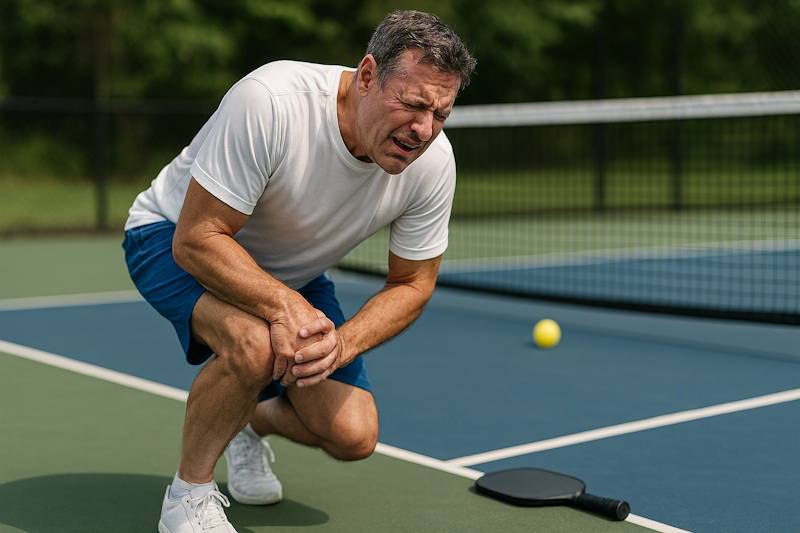
If hard courts were the primary culprit, injury rates should be roughly age agnostic as concrete doesn’t know how old you are. The data says otherwise, and the gap isn’t subtle.
Using a 50 year old cutoff the threshold most of the injury research itself uses multiple NEISS based emergency department studies converge on the same picture:
| Age group | Share of ER-treated injuries |
|---|---|
| Under 50 | 9-15% |
| 50 and older | 85-91% |
A 2022 national snapshot put it at 87% for players over 50. A 10 year study spanning 2013-2022 put it at 91%. An earlier 2010-2019 analysis found over 85% occurred in players 60 and up an even higher bar than 50, and the majority still cleared it. A dataset going back to 2001 found 90-91% in the 50-plus group. However the years are sliced, the result doesn’t move: players 50 and older account for roughly 6 to 10 times more ER-treated pickleball injuries than everyone under 50 combined.
Two honest caveats belong alongside that number. First, this is ER-treated injury data, which skews toward the most severe cases fractures and falls serious enough to warrant a hospital visit so it understates how often younger players pick up minor strains that never show up in this dataset.
Second, part of the gap simply reflects who’s playing: pickleball’s player base itself skews older. But that second point doesn’t fully explain it away a nationwide player survey study found injury likelihood was still significantly higher for players aged 33-77 than for players 18-32, even after accounting for how often each group plays.
Put plainly: age, deconditioning, and cardiovascular risk are doing far more explanatory work here than court surface ever could. A stiff court affects a 25 year old and a 65 year old identically in terms of physics. It’s the body absorbing that identical force that differs and that’s a player side variable, not a construction material one.
Bonus: The Senior Pickleball Injury Prevention Plan
If you’re over 50, the research doesn’t say to stop playing. It says to prepare for it like an athletic activity, not a casual pastime.
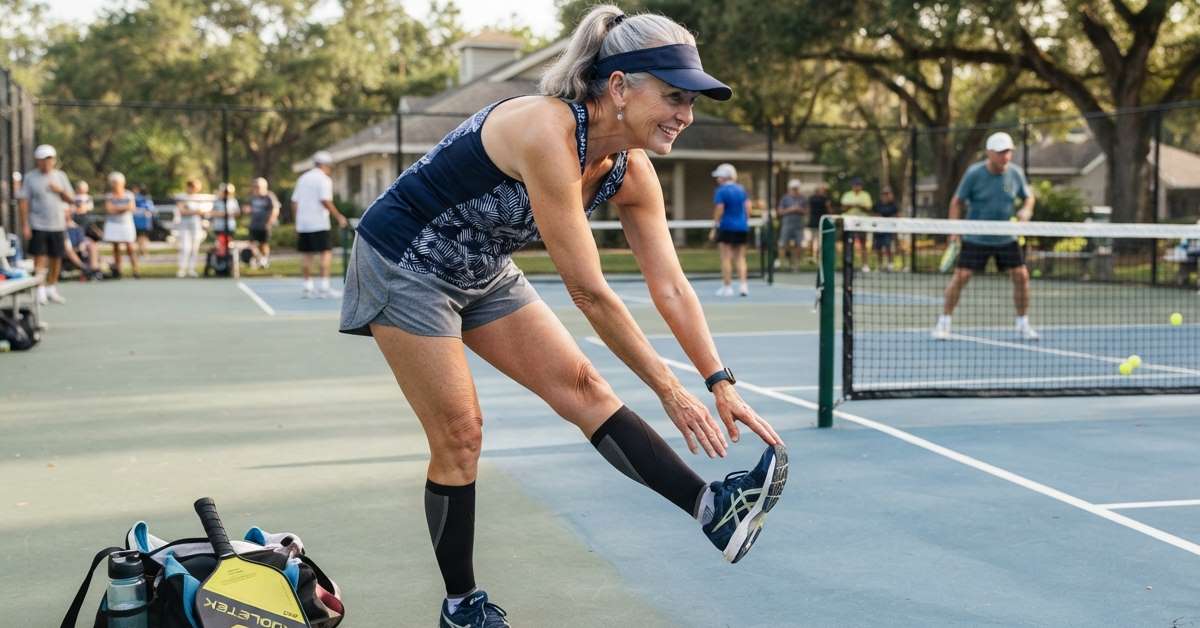
- Build a 5 to 10 minute dynamic warmup. Start with general movement, then progressively add lateral shuffles, controlled lunges, and calf raises before hitting.
- Train balance two to three times a week. Single leg stance, controlled stepping, and lateral balance work for 10 to 15 minutes per session.
- Strengthen the entire lower body. Quads, hamstrings, glutes, calves, and hips, trained for deceleration and control, not just appearance.
- Protect the Achilles, especially for older men. Introduce explosive movement gradually rather than jumping straight into competitive play.
- Practice fall prevention directly. Lateral stepping, controlled stopping, recovery steps, and the judgment to let a ball go rather than lunge for it.
- Manage playing volume. Increase gradually, watch for persistent soreness, and don’t let a twice weekly habit silently become six days a week.
- Improve kitchen movement mechanics. Coached lunging and deceleration work in the no volley zone rather than treating it as random scrambling.
- Train the upper body specifically for pickleball. Rotator cuff, scapular stabilizers, forearms, and grip, with overhead and rotational movements introduced gradually.
What about deaths?
Yes pickleball has produced a small but real number of on court deaths, and the data here says less about concrete and more about the sport itself.
Pickleball injury statistics from a 10 year NEISS based ED study covering 2014-2023 recorded 5 deaths in its dataset, and every one was attributed to cardiac arrest not a fracture, not a head injury, not trauma from hitting the court.
That points squarely at what pickleball actually is: a sport marketed and perceived as gentle “ping-pong on a tennis court,” an easy way to get some air and socialize that in practice delivers real bursts of competitive, high heart rate exertion. Points are short but intense, rest between them is minimal, and the format rewards quick reflexes and sudden sprints far more than its low effort reputation suggests.
That mismatch between perception and actual cardiovascular demand is the sport’s own design problem, not a property of what it’s played on.
Layer onto that a boom that pulled a huge wave of newly active, often previously sedentary adults into regular competitive play almost overnight, many with no baseline fitness testing or cardiac screening, and you get a sport whose social, low barrier to entry format is quietly asking untrained hearts to perform like athletes’ hearts, several times a week.
Outside reporting on individual on court deaths echoes this pattern consistently: sudden cardiac arrest striking mid match, in players with no diagnosed heart condition going in, in settings that frequently lacked an on site AED or a bystander ready with CPR in the critical first minutes.
Worth keeping in perspective: against tens of millions of players and presumably millions of hours played annually, single digit reported deaths in a decade of ED surveillance data is an extremely low absolute risk this isn’t a case for panic.
But it is a case for treating pickleball’s cardiovascular demands honestly rather than by its “low impact hobby” marketing, and for building cardiac screening and on site AEDs into how the sport is run not for pointing at the court surface underneath it.
The data indicts behavior, not concrete
Start with the single most important number buried in the pickleball injury statistics: in the largest recent injury epidemiology study on recreational pickleball players, 78% of injuries were overuse injuries gradual onset problems with no single traumatic event. Only 22% came from acute trauma like a fall or collision.
That ratio is the whole argument. A hard court doesn’t cause an overuse injury. A hard court doesn’t know or care how many days a week you’re playing. What causes a meniscus tear or a patellar tendinopathy that develops “gradually” over weeks is a person ignoring their own accumulating fatigue, playing through early warning signs, and not building in recovery regardless of what they’re standing on.
Even the acute side of the ledger, where surface genuinely matters more, still traces back mostly to player-controlled variables:
- Age and deconditioning, not concrete. Pickleball injury statistics show injury rates for players over 65 run several times higher than for players under 55. That’s not because older players are somehow assigned to harder courts it’s because a 68 year old’s balance, reaction time, and bone density are different from a 35 year old’s, and the sport’s start-stop, lunge heavy movement pattern exposes that gap regardless of surface.
- Frequency without recovery. Sports medicine write ups consistently flag the same pattern: players who take up the game several times a week without adequate rest are the ones showing up with knee tendon and cartilage complaints. That’s a training load decision, not a construction-material decision.
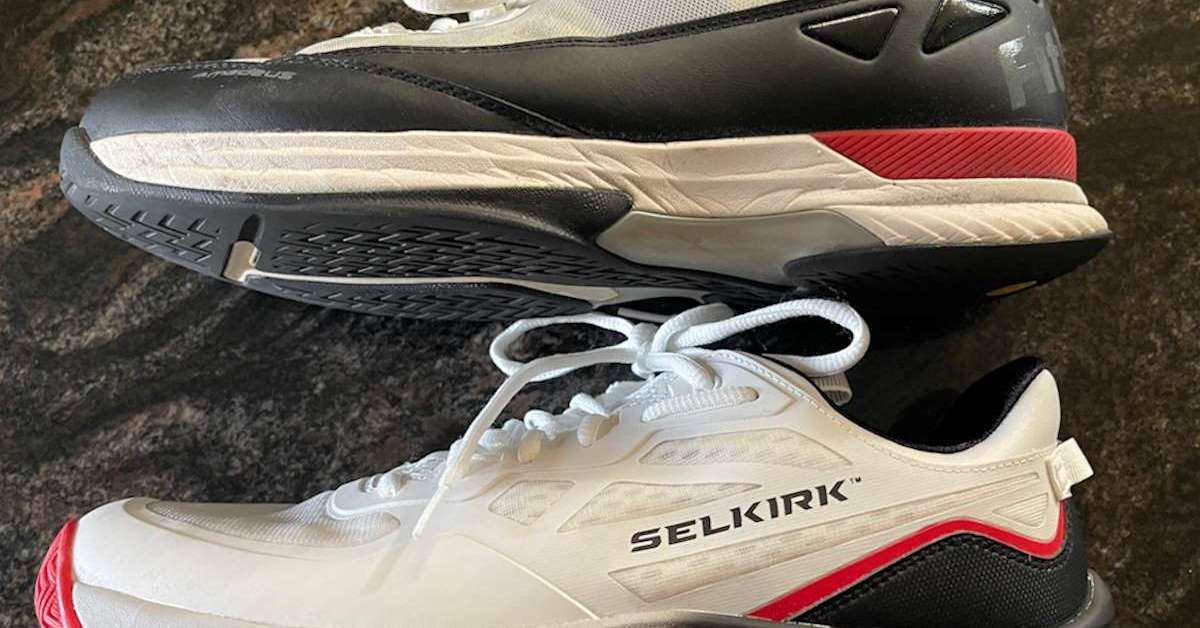
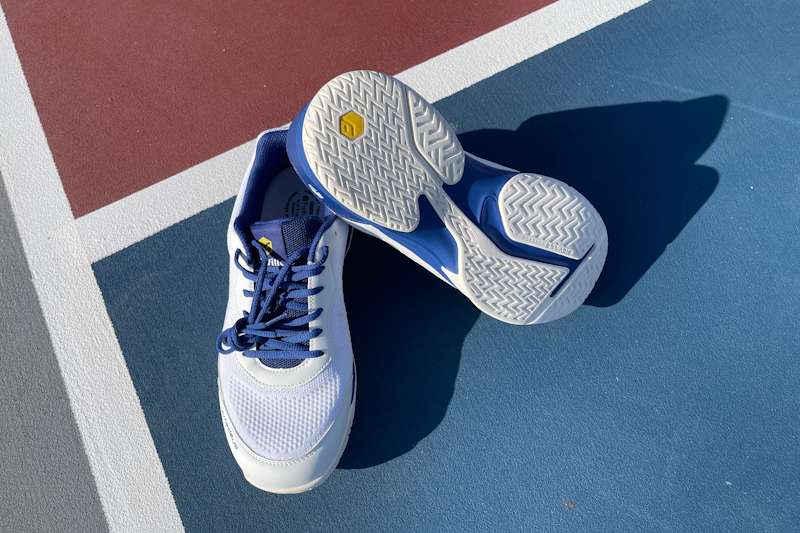
- Footwear. A large share of players show up to a fast lateral movement sport in running shoes, footwear literally engineered for forward motion, with minimal lateral ankle support. That’s a gear choice, and it dramatically raises rolled-ankle and knee torque risk independent of what the court is made of.
📌 What to Read Next:
Your physical safety on acrylic covered concrete depends entirely on your footwear. Explosive lateral movements on a textured sports surface can easily cause ankle strains without proper support. Read our thorough Selkirk Courtstrike Pro 3.0 review to see how its specialized stability outrigger shields active players from court-related injuries.
- Technique. Nobody teaches recreational players how to lunge, decelerate, or recover footwork properly before they start playing three times a week. Compare this to tennis or basketball, sports with a longer coaching culture pickleballs casual, “anyone can pick up a paddle” entry point means a huge share of its player base has zero movement instruction.
Bonus: The Injury Prevention Checklist
Before you play, run through these eight questions:
- Did I warm up for at least five minutes?
- Are my legs prepared, both strength and mobility?
- Is my balance good enough, or do I need to train it?
- Did I suddenly increase my playing volume this week?
- Am I playing while fatigued?
- Am I wearing proper court shoes with lateral support?
- Am I chasing balls that aren’t worth chasing?
- Am I protecting my eyes, especially during fast kitchen exchanges?
The surface blame argument doesn’t hold up to scrutiny
If hard courts were the primary driver, you’d expect indoor cushioned court players to show meaningfully lower injury rates than outdoor concrete players in the data. That comparison hasn’t actually been demonstrated at scale the epidemiology studies collecting injury data from tournaments and nationwide player surveys aren’t finding “outdoor concrete players get hurt way more than indoor cushioned court players.” What they’re finding instead is consistent injury patterns tied to age, playing frequency, and injury history the same predictors regardless of where the games happen to be played.
Tennis has been played on hard courts for a century without a parallel “hard courts are ruining tennis players’ joints” narrative reaching this volume because tennis has an established culture of conditioning, coaching, and gradual skill progression before someone plays five times a week. Pickleball’s court surfaces are, materially, the same asphalt and concrete tennis has always used. What’s different is a wave of players in their 50s and 60s picking up a new sport with no onboarding, no conditioning base, and no sense of how much load their joints can absorb and playing it aggressively out of the gate because it looks easy.
The convenient myth
Blaming the court is comfortable because it doesn’t require anyone to change their behavior. “Install cushioned surfaces” is a capital expenditure a city council can approve once. “Play less, warm up, get proper shoes, build strength around your knees, listen to early pain signals” requires every individual player to actually do something and that’s a much harder sell than a surface upgrade.
None of this means court surface is irrelevant cushioned surfaces do measurably reduce impact forces, and that’s worth factoring into new facility construction. But treating surface as the primary explanation for the injury wave lets players off the hook for the decisions that are actually driving most of the damage: how often they play, how they train, what’s on their feet, and whether they respect the recovery their joints are asking for.
The uncomfortable version, stated plainly
Pickleball isn’t hurting people. Pickleball injury statistics show that untrained, deconditioned, overenthusiastic adults playing a repetitive motion sport too often, in the wrong shoes, with no technique and no rest days, are hurting themselves and the court underneath them is a convenient scapegoat.
Sources: Frontiers in Public Health (2025) injury epidemiology study of Korean pickleball players; Sports Medicine – Open (2025) nationwide U.S. injury patterns study; PMC/NEISS-based 10-year U.S. emergency department analysis of pickleball injuries; various sports-medicine and orthopedic surface-comparison write-ups (2024–2026).